






























WhatsApp’s new username feature has become one of India’s biggest technology stories after the government raised concerns over its rollout. While the feature promises greater privacy by allowing users to chat without sharing their phone numbers, questions around impersonation, fraud and cybersecurity have pushed it into the national spotlight.
The WhatsApp usernames feature is trending across India for two reasons. First, Meta recently announced a phased global rollout that allows users to create unique usernames instead of sharing their phone numbers with new contacts. Second, the Indian government has issued a notice to Meta, asking the company to pause the rollout in India until consultations are completed regarding potential security and fraud risks.
For millions of Indian users, the development has sparked curiosity as well as confusion. Many people are wondering whether they will have to replace their phone numbers, whether the feature is mandatory, and how it could affect everyday conversations on WhatsApp.
What Is the WhatsApp Username Feature?
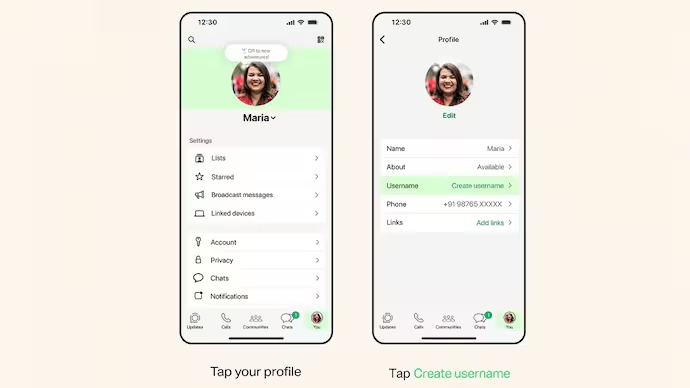
The upcoming feature allows users to create a unique username that can be shared with people instead of revealing their mobile number during first-time conversations.
Currently, WhatsApp requires users to exchange phone numbers before they can chat. With usernames, users will be able to connect while keeping their personal numbers hidden from new contacts. This approach is similar to platforms such as Telegram and Signal, where usernames have existed for years.
Importantly, the feature does not eliminate phone numbers from WhatsApp. Every account will still require a verified mobile number for registration and account recovery. Usernames simply provide an additional privacy layer for new interactions.
Why Is the Feature Trending Across India?
The feature became national news after the Ministry of Electronics and Information Technology reportedly directed Meta to explain how the system would prevent misuse before introducing it in India.
Government officials have expressed concerns that usernames resembling trusted brands, banks, government agencies or public personalities could increase the risk of impersonation, phishing and online scams if adequate safeguards are not in place.
As a result, Meta has reportedly been asked to pause the rollout in India while authorities review the feature. The development has generated widespread discussion on social media, where technology experts and users remain divided over whether usernames improve privacy or introduce new cybersecurity challenges.
What Does It Mean for Everyday WhatsApp Users?
For ordinary users, the biggest advantage is privacy.
Instead of giving your personal phone number to someone you meet through a marketplace, community group, event or professional network, you could simply share your username.
This could reduce unwanted calls, spam messages and unnecessary exposure of personal contact details.
However, users should also remember that privacy features are only effective when combined with careful digital habits. Even if phone numbers remain hidden, users should continue verifying unknown contacts, avoiding suspicious links and reporting fake accounts.
Existing chats and saved contacts are not expected to be affected. Friends and family who already have your number will continue communicating normally. The username feature mainly changes how new contacts initiate conversations.
Privacy Benefits Versus Security Concerns
The discussion around WhatsApp usernames highlights a common challenge in digital technology.
On one hand, hiding phone numbers can strengthen user privacy, particularly for women, freelancers, online sellers and professionals who regularly interact with strangers.
On the other hand, experts believe that bad actors could attempt to create usernames that resemble trusted individuals or organisations. Although Meta has said the feature includes safeguards against impersonation and will roll out gradually, regulators want additional clarity before allowing widespread deployment in India.
This explains why the feature has become more than just a software update. It has evolved into a broader discussion about balancing innovation with cybersecurity.
Should Indian Users Be Concerned?
At this stage, there is no immediate action required from WhatsApp users in India.
The username feature is not mandatory, and it has not been fully rolled out in the country. Users can continue using WhatsApp exactly as they do today.
If and when the feature becomes available after regulatory approvals, users should choose unique usernames, enable available privacy settings and remain cautious when receiving messages from unknown accounts.
As digital communication evolves, privacy tools like usernames may become increasingly common. However, their success will depend on whether they can offer convenience without compromising security.
Key Takeaways
- WhatsApp usernames are designed to let users connect without sharing phone numbers with new contacts.
- The Indian government has asked Meta to pause the feature’s rollout while reviewing privacy and cybersecurity concerns.
- Existing WhatsApp accounts and conversations will continue working normally.
- Users should continue following safe online practices even after new privacy features become available.
FAQs
Q1. What are WhatsApp usernames?
They are unique identifiers that allow users to connect without revealing their mobile numbers to first-time contacts.
Q2. Will WhatsApp remove my phone number completely?
No. A verified phone number is still required to create and maintain a WhatsApp account.
Q3. Is the WhatsApp username feature available in India?
The feature has attracted regulatory attention, and the Indian government has asked Meta to pause its rollout until consultations are completed.
Q4. Why is the government reviewing this feature?
Authorities are evaluating whether usernames could increase impersonation, phishing and cyber fraud if not implemented with sufficient safeguards.