






























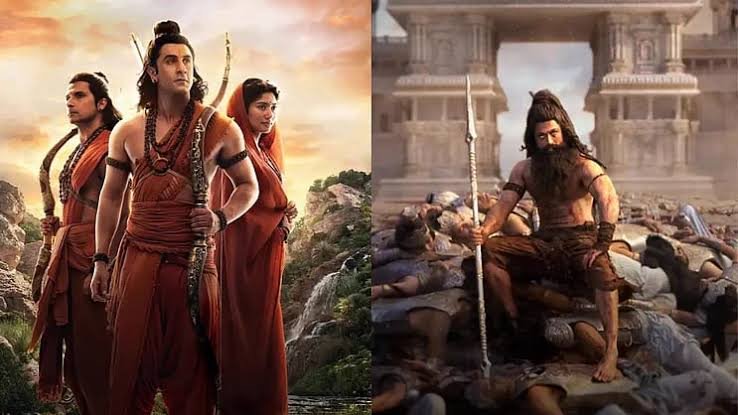
The Los Angeles premiere of Ramayana: Rise of a Legend on October 27, 2026, has brought Indian mythology and filmmaking into an international spotlight. Featuring Ranbir Kapoor, Sai Pallavi and Yash, the film is scheduled for a worldwide theatrical release on November 5.
Ramayana Premiere in Los Angeles Draws International Attention
The Los Angeles premiere of Ramayana: Rise of a Legend marks an important promotional milestone for one of India’s most ambitious mythological film projects. Directed by Nitesh Tiwari and produced by Namit Malhotra, the film received its first international screening at the David Geffen Theatre inside the Academy Museum of Motion Pictures on October 27.
The invitation-only event brought together the film’s principal cast and creative team, including Ranbir Kapoor, Sai Pallavi, Yash and the director. The screening took place in 3D, while the red-carpet event incorporated traditional Indian attire ahead of the Diwali season.
The premiere is significant because it places a story rooted in an ancient Indian epic before an international gathering of film professionals, media representatives and invited guests. It also provides an opportunity to introduce the production’s visual approach and performances before the film reaches cinemas.
However, the event’s international profile should be viewed as an opening step in the film’s global journey, rather than proof of its eventual commercial success. Audience response, reviews, theatrical attendance and overseas box-office performance will provide a clearer picture after release.
Ranbir Kapoor, Sai Pallavi and Yash Lead the Cast
The film brings together performers from different parts of the Indian film industry. Ranbir Kapoor plays Rama, Sai Pallavi portrays Sita, Yash takes on the role of Ravana, and Sunny Deol appears as Hanuman. Ravie Dubey plays Lakshman.
The casting gives the production a combination of established Hindi cinema talent and a major star associated with Kannada cinema. Yash’s participation is particularly relevant to the film’s pan-Indian positioning, given his popularity following the KGF franchise.
The supporting cast includes actors such as Arun Govil, Lara Dutta, Vivek Oberoi, Kajal Aggarwal and Anupam Kher. The ensemble reflects the scale of the production and its attempt to bring together performers from different linguistic and regional film industries.
For Indian cinema, this approach is not entirely new. Films such as Baahubali and the KGF series demonstrated how productions originating in particular language industries can reach wider audiences through dubbing, distribution and coordinated marketing.
Ramayana has a different starting point because its source material is already familiar to many Indian audiences and has cultural significance beyond any single language. Its challenge will be to present the story in a way that engages viewers who know the epic well while remaining accessible to international audiences encountering this particular adaptation for the first time.
How Ramayana Could Expand the Global Reach of Indian Cinema
The international launch of Ramayana highlights a broader development in Indian filmmaking: the effort to design major productions for audiences both within and outside the country.
Indian films have increasingly used international theatrical distribution, multilingual releases, premium cinema formats and global promotional campaigns to reach viewers overseas. Yet global reach depends on more than a high-profile event or a large production budget.
A film must also connect with viewers through its storytelling, performances, visual presentation and emotional themes. For a mythological adaptation, these factors are especially important because audiences may bring different expectations and levels of familiarity to the same story.
The Ramayana narrative explores duty, sacrifice, loyalty, conflict and the consequences of personal decisions. These themes can be understood across cultural boundaries, although their religious and philosophical significance varies among communities.
An international release gives the filmmakers an opportunity to communicate these themes through cinematic storytelling rather than relying entirely on the audience’s prior knowledge of the epic.
The film’s performance will also offer insight into how effectively Indian productions can combine culturally specific stories with international marketing and distribution strategies.
Advanced Visual Effects and International Film Collaboration
Another major aspect of Ramayana is its technical ambition. The project is being produced by Prime Focus Studios in association with DNEG and Monster Mind Creations. DNEG is known for its visual-effects work on major international productions, making its involvement relevant to the film’s presentation of large-scale settings, creatures and battle sequences.
The production has also brought together composers A. R. Rahman and Hans Zimmer. Their collaboration combines experience in Indian film music with a background in international film scoring.
Such partnerships can influence how a production is developed, marketed and received in overseas markets. Visual effects, sound design, cinematography and music contribute to the overall viewing experience, particularly when a story depends on expansive settings and large-scale conflict.
However, advanced technology does not automatically produce a successful film. Visual spectacle must support the narrative and performances rather than replace them. Audiences will ultimately judge whether the technical elements strengthen the story and create an engaging cinematic experience.
The production’s international creative partnerships nevertheless illustrate how Indian films can combine domestic storytelling with expertise and infrastructure that operate across global film industries.
Multilingual Release and Overseas Distribution Strategy
Ramayana: Rise of a Legend is scheduled to release worldwide in cinemas on November 5, 2026. The announced Indian language versions include Hindi, Tamil, Telugu, Kannada and Malayalam, with premium-format screenings also planned.
The multilingual approach is important for reaching audiences across India’s diverse film markets. A release that supports several major Indian languages can reduce the dependence on a single regional audience and create opportunities for coordinated promotion.
Overseas distribution is another important part of the strategy. Sony Pictures is handling international distribution outside India, while Dharma Productions is responsible for theatrical distribution across the Hindi-speaking market.
Working with established distribution networks can help a film secure theatrical access in multiple territories. It can also support marketing campaigns, release planning and the coordination of cinema bookings.
For audiences in Tier-2 and Tier-3 Indian cities, the availability of regional-language versions and accessible theatrical screenings may influence how easily they can watch the film. The eventual reach of the release will depend on cinema availability, local demand, ticket pricing and the distribution arrangements in individual markets.
The November 5 release will provide the first substantial opportunity to assess how the film performs across domestic and international territories.
What the Premiere Means for India’s Mythological Film Genre
Indian cinema has a long history of adapting epics and mythological stories for film and television. The Ramayana has been retold through regional traditions, stage productions, animated works and live-action adaptations.
A new big-screen version enters this established cultural landscape, where many viewers already have strong ideas about the characters and the story. Filmmakers must therefore balance creative interpretation with the expectations of audiences who regard the epic as more than a conventional fictional narrative.
The scale of Ramayana also raises questions about how Indian mythological films can compete in a global entertainment market without losing the cultural details that make them distinctive.
A successful adaptation could encourage further investment in Indian stories that draw on history, mythology and regional literary traditions. It could also create opportunities for artists, visual-effects professionals, technicians and production companies working on future projects.
These outcomes are possibilities rather than guaranteed consequences. The wider impact will depend on the film’s reception, financial performance and the industry’s willingness to support similarly ambitious productions.
What to Watch Before the November Release
The Los Angeles premiere has created an international platform for Ramayana, but several factors will determine the next stage of its journey.
First, audience and critic reactions to the completed film will provide a more useful measure than red-carpet attention alone. Second, advance bookings and opening-weekend attendance will help establish the level of public interest in India and overseas markets.
Third, the availability of different language versions will influence the film’s reach across India’s regional markets. Finally, the response to the film’s storytelling, performances and visual effects will help determine whether the production appeals beyond its existing fan base.
The second instalment is planned for Diwali 2027, making the first film part of a longer cinematic project. Its performance may therefore have implications for audience expectations surrounding the next chapter.
For now, the Los Angeles premiere represents a high-profile introduction to an Indian epic reimagined for contemporary cinema. Whether that visibility translates into lasting global success will become clearer after the theatrical release.
Key Takeaways
- Ramayana: Rise of a Legend held its Los Angeles world premiere on October 27, 2026, ahead of its scheduled worldwide theatrical release on November 5.
- The film stars Ranbir Kapoor as Rama, Sai Pallavi as Sita, Yash as Ravana and Sunny Deol as Hanuman, under director Nitesh Tiwari.
- International creative partnerships, multilingual distribution and visual-effects production form important parts of the film’s global strategy.
- The premiere creates international visibility, but box-office performance, reviews and audience response will determine the film’s wider impact.
Frequently Asked Questions
1. When did Ramayana: Rise of a Legend premiere in Los Angeles?
The film held its world premiere on October 27, 2026, at the David Geffen Theatre inside the Academy Museum of Motion Pictures in Los Angeles.
2. When will Ramayana: Rise of a Legend release in theatres?
The film is scheduled for a worldwide theatrical release on November 5, 2026. The second instalment is planned for Diwali 2027.
3. Who stars in the new Ramayana film?
The principal cast includes Ranbir Kapoor as Rama, Sai Pallavi as Sita, Yash as Ravana, Sunny Deol as Hanuman and Ravie Dubey as Lakshman. Nitesh Tiwari directs the film, which is produced by Namit Malhotra.
4. Why is the Los Angeles premiere significant for Indian cinema?
The premiere provides international visibility for an Indian mythological production and highlights its global distribution plans and international creative partnerships. Its long-term significance will depend on audience reception, reviews and commercial performance.