






















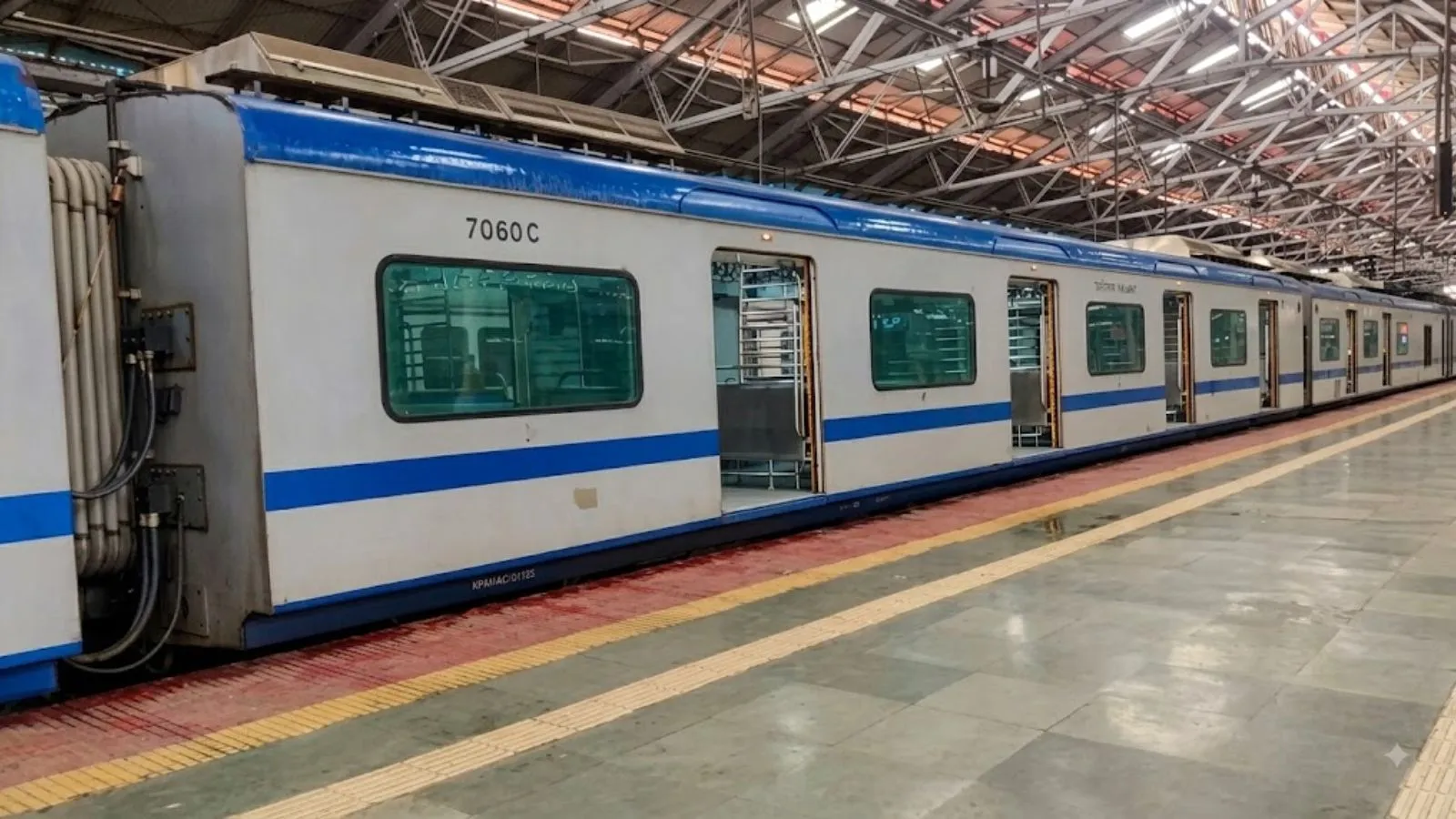
Mumbai’s local train delays became a major talking point on social media after technical disruptions on the Central Railway network left commuters struggling during their daily journeys on October 26. As passengers waited for services to resume, many turned to the popular m-Indicator app to share sarcastic comments and jokes, highlighting how humour has become an outlet for frustration among the city’s daily railway users.
Mumbai Local Train Disruption Leaves Commuters Stranded
The disruption affected services on the Central Railway’s main line, particularly along the CSMT-Kalyan corridor. Thousands of passengers faced delays during the morning rush, with some trains running significantly behind schedule.
According to reports, the first issue was detected at around 9.23 am when a foreign wire was found hanging from the overhead equipment between Mulund and Thane. Railway authorities arranged a power block to remove the obstruction and restore the affected section.
A separate signalling problem was also reported around Kanjurmarg. Smoke and a fire-related incident in the relay room affected signalling operations, further complicating train movements.
The combination of these technical problems caused train bunching and delays across the suburban network. Some passengers reported waiting for extended periods inside stationary trains, while others struggled to find alternative ways to reach their destinations. Mumbai News – The Indian Express+2
m-Indicator Comments Turn Train Delays Into Internet Humour
While commuters were dealing with long waiting periods, the m-Indicator app’s chat section became an unexpected space for humour and sarcastic exchanges.
Passengers used the platform to discuss train movements, share updates and respond to the disruption with jokes. One comment that attracted attention was, Train bimar hogya hai koi lene chalega, suggesting that the train had fallen ill and someone needed to come and pick it up.
Another commuter sarcastically wrote, Bullet train chalu karo, bringing India’s high-speed railway ambitions into a discussion about delayed suburban services.
Other comments included suggestions to tell family members that they would return home the following day and jokes about spending the entire day waiting for a train.
The humour reflected a familiar experience for Mumbai commuters. What started as an attempt to exchange travel information gradually became an outlet for people to express their irritation through relatable jokes.
Screenshots and reactions from these conversations subsequently attracted attention on social media, giving the disruption a second life beyond railway updates. Free Press Journal+2
Why Mumbai Local Train Delays Affect Thousands of People
Mumbai’s suburban railway network is not simply a mode of transportation. It is an essential part of everyday life for employees, students, business owners, vendors and people travelling between the city’s suburbs and commercial centres.
For many residents, local trains are the most practical and affordable way to travel across the metropolitan region. A disruption lasting even 30 minutes can affect office attendance, college schedules, business appointments and personal commitments.
The impact becomes more complicated when trains remain stationary between stations. Passengers may have limited access to drinking water, seating and information about when services will resume.
During the October 26 disruption, some commuters reported being stuck inside trains for considerably longer than expected. Others expressed frustration over the lack of timely announcements and uncertainty about alternative travel arrangements.
One passenger interviewed by the Free Press Journal questioned why commuters faced salary deductions for reaching work late because of railway disruptions. Another highlighted the difficulties faced by senior citizens who had to stand for extended periods.
Technical Problems Highlight Challenges in Railway Operations
The October disruption also brought attention to the challenges involved in managing one of India’s busiest suburban railway systems.
Overhead equipment supplies electricity to electric trains, while signalling systems help regulate train movements and maintain safe distances between services. When either system develops a technical fault, railway authorities may have to introduce alternative operating procedures.
In this case, the overhead wire obstruction required a power block, while the signalling problem around Kanjurmarg affected the normal movement of trains.
Such incidents can create a chain reaction. When one train is delayed, services behind it may also have to wait. This can result in train bunching, longer gaps between services and overcrowding at stations.
Restoring normal operations therefore involves more than fixing the original technical problem. Railway teams must also regulate train movements and gradually clear the accumulated delays.
The incident highlighted the importance of regular maintenance, effective emergency response and timely communication with passengers. mid-day.http.akamai-trials.com+1
Commuters Question Railway Communication and Accountability
Apart from the technical problems, the incident raised questions about how railway authorities communicate with passengers during unexpected disruptions.
For commuters, knowing that a train is delayed is not always enough. They also need information about the reason for the disruption, the expected waiting period and whether alternative travel arrangements are available.
A lack of clear announcements can leave passengers uncertain about whether to remain inside a stationary train or look for another way to reach their destination.
The October 26 incident also renewed discussions about passenger safety after some commuters were seen walking along railway tracks to reach nearby stations.
Walking on railway tracks is extremely dangerous because trains may approach on adjacent lines, sometimes without passengers being able to hear or see them in time. Even when services appear suspended, railway tracks should never be treated as pedestrian routes.
The incident demonstrated why railway authorities need to provide clear instructions and safe alternatives during prolonged disruptions. Free Press Journal+1
Why Mumbai’s Commuters Turn to Humour During Difficult Journeys
Mumbai’s local train culture has always been closely connected to the city’s working population. Daily passengers share familiar experiences of crowded compartments, missed trains, sudden halts and difficult peak-hour journeys.
Social media and commuter applications have created additional spaces where people can discuss these experiences.
Humour plays an interesting role in these conversations. Sarcastic comments and memes allow passengers to express frustration in a way that others immediately understand.
The m-Indicator comments during the October disruption were an example of this behaviour. Jokes about sick trains, bullet trains and spending an entire day waiting for services reflected the mood of commuters dealing with an unpredictable journey.
However, the popularity of these jokes should not distract from the actual difficulties passengers experienced.
Behind every viral comment was someone trying to reach work, attend college, manage a business or return home. The online humour reflected a shared experience, but it also highlighted the need for more reliable railway services.
The Bigger Question: Can Mumbai’s Local Train Experience Improve?
The October 26 disruption has once again brought commuter concerns into public discussion. The November 1 coverage also highlighted demands for greater accountability, better passenger communication and improvements in the reliability of suburban services.
Mumbai’s growing population and dependence on suburban trains make consistent railway operations particularly important.
Infrastructure maintenance, modern signalling systems, emergency planning and passenger information services all play a role in improving the daily travel experience.
Railway authorities also need to consider how disruptions affect people travelling from distant suburbs, where alternative transport options may be limited or expensive.
For passengers travelling from areas such as Kalyan, Badlapur, Dombivli and Ambernath, even a relatively short disruption can create significant difficulties when travelling towards Mumbai.
The memes may eventually disappear from social media, but the concerns behind them remain relevant. For Mumbai’s commuters, a reliable local train service is not a luxury. It is a necessity that directly affects their working lives and everyday routines.
Key Takeaways
- Mumbai’s Central Railway services faced major disruption on October 26, 2026, following overhead equipment and signalling-related problems.
- Commuters shared sarcastic comments and jokes on the m-Indicator app while waiting for delayed trains.
- The disruption highlighted concerns about overcrowding, passenger communication and the safety of stranded commuters.
- The incident renewed discussions about railway maintenance, accountability and reliable suburban transportation.
Frequently Asked Questions
1. Why were Mumbai local trains delayed on October 26, 2026?
Central Railway services were disrupted after a foreign wire was found hanging from overhead equipment between Mulund and Thane. A separate signalling-related incident at Kanjurmarg further affected train movements.
2. Why did Mumbai commuters share memes about train delays?
Passengers used the m-Indicator app’s chat section to share sarcastic comments and jokes while waiting for services to resume. Their reactions reflected frustration with the disruption and uncertainty surrounding their journeys.
3. Which railway line was affected by the October 26 disruption?
The disruption primarily affected the Central Railway’s main suburban line connecting Chhatrapati Shivaji Maharaj Terminus (CSMT) and Kalyan.
4. Is it safe to walk on railway tracks during a train disruption?
No. Railway tracks are extremely dangerous pedestrian areas. Passengers should follow official railway instructions and use authorised routes to reach nearby stations.