































Summary: The Vasai Virar City Municipal Corporation is considering a 3.1-kilometre elevated automated transit system connecting the upcoming Mumbai-Ahmedabad bullet train station in Virar with Metro Line 13 in Nalasopara. The proposal remains under consideration, with a draft development plan expected by early November 2026.
Elevated Bus System Proposed for the Mumbai Metropolitan Region
The proposed elevated bus system in the Mumbai Metropolitan Region could introduce a new public transport option for commuters travelling between Virar and Nalasopara. The Vasai Virar City Municipal Corporation (VVCMC) is considering an Automated Guideway Transit (AGT) system, a driverless transport technology designed to operate on a dedicated elevated guideway.
According to a report published by The Indian Express on October 13, 2026, the proposed 3.1-kilometre corridor would connect Sahakar Nagar in Virar East, near the upcoming Mumbai-Ahmedabad bullet train station, with the proposed Metro Line 13 station in Nalasopara West.
The idea is to improve connections between different transport networks and make it easier for passengers to move between the high-speed rail station and the metro system.
However, commuters should understand that this is a proposal under consideration, not an operational transport service. The final alignment, technology and implementation arrangements have not yet been confirmed.
Where Will the Proposed Elevated Bus Operate?
The proposed route would cover approximately 3.1 kilometres between Virar East and Nalasopara West. It is intended to connect the area around the upcoming bullet train station at Virar with Metro Line 13.
The corridor is expected to begin at Sahakar Nagar in Virar East and extend towards the proposed metro station in Nalasopara West. According to the report, the route would cross suburban railway tracks, making the alignment and engineering requirements important considerations during planning.
The proposal forms part of a broader local area development plan covering approximately 463 hectares around the Virar high-speed rail station.
This wider development approach aims to coordinate transport infrastructure with the surrounding urban area. Better connections between railway stations, metro networks and other public transport services can help passengers complete journeys without depending entirely on private vehicles or multiple road-based transfers.
For commuters in the rapidly developing Vasai-Virar region, the proposed connection could eventually become relevant to daily travel, particularly for those moving between residential areas and major transport hubs.
However, the actual benefits will depend on the final route, station locations, service frequency and integration with existing transport facilities.
What Is Automated Guideway Transit Technology?
Automated Guideway Transit, or AGT, is a form of guided public transportation that can operate without a driver. Vehicles travel along a dedicated guideway rather than sharing ordinary roads with cars, motorcycles, auto-rickshaws and conventional buses.
Depending on the technology selected, these systems may use rubber-tyred vehicles, automated control systems and specially constructed elevated tracks. Their design and passenger capacity can vary significantly between projects.
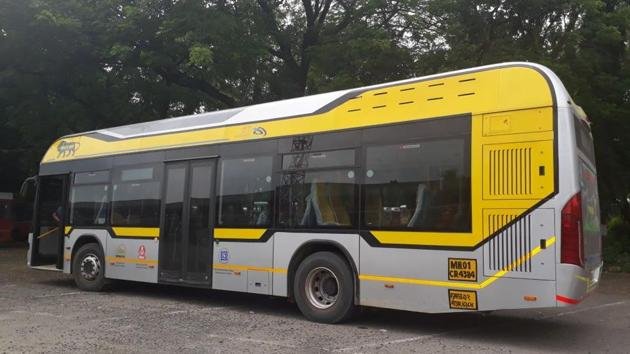
The term elevated automated bus is being used to describe the proposed system in the Mumbai region. However, it should not automatically be interpreted as a conventional city bus travelling on an elevated road. The final vehicle design and operating technology have not yet been established publicly.
Dedicated guideways can reduce direct interaction with road traffic and allow transport operators to control vehicle movement more precisely. Automation may also support frequent services when passenger demand and operating conditions justify it.
At the same time, these systems require specialised infrastructure, reliable control technology, maintenance facilities and emergency procedures. Their overall cost and suitability depend on local conditions, including passenger demand, land availability and connections with other transport modes.
How Could the System Help Virar and Nalasopara Commuters?
The main objective of the proposal is to improve last-mile connectivity between major transport facilities.
Last-mile connectivity refers to the part of a journey that takes passengers from a railway or metro station to their final destination, or connects them to another transport service. Even when a city has a major railway or metro network, weak connections between stations can make public transport less convenient.
For example, a passenger arriving at the proposed Virar bullet train station may need to continue towards Nalasopara or another suburban destination. A dedicated automated connection could offer an alternative to road-based transfers, depending on the final route and service design.
The proposed corridor could also support easier transfers between high-speed rail and metro services if their operating schedules and station facilities are coordinated effectively.
For residents of Vasai, Virar and Nalasopara, the potential advantages include fewer road-based transfers and more predictable connections between transport hubs.
Nevertheless, the project cannot yet be expected to reduce travel times by a specific amount. That would require details about operating speeds, waiting times, station access and passenger demand, none of which have been finalised in the available reporting.
How Does It Fit Into Mumbai’s Expanding Transport Network?
The Mumbai Metropolitan Region is developing several transport systems to improve connectivity across its urban and suburban areas. These include metro corridors, suburban rail services, monorail infrastructure and proposals for newer forms of urban mobility.
The proposed AGT connection would add another option to this mix, with a particular focus on linking the upcoming bullet train station to the planned metro network.
The wider objective is to make different transport services work together rather than operate as disconnected systems. Passengers benefit when stations are accessible, transfers are straightforward and ticketing arrangements are convenient.
For a region extending beyond Mumbai’s traditional urban core, transport integration is especially important. Residential development in areas such as Vasai-Virar increases the need for reliable connections to employment centres, educational institutions and other urban facilities.
Still, an additional transport mode does not automatically guarantee better connectivity. The effectiveness of the proposed system will depend on whether it serves a genuine passenger need and integrates efficiently with the surrounding network.
The project will also need to be assessed against other possible options, including feeder buses and improvements to existing road and rail connections.
What Is the Project Timeline and Approval Status?
As of October 13, 2026, the elevated automated bus system remains at the planning stage.
The Indian Express reported that VVCMC is working with Tandon Urban Solutions Pvt Ltd and a Japanese delegation on the development plan. The Japan International Cooperation Agency (JICA), which is involved in the Mumbai-Ahmedabad high-speed rail project, is also mentioned in the reporting.
A draft plan is expected by early November 2026, after which it is to be submitted to the Maharashtra government for approval.
This is an important distinction for commuters. The preparation and submission of a draft plan do not mean that construction has been approved or that an opening date has been announced.
Further decisions will be needed on the final alignment, engineering design, funding, implementation arrangements and applicable approvals. The available report does not establish a confirmed construction start date, project completion date, ticket price or operating schedule.
Commuters should therefore treat any claims about when the elevated system will begin operating with caution until official announcements provide further details.
What Should Commuters Watch For Next?
The next major development to watch is the proposed draft plan expected in early November 2026. Its details should help clarify how the corridor is intended to connect the Virar high-speed rail station with Metro Line 13.
Commuters should look for official information on the exact route, proposed stations, accessibility arrangements and integration with existing public transport. Details about project costs, funding and construction phases will also be important in determining whether the proposal can move towards implementation.
Passenger capacity and service frequency will matter as well. A transport link needs sufficient capacity during peak hours to be useful to daily commuters. Connections with feeder buses, auto-rickshaws and pedestrian facilities will influence how convenient the system becomes.
The project will also need to demonstrate that its benefits justify the investment in elevated infrastructure and automated operations.
For now, the proposal signals an effort to explore new ways of connecting transport hubs in the Mumbai Metropolitan Region. Whether it becomes a practical option for commuters will depend on the decisions that follow the planning stage.
Key Takeaways
- VVCMC is considering a 3.1-kilometre Automated Guideway Transit system between Virar East and Nalasopara West.
- The proposed corridor would connect the upcoming Mumbai-Ahmedabad bullet train station with Metro Line 13.
- A draft development plan is expected by early November 2026, followed by submission to the Maharashtra government for approval.
- The project remains a proposal, with no confirmed construction schedule, opening date, fares or final technology announced in the available reporting.
Frequently Asked Questions
1. What is the proposed elevated bus system in Mumbai?
It is a proposed Automated Guideway Transit system that would use a dedicated elevated guideway to connect the upcoming bullet train station in Virar with Metro Line 13 in Nalasopara.
2. What is the proposed route of the elevated automated bus?
The proposed 3.1-kilometre corridor would run from Sahakar Nagar in Virar East towards the proposed metro station in Nalasopara West, crossing suburban railway tracks.
3. When will the elevated bus system start operating?
No confirmed opening date has been announced. A draft development plan is expected by early November 2026, after which it will be submitted to the Maharashtra government for approval.
4. Will the proposed system reduce travel time for commuters?
It could improve connections between major transport hubs, but the actual effect on travel time cannot yet be determined. The final route, operating speed, service frequency and transfer arrangements remain to be established.














