












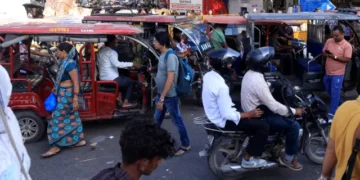








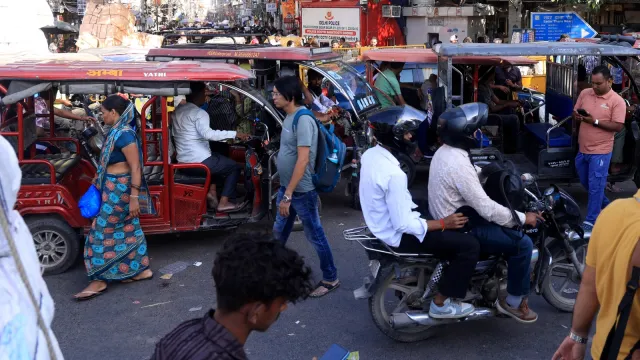
Delhi’s proposed E-Rickshaw Registration Scheme 2026 could change how thousands of drivers and vehicle owners operate across the capital. The draft introduces a 2.5 lakh vehicle cap, mandatory compliance certificates, ownership limits and stricter safety requirements, with public consultation taking place before implementation.
Delhi E-Rickshaw Scheme 2026: What Has the Government Proposed?
The Delhi government has introduced the draft Delhi E-Rickshaw (Registration and Operation) Scheme, 2026, to regulate the growing number of battery-operated three-wheelers operating across the national capital.
The proposed framework aims to address concerns related to traffic congestion, road safety, vehicle overloading, battery quality and unregulated operations.
According to reports published on October 18 and 19, the government has proposed limiting the number of e-rickshaws operating in Delhi to 2.5 lakh.
One of the central features is a digital E-Rickshaw Compliance Certificate (ECC), which would become mandatory for vehicles operating under the proposed framework.
The draft also introduces conditions for vehicle owners, fleet operators and drivers. These include limits on individual ownership, compulsory driving licences, Public Service Vehicle (PSV) badges and valid vehicle documentation.
Importantly, these provisions are still proposals. The government has invited suggestions and objections from stakeholders before finalising the scheme. Drivers and owners should not assume that every proposed condition is already in force.
2.5 Lakh E-Rickshaw Limit: What Does It Mean?
One of the most significant proposals is a citywide cap of 2.5 lakh e-rickshaws.
The government intends to regulate the number of vehicles operating in Delhi by controlling new registrations and issuing compliance certificates within the prescribed limit.
Under the draft, no additional registration would be permitted once the proposed cap is reached, unless the government decides to revise it.
The proposal is aimed at managing the rapid growth of e-rickshaws, particularly in areas where these vehicles operate as an important part of last-mile public transport.
E-rickshaws provide affordable short-distance connectivity between residential areas, metro stations, bus stops, markets and commercial centres.
However, the increasing number of vehicles has also raised concerns about traffic management, parking, road discipline and passenger safety.
For drivers who depend on e-rickshaws for their daily income, the proposed cap could have an important impact on future registration opportunities.
For existing owners, it means that maintaining proper vehicle documents and meeting the proposed compliance conditions could become increasingly important.
What Is the E-Rickshaw Compliance Certificate?
The proposed E-Rickshaw Compliance Certificate is a digital authorisation that would establish whether a vehicle and its authorised driver meet the requirements of the new scheme.
The certificate would be separate from the existing vehicle registration and permit requirements under the Motor Vehicles Act.
According to the draft, the ECC would contain information relating to:
- Vehicle registration details
- Ownership information
- Authorised driver’s details
- Driving licence and PSV badge information
- Battery compliance status
- Vehicle fitness certificate
- Valid insurance details
Each certificate would be linked to one e-rickshaw and one authorised driver.
The proposed validity period is two years, unless the certificate is suspended or cancelled earlier by the competent authority.
This system is intended to make it easier for transport officials to verify the identity of vehicles and drivers operating on Delhi’s roads.
It could also help authorities identify vehicles operating without valid documentation or using batteries that do not meet the prescribed standards.
Delhi E-Rickshaw Registration: Proposed Rules for Existing Owners
The draft scheme also addresses e-rickshaws that are already registered in Delhi.
Existing registered vehicles would be divided into two categories.
The first category includes vehicles that already have valid fitness certificates, insurance and drivers with the required driving licences and PSV badges.
The second category includes vehicles that are missing one or more of these requirements.
Both categories would have to obtain the proposed E-Rickshaw Compliance Certificate within the prescribed period.
According to the draft, existing Delhi-registered e-rickshaws would receive 90 days from the date of notification to obtain the ECC. The Transport Department may extend this period.
This is an important distinction for existing drivers. The 90-day period does not begin simply because the draft policy has been reported in the media. It is linked to the scheme’s formal notification.
Therefore, owners should wait for the final notification and official instructions before assuming that the compliance deadline has started.
How Many E-Rickshaws Can One Person Own?
The proposed scheme introduces limits on the number of e-rickshaws that can be owned by individuals and organisations.
Under the draft:
| Owner category | Proposed ownership limit |
|---|---|
| Individual Delhi resident | Maximum 5 e-rickshaws |
| Companies and firms | Maximum 100 e-rickshaws |
| NGOs and cooperative societies | Maximum 100 e-rickshaws |
| Driving schools and other eligible entities | Maximum 100 e-rickshaws |
Individual ownership would be restricted to Delhi residents.
For organisations operating multiple vehicles, the draft also proposes additional responsibilities related to charging infrastructure and battery-swapping arrangements.
The ownership restrictions are intended to prevent excessive concentration of vehicles under individual operators and establish clearer accountability for fleet management.
These limits may be particularly relevant for people who operate multiple e-rickshaws through hired drivers.
However, owners should check the final scheme for any modifications to these proposed limits before making decisions about purchasing additional vehicles.
Driving Licence and PSV Badge Requirements
The proposed policy places particular emphasis on driver identification and licensing.
Every e-rickshaw driver would be required to hold a valid e-rickshaw driving licence and a Public Service Vehicle badge.
A driver or driving licence would not be permitted to remain linked to more than one valid ECC at the same time.
This requirement is intended to establish a direct connection between the vehicle and the person authorised to operate it.
Owners who hire drivers would also have to provide their details to the registering authority.
Whenever a driver changes, the relevant information would need to be updated in the official records.
This could affect owners who frequently change drivers or operate multiple vehicles through informal arrangements.
The proposed system would make it more important for vehicle owners to maintain accurate employment and driver records.
Fleet operators would also be responsible for ensuring that their drivers meet the prescribed licensing and compliance conditions.
New E-Rickshaw Safety Rules: Passenger Limit and Speed Restrictions
The draft also proposes stricter vehicle safety requirements.
According to the proposed framework, an e-rickshaw would be permitted to carry a maximum of four passengers, excluding the driver.
Passengers would not be allowed to occupy a seat beside the driver or travel while standing.
The draft also specifies a maximum vehicle speed of 25 kmph and a motor power limit of 2,000 watts.
The permitted luggage capacity would be limited to 40 kg.
These provisions are intended to address common safety concerns associated with overloading and unsafe vehicle modifications.
E-rickshaws are frequently used for short-distance transportation, especially around metro stations, local markets and residential colonies.
However, carrying additional passengers beyond the permitted capacity can affect vehicle stability and increase the risk of accidents.
The proposed rules also seek to prevent drivers from playing music or other audio that could cause disturbance or distraction while operating their vehicles.
If implemented, these requirements would establish clearer operating standards for both drivers and passengers.
Penalties for Unregistered E-Rickshaws Under the Draft Scheme
The proposed framework includes strict action against vehicles operating without the required registration and compliance documents.
Under the draft, e-rickshaws found operating without registration after the scheme’s notification could be impounded.
The proposal also provides for such vehicles to be crushed or auctioned under prescribed government guidelines rather than routinely released.
Batteries fitted in impounded vehicles, including batteries leased from third parties, could also be withheld and auctioned to authorised recyclers for disposal in accordance with applicable rules.
These provisions indicate that the government wants to discourage unregistered operations and unsafe battery use.
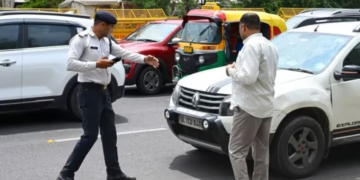
The draft also allows the Transport Department to conduct inspections to verify vehicle registration, ownership, driver identity, insurance, fitness and battery compliance.
However, these proposed enforcement measures should not be described as already implemented. Their application will depend on the final scheme and its notification.
What Happens to E-Rickshaw Fleet Operators?
The proposed policy also introduces additional requirements for organisations and businesses operating larger e-rickshaw fleets.
Entities managing multiple vehicles would need to maintain appropriate charging or battery-swapping arrangements.
Another important provision concerns aggregator licensing.
According to the draft, an entity registering its 25th e-rickshaw would have to apply for an aggregator licence under the Delhi Motor Vehicle Aggregator and Delivery Service Provider Scheme, 2023, within one month.
This provision could affect businesses that operate organised e-rickshaw fleets rather than individual vehicles.
It would also bring larger operators under a more structured regulatory framework.
For small businesses, the proposed requirements could mean additional administrative responsibilities and infrastructure expenses.
The final rules will determine how these obligations are applied and what documentation fleet operators will need to submit.
What Should E-Rickshaw Drivers and Owners Do Now?
Since the scheme is still at the draft stage, drivers and owners should focus on keeping their existing vehicle documents updated.
They should check whether their e-rickshaws have valid registration certificates, fitness certificates and insurance.
Drivers should also verify that their driving licences and PSV badges are valid.
Owners employing other drivers should maintain accurate records of who operates each vehicle.
Battery safety is another important consideration. Owners should ensure that their vehicles use compliant batteries and that old batteries are handled through authorised recycling channels.
Most importantly, drivers should follow announcements from the Delhi Transport Department rather than relying entirely on social media messages or unofficial claims about registration deadlines.
The government has invited public suggestions and feedback for one month before finalising the draft framework.
The final notification will clarify the implementation date, application process, documentation requirements and compliance deadlines.
For thousands of people who depend on e-rickshaws for their livelihood, these details will be important in understanding how the proposed changes affect their daily operations.
Key Takeaways
- Delhi has proposed a citywide limit of 2.5 lakh e-rickshaws under its draft 2026 scheme.
- A digital E-Rickshaw Compliance Certificate with a proposed two-year validity would become mandatory.
- Individual Delhi residents would be allowed to own up to five e-rickshaws, while eligible organisations could own up to 100.
- Existing registered vehicles would have a proposed 90-day compliance window after formal notification, subject to possible extension.
Frequently Asked Questions
1. Has Delhi implemented the E-Rickshaw Registration Scheme 2026?
No. As of October 31, 2026, the scheme is a draft proposal. The government has invited public suggestions and feedback before finalising the framework.
2. What is the proposed maximum number of e-rickshaws in Delhi?
The draft proposes a citywide limit of 2.5 lakh e-rickshaws. The limit would apply to registrations under the proposed framework.
3. What is the E-Rickshaw Compliance Certificate?
The ECC is a proposed digital certificate containing vehicle registration, ownership, driver, battery compliance, fitness and insurance information. It would have a proposed validity of two years.
4. How much time will existing e-rickshaw owners get to comply?
The draft proposes 90 days from the date of formal notification for existing registered e-rickshaws to obtain the ECC. The Transport Department may extend the deadline.
(