



























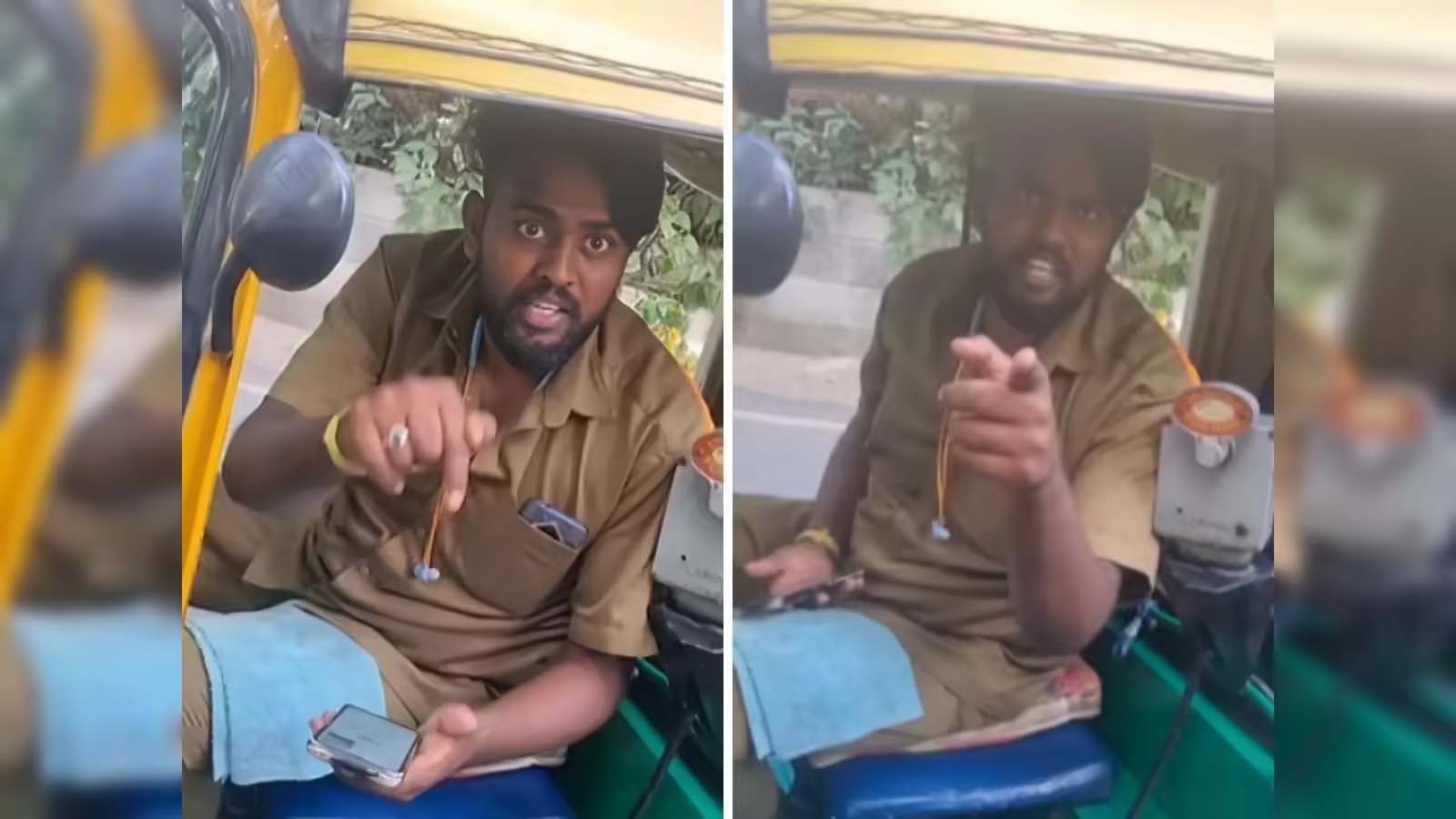
A viral video of a female auto driver from Bengaluru has triggered widespread discussion across social media about women’s employment, financial independence, safety, and changing work culture in urban India. The clip resonated with viewers because it reflected a reality many women continue to face while trying to earn independently.
Viral Bengaluru Auto Driver Video Gains National Attention
The Bengaluru female auto driver viral video quickly spread across Instagram, X, and YouTube after a content creator shared a conversation with the driver during a routine ride. In the clip, the woman confidently spoke about why she preferred driving an auto over depending financially on others.
What made the video stand out was not drama or controversy. It was the honesty of the conversation. The driver explained that while the work was physically demanding, it gave her dignity, daily income, and freedom to support her family. Her statement comparing household labor with professional driving became a major talking point online.
Social media users across India praised her confidence and practical mindset. Many viewers described the video as relatable because it highlighted the economic pressures faced by middle-class and lower-income families in metro cities like Bengaluru.
The conversation also sparked discussions around how women in India are increasingly entering jobs that were traditionally dominated by men.
Women Workforce Participation Is Slowly Changing In Indian Cities
The Bengaluru viral auto driver story reflects a broader shift happening across urban India. Women are now working in delivery services, cab driving, logistics, security, and public transport at a much larger scale than before.
In cities such as Bengaluru, Pune, Hyderabad, Mumbai, and Delhi, app-based transport platforms and gig economy jobs have opened new earning opportunities for women who may not have access to formal office jobs.
At the same time, many women still face major challenges. Safety concerns, irregular income, social judgment, long working hours, and lack of public support systems continue to affect female workers in transport-related sectors.
Experts say the viral response to the auto driver’s comments happened because audiences saw authenticity instead of polished motivational messaging. Her words reflected real financial survival rather than social media branding.
The incident also exposed how discussions around women’s empowerment in India are increasingly moving beyond education and into economic participation.
Bengaluru Continues To Represent India’s Changing Work Culture
Bengaluru has often become the center of conversations around modern work culture, rising living costs, startup growth, and gig economy employment. The city’s rapidly increasing expenses have pushed many households to look for multiple income sources.
For women from lower and middle-income families, flexible transport jobs can sometimes offer more practical earning opportunities than traditional employment sectors requiring degrees or fixed schedules.
The viral auto driver video also highlighted another important aspect of Bengaluru’s economy: dignity of labor. Several users online pointed out that India still tends to judge certain professions socially, especially when women enter physically demanding or public-facing roles.
Many working women shared their own experiences in response to the clip. Some discussed balancing work and childcare, while others spoke about choosing unconventional careers due to financial necessity.
The public reaction showed how short viral moments can sometimes reveal deeper economic realities affecting millions of Indians.
Social Media Is Amplifying Real-Life Working-Class Stories
Unlike earlier viral trends focused mainly on entertainment, current Indian social media audiences increasingly engage with stories involving ordinary workers, street vendors, delivery agents, and transport staff.
The Bengaluru female auto driver viral video became popular partly because viewers are now more interested in real human experiences rather than scripted influencer content.
Short-form video platforms have also created visibility for people whose voices were rarely heard in mainstream media earlier. Auto drivers, shopkeepers, laborers, and small business owners are now regularly becoming part of national online conversations.
At the same time, experts caution that viral fame can be temporary. While audiences celebrate such stories online, long-term structural issues like wage inequality, women’s safety, healthcare access, and financial security still require policy-level solutions.
The conversation started by this Bengaluru auto driver ultimately became larger than the video itself. It turned into a reflection of how India’s workforce, especially for women, is changing in real time.
Why The Video Connected Strongly With Indian Audiences
One reason the clip gained traction is because it arrived during a period when discussions around inflation, rent, employment pressure, and work-life balance are already dominating urban conversations.
Bengaluru in particular has frequently appeared in national discussions around high rents, traffic stress, startup culture, and rising living costs. Against that backdrop, the auto driver’s straightforward comments about earning independently felt genuine and relatable.
The video also challenged stereotypes. Many people still assume transport driving is unsuitable for women. The viral response showed that public attitudes are slowly shifting, especially among younger audiences who increasingly value financial independence over traditional role expectations.
The incident may fade from social media trends over time, but the larger discussion around women, work, and economic survival in modern India is likely to continue.
Key Takeaways
- The Bengaluru female auto driver viral video sparked discussions about women’s financial independence and dignity of labor.
- Social media users connected with the authenticity and practical realities shared in the conversation.
- More women in Indian cities are entering gig economy and transport-related jobs.
- The viral moment highlighted broader concerns around urban living costs, employment pressure, and changing work culture.
FAQ
Why did the Bengaluru female auto driver video go viral?
The video became popular because the driver spoke honestly about work, independence, and financial survival, which many viewers found relatable and inspiring.
What larger issue did the video highlight?
The clip highlighted discussions around women’s workforce participation, dignity of labor, and changing employment patterns in urban India.
Are more women joining transport and gig economy jobs in India?
Yes. Many women are increasingly working in ride services, delivery platforms, and flexible gig economy roles, especially in metro and Tier-2 cities.
Why did the story connect strongly with Bengaluru audiences?
Bengaluru is already facing conversations around high living costs, job pressure, and urban work culture, making the driver’s comments especially relevant.