
















AI generated celebrity videos are once again dominating social media feeds, raising fresh concerns about misinformation, digital manipulation, and online safety. As generative AI tools become more accessible, realistic fake videos featuring actors, politicians, athletes, and influencers are spreading rapidly across platforms, prompting experts and authorities to urge users to verify content before sharing.
The topic is time sensitive because the rise of AI generated celebrity videos is linked to recent viral incidents, the rapid adoption of new AI video generation tools, and ongoing discussions around deepfakes, misinformation, and platform moderation. The article below follows a news reporting style.
The phrase AI generated celebrity videos has become one of the most searched technology topics this week as several highly realistic clips featuring well-known public figures have gone viral across social media. These videos appear authentic at first glance, often showing celebrities endorsing products, making controversial statements, or participating in events that never actually happened.
The increasing realism of these videos has made it difficult for ordinary users to distinguish genuine footage from AI-generated content. Experts warn that this trend is likely to continue as artificial intelligence becomes more advanced and easier for the public to access.
Recent improvements in generative AI video models have significantly reduced the time and technical knowledge required to create convincing synthetic videos, making the technology available to both professionals and casual users.
New AI Tools Are Making Fake Videos More Realistic
The latest generation of AI video creation platforms can generate lifelike facial expressions, natural lip movements, realistic voices, and detailed backgrounds using only text prompts or a few reference images.
Unlike earlier deepfake technology that required extensive editing skills, many modern AI tools allow users to produce polished videos within minutes. As a result, fake celebrity interviews, fictional movie trailers, parody clips, and manipulated advertisements are appearing more frequently online.
Technology companies continue to improve these models for creative and educational purposes. However, experts acknowledge that the same technology can also be misused to create misleading or deceptive content when proper safeguards are ignored.
The growing accessibility of AI video software has therefore become a major focus for policymakers, technology firms, and digital safety organizations worldwide.
Viral Celebrity Videos Trigger Online Confusion
Several recent viral clips have demonstrated how quickly AI-generated content can spread before being questioned.
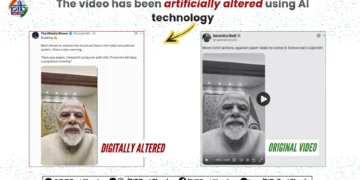
Some videos falsely showed celebrities promoting financial investment schemes, cryptocurrency platforms, miracle health products, or political campaigns. Others appeared to capture actors making comments they never actually made.
Although many of these videos were later identified as AI-generated, millions of people had already viewed or shared them.
Social media algorithms often amplify highly engaging content regardless of whether it is authentic. Once a manipulated video gains momentum, corrections usually reach a much smaller audience than the original post.
This has increased concerns among fact-checkers and media organizations that AI-generated celebrity videos could influence public opinion, damage reputations, or become tools for online fraud.
Deepfakes Are Becoming a Serious Digital Safety Issue
The conversation around AI generated celebrity videos is no longer limited to entertainment. Cybersecurity experts now classify malicious deepfakes as an emerging digital threat.
Fraudsters increasingly use fake celebrity endorsements to convince users to invest money, download applications, or click suspicious links. Some scams impersonate trusted public figures to create a false sense of credibility.
Authorities in several countries have repeatedly warned the public against relying solely on videos circulating through social media. Instead, users are encouraged to verify claims through official statements, reputable news organizations, and verified accounts before believing or forwarding content.
Many platforms have also introduced policies requiring labels for synthetic media or removing manipulated videos that violate community guidelines. However, enforcement remains a challenge because thousands of AI-generated videos are uploaded every day.
How to Identify an AI Generated Celebrity Video
Although AI technology has improved dramatically, there are still signs that may help viewers identify manipulated content.
Users should look for unnatural facial movements, inconsistent lighting, irregular blinking patterns, distorted hands, unusual voice synchronization, or audio that sounds overly artificial.
Another useful step is checking whether established news organizations or the celebrity’s verified social media accounts have acknowledged the video. If a sensational clip appears only on anonymous accounts, extra caution is advisable.
Reverse image searches, official press releases, and trusted fact-checking organizations can also help determine whether a viral video is genuine or AI-generated.
Experts stress that healthy skepticism is becoming an essential digital skill as synthetic media becomes increasingly sophisticated.
Why the Debate Is Growing Stronger in 2026
Artificial intelligence is transforming filmmaking, education, advertising, gaming, and digital content creation. At the same time, its misuse is creating new ethical and legal challenges.
Governments around the world are discussing regulations for AI-generated media, while technology companies continue developing watermarking systems, AI detection tools, and content authentication methods.
For ordinary users, the most effective defense remains digital awareness. Verifying information before sharing it can significantly reduce the spread of misleading content and online scams.
As AI continues evolving, the conversation is shifting from whether synthetic media can fool people to how societies can responsibly manage its growing influence.
Takeaways
- AI-generated celebrity videos are becoming increasingly realistic due to advances in generative AI.
- Fake celebrity endorsements and manipulated videos are contributing to misinformation and online scams.
- Experts recommend verifying viral videos through trusted news sources and official accounts.
- Governments and technology companies are working on tools and policies to improve AI content transparency.
FAQ
Q1. What are AI-generated celebrity videos?
They are videos created or altered using artificial intelligence to make celebrities appear to say or do things that never actually happened.
Q2. Are all AI celebrity videos harmful?
No. Many are created for entertainment, parody, education, or creative projects. Problems arise when they are presented as real or used to mislead people.
Q3. How can I identify a fake AI video?
Look for unnatural facial movements, inconsistent lip-sync, unusual lighting, suspicious accounts posting the content, and verify the video through trusted news outlets or official celebrity accounts.
Q4. Why are AI-generated celebrity videos becoming more common?
Modern AI tools have become faster, more affordable, and easier to use, allowing almost anyone to create highly realistic videos with minimal technical expertise.
(Internal keywords: AI generated celebrity videos, deepfake videos, AI misinformation, fake celebrity videos, AI video tools, synthetic media, celebrity deepfakes, viral AI videos, digital safety, fact check AI content)