



























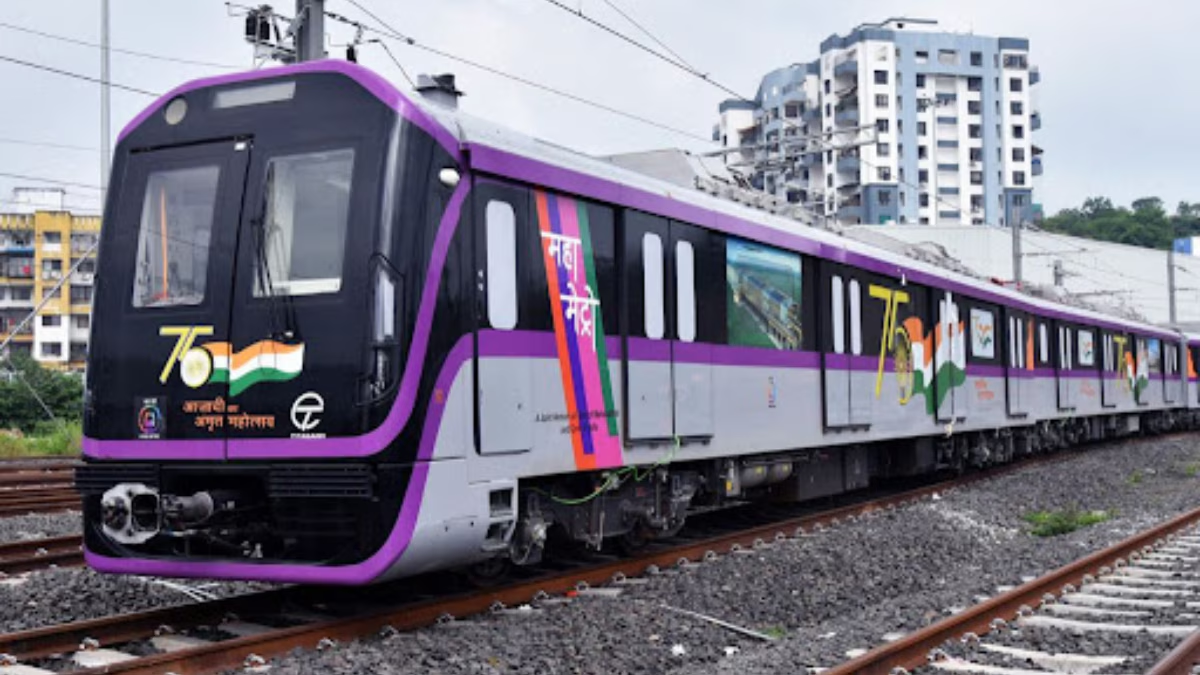
The Pune Metro expansion update indicates that new routes are likely to open soon, improving connectivity across key areas. Authorities are accelerating work on pending corridors, aiming to ease traffic congestion and enhance public transport access in the city.
Pune Metro Expansion Update Signals New Route Openings
The Pune Metro expansion update comes as construction and trial activities progress on additional corridors in Pune. The project, implemented by Maharashtra Metro Rail Corporation Limited, is part of a long term plan to create an integrated urban transit system.
Initial operational routes have already connected major stretches, and upcoming phases are expected to extend coverage to more residential and commercial zones. Officials have indicated that certain sections are nearing completion, with trial runs and safety checks underway.
The expansion is designed to reduce dependence on road transport and provide a faster alternative for daily commuters.
Key New Metro Routes and Coverage Areas
The Pune Metro expansion focuses on extending existing lines and completing partially operational corridors. Key routes include stretches connecting areas such as Pimpri Chinchwad, Shivajinagar, and Swargate, which are among the busiest travel corridors.
These routes are strategically planned to link residential zones with employment hubs, educational institutions, and transport nodes. Improved connectivity is expected to benefit both daily commuters and occasional travelers.
Secondary routes under development aim to connect outer areas, ensuring that metro access is not limited to central parts of Pune. This expansion reflects the city’s rapid growth and increasing demand for efficient transport systems.
Impact on Traffic and Daily Commute
The Pune Metro expansion update is expected to have a direct impact on traffic congestion. Roads in Pune often experience heavy traffic during peak hours, leading to longer travel times and increased fuel consumption.
With new metro routes becoming operational, commuters will have an alternative that is faster and more predictable. This can reduce pressure on major roads and improve overall traffic flow.
For office goers and students, metro connectivity offers time savings and convenience. It also reduces exposure to road congestion and parking challenges.
However, the full impact will depend on last mile connectivity, including feeder buses and shared mobility options.
Integration With Existing Transport Systems
The success of the Pune Metro expansion depends on how well it integrates with other modes of transport. Authorities are working to improve connectivity between metro stations and local bus services.
Efforts are also being made to develop multimodal hubs where commuters can switch between metro, buses, and other transport options seamlessly. This approach is essential for maximizing metro usage.
Parking facilities, pedestrian access, and digital ticketing systems are additional factors that influence adoption. A well integrated system can encourage more residents to shift from private vehicles to public transport.
Challenges in Expansion and Implementation
Despite progress, the Pune Metro expansion faces several challenges. Land acquisition, construction delays, and coordination between multiple agencies can affect timelines.
Urban infrastructure projects often require adjustments to existing road networks, which can temporarily disrupt traffic. Managing these disruptions while maintaining project momentum is a key challenge.
Cost management is another factor. Large scale metro projects involve significant investment, and efficient execution is necessary to ensure long term viability.
Authorities have emphasized phased implementation to address these challenges and ensure that completed sections become operational without waiting for the entire network.
What Commuters Can Expect Next
Commuters in Pune can expect gradual expansion rather than a single large scale launch. As new sections are cleared for operation, services will be introduced in phases.
Trial runs and safety inspections are critical steps before opening any new route. Once operational, these routes are expected to improve connectivity and reduce travel time across key corridors.
In the long term, the metro network is expected to become a central part of Pune’s transport system, supporting the city’s growth and urban mobility needs.
Takeaways
- Pune Metro expansion update indicates new routes will open soon
- Project aims to improve connectivity and reduce traffic congestion
- Integration with buses and last mile transport is crucial for success
- Phased rollout is expected as construction and trials progress
FAQs
Q1. Which new routes are expected to open in Pune Metro?
Routes connecting major areas like Pimpri Chinchwad, Shivajinagar, and Swargate are among those nearing completion.
Q2. How will the expansion affect daily commuters?
It is expected to reduce travel time, improve convenience, and provide an alternative to road transport.
Q3. Who is managing the Pune Metro project?
The project is implemented by Maharashtra Metro Rail Corporation Limited.
Q4. When will the new routes become operational?
Timelines depend on trial runs and safety approvals, with phased openings expected.