































Artificial intelligence is transforming content moderation by enabling social media platforms to identify harmful posts, images, videos, and spam more quickly than traditional methods. While AI has significantly improved online safety, human oversight remains essential for handling complex moderation decisions.
The topic is evergreen with ongoing relevance, so this article follows an educational and explanatory style supported by current industry practices.
Artificial intelligence is playing a central role in making social media safer. How AI is helping social media platforms detect harmful content faster has become an important topic as billions of posts, comments, photos, and videos are uploaded every day. Reviewing such an enormous volume of content manually is impossible, prompting major platforms to rely on AI-powered moderation systems to identify potentially harmful material within seconds.
From detecting hate speech and misinformation to identifying graphic violence, fake accounts, and spam, AI systems are helping moderators respond more quickly while improving the overall user experience. Although these technologies continue to evolve, experts agree that AI works best when combined with human review for difficult or sensitive cases.
AI Content Moderation Is Transforming Online Safety
Social media platforms receive millions of content uploads every hour. AI-powered content moderation systems analyze this information in real time using machine learning, computer vision, and natural language processing.
These technologies enable platforms to detect harmful text, inappropriate images, manipulated videos, phishing attempts, and coordinated spam campaigns before they reach large audiences. Instead of relying solely on user reports, AI can proactively identify suspicious activity based on patterns learned from previously reviewed content.
For example, AI can recognize abusive language in multiple languages, detect violent imagery, identify accounts that repeatedly violate community standards, and flag coordinated networks attempting to spread misleading information. Automated detection significantly reduces response times compared to manual moderation alone.
Detecting Hate Speech, Spam, and Misinformation
One of AI’s biggest strengths is recognizing patterns that indicate harmful behavior. Natural language processing models analyze words, sentence structure, context, and user behavior to identify abusive or offensive content.
Spam detection systems monitor unusual posting frequency, repeated messages, suspicious links, and coordinated account activity. This helps reduce scams, fake promotions, and bot-driven campaigns that often target unsuspecting users.
AI is also increasingly used to detect misinformation. While determining factual accuracy remains complex, AI can identify potentially misleading claims, compare them with trusted information sources, and flag content for human review. During emergencies, elections, or public health events, faster detection can help reduce the spread of false information before it reaches millions of users.
AI Video Analysis and Image Recognition Improve Moderation
Images and videos present unique moderation challenges because harmful material may not contain any written text. Computer vision technology enables AI to analyze visual content frame by frame.
These systems can identify graphic violence, explicit imagery, weapons, dangerous activities, and manipulated visual content. AI can also recognize duplicate videos that have previously violated platform policies, preventing repeated uploads of banned material.
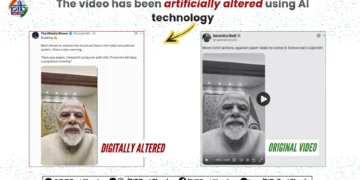
Advances in AI have improved the detection of synthetic media and deepfake content. While identifying sophisticated AI-generated videos remains challenging, platforms continue investing in technologies that analyze facial inconsistencies, editing artifacts, metadata, and digital fingerprints to improve detection accuracy.
Real-time image analysis also helps protect younger users by quickly identifying content that may violate child safety policies.
Why Human Moderators Still Matter
Despite rapid progress, AI cannot fully replace human judgment. Many moderation decisions depend on cultural context, satire, journalism, artistic expression, or public interest, areas where automated systems may struggle.
For example, a news report documenting a conflict may contain graphic images that are important for public awareness but require careful handling. Similarly, AI may incorrectly classify sarcasm, humor, or educational discussions as harmful content.
For this reason, most major social media platforms combine AI with trained human moderators. AI performs the initial screening and prioritizes high-risk content, while human reviewers make final decisions on complex cases or appeals.
This hybrid approach improves efficiency while reducing the likelihood of incorrect removals.
Challenges Facing AI Content Detection
Although AI moderation has improved significantly, several challenges remain. Language evolves quickly, and harmful users often develop new slang, coded language, or visual techniques to avoid automated detection.
False positives also remain a concern. Legitimate content may occasionally be removed by mistake, while some harmful material can escape detection. Continuous model training is necessary to improve accuracy as online behavior changes.
Privacy considerations represent another important issue. Platforms must balance effective moderation with responsible handling of user data while complying with evolving regulations in different countries.
Experts also emphasize transparency. Many users want clearer explanations about why content is removed, restricted, or recommended for review.
The Future of AI in Social Media Moderation
Artificial intelligence will continue becoming more sophisticated as machine learning models improve. Future moderation systems are expected to understand context more accurately, identify coordinated misinformation campaigns earlier, and respond more effectively to emerging threats.
Generative AI is creating both opportunities and challenges. While AI helps detect harmful content, it also enables bad actors to create increasingly realistic fake images, videos, and audio. This ongoing technological competition means moderation systems must continuously evolve.
Ultimately, AI is becoming an essential partner in protecting online communities. Rather than replacing human moderators, it enables them to focus on the most sensitive and complex cases while automated systems manage routine detection at internet scale.
Key Takeaways
- AI enables social media platforms to detect harmful content much faster than manual moderation alone.
- Machine learning, natural language processing, and computer vision help identify spam, hate speech, misinformation, and harmful images.
- Human moderators remain essential for reviewing complex cases that require context and judgment.
- AI moderation will continue evolving as platforms respond to new forms of online abuse and AI-generated content.
Frequently Asked Questions
Q1. How does AI detect harmful content on social media?
AI analyzes text, images, videos, user behavior, and posting patterns using machine learning, natural language processing, and computer vision to identify potential violations of platform policies.
Q2. Can AI completely replace human content moderators?
No. AI is highly effective at detecting patterns and prioritizing content, but human moderators are still needed to evaluate context, satire, news reporting, and appeals.
Q3. Does AI help reduce misinformation online?
Yes. AI can identify suspicious claims, detect coordinated misinformation campaigns, and flag potentially misleading content for further human review, although it does not independently determine truth in every case.
Q4. What are the biggest challenges facing AI moderation?
Current challenges include understanding context, reducing false positives, detecting increasingly sophisticated AI-generated content, adapting to evolving online language, and balancing moderation with privacy and transparency.
(Internal Keyword Suggestions: AI content moderation, AI social media moderation, harmful content detection, AI misinformation detection, machine learning social media, natural language processing, AI image recognition, AI video moderation, online safety, artificial intelligence in social media)