























Old videos are once again being circulated on social media with new claims about recent events in India and abroad. Recent fact checks have identified unrelated footage, AI-generated visuals and older recordings being presented as evidence of incidents that happened only days ago.
Why old videos keep returning with new claims
The circulation of old videos with new claims has become a recurring misinformation pattern on social media. A video recorded years ago can suddenly gain millions of views when users attach it to a current protest, accident, political development, natural disaster or conflict.
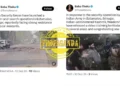
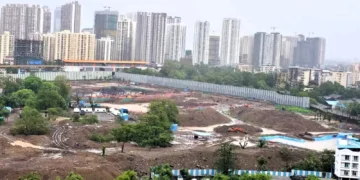
Recent fact checks in India have identified several such examples. In one case, a video from a 2017 building demolition in Delhi was presented as footage of the September 2026 Satya Niketan building collapse. Another video included in the same viral post was found to contain AI-generated elements.
The problem is not always that the footage itself is fake. In many cases, the video is real but the description attached to it is false. That distinction matters because genuine footage can make a false claim appear much more convincing.
Satya Niketan videos show how old footage gets recycled
The recent Satya Niketan case provides a clear example of how misleading visual content can spread.
A building in Delhi’s Satya Niketan area collapsed on September 6, 2026, resulting in seven deaths and injuries, according to reports cited by BOOM. Soon after the incident, social media posts circulated two videos claiming to show the collapse.
BOOM’s investigation found that the videos did not show the recent tragedy. One appeared to have been generated using Google AI tools. The other was traced to 2017 and showed the controlled demolition of an unauthorised four-storey building in Jasola Vihar.
The 2017 footage had previously appeared in reports from ABP News and India TV about the demolition. Its existence years before the 2026 Satya Niketan incident established that it could not be footage of the recent collapse.
This case highlights an important fact-checking principle: determining when and where a video was originally recorded is often more important than simply checking whether the footage looks real.
Old footage can become misleading without being edited
A common misunderstanding about misinformation is that every false video must be digitally manipulated.
That is not the case.
An authentic video can become misleading when it is given a false date, location or context. A clip from a protest in 2025 can be presented as a protest in 2026. Footage from one city can be described as showing an incident in another. A genuine explosion, flood or building demolition can be linked to an entirely different event.
Fact-checkers frequently use reverse image searches, keyframe searches, older news reports, video archives and other digital clues to establish when footage first appeared online.
Factly recently identified an example involving a protest video that was falsely linked to an ongoing protest in Delhi. The footage actually showed a June 2026 incident at Patliputra railway station in Patna, Bihar.
The original footage was therefore real, but the new description attached to it was not.
Social media makes recycled videos travel faster
The speed of social media can make old footage appear new before users have an opportunity to verify it.
When a major incident occurs, people often search for visual evidence immediately. If genuine footage is limited, old videos that appear to match the event can be reposted with a new caption.
The process becomes even faster when influential accounts share the content. Once a video is reposted by several accounts, users may assume that repeated circulation means the claim has been independently verified.
It does not.
A video appearing on multiple social media accounts does not establish its date, location or authenticity. Each repost can simply be copying the same original mistake.
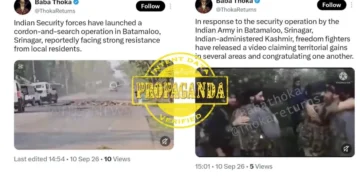
Recent fact-checking reports have repeatedly documented this pattern, particularly during periods of political tension, natural disasters and international conflicts.
Political events create another opportunity for misinformation
Political developments can also trigger the recycling of old videos.
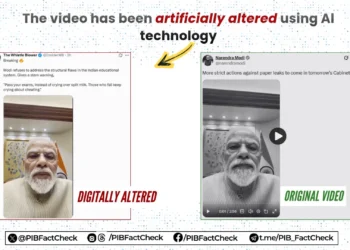
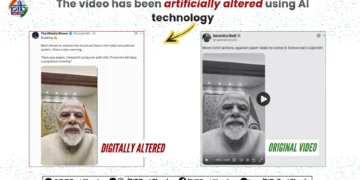
One recent example investigated by Alt News involved a video of Prime Minister Narendra Modi that was shared with a new claim about his position toward the INDIA bloc. The fact-check found that the video was old and that the viral interpretation attached to it was false.
Another recent Alt News fact check examined a video involving Congress leader Mallikarjun Kharge that was presented in a misleading context. The organisation identified the circulating image as a morphed photograph rather than an authentic representation of the event being discussed.
These examples show why political videos require additional context. A short clip may leave out what happened immediately before or after the section being shared. A photograph may also be altered or paired with an unrelated caption.
The correct approach is to verify the original source and context before drawing conclusions.
AI-generated videos are making verification harder
The rise of generative artificial intelligence has added another challenge to the problem.
In the Satya Niketan case, BOOM identified one viral video as containing AI-generated elements. That means fact-checkers now have to examine not only whether a video is old, but also whether the footage itself was generated or altered using artificial intelligence.
AI-generated content can include realistic-looking people, buildings, crowds and disaster scenes. A viewer who relies only on visual appearance may therefore find it difficult to distinguish authentic footage from synthetic material.
However, AI detection tools are not the only method used in professional verification. Fact-checkers can compare frames with earlier material, investigate the video’s earliest known appearance, examine metadata where available and cross-check the alleged event against credible reporting.
A video should not be considered genuine simply because it looks realistic.
Why captions can be more misleading than videos
The caption accompanying a video often determines how audiences interpret it.
Consider a video showing a large crowd running. Without context, the footage could represent a protest, a sporting event, an evacuation, a celebration or an old incident.
If the caption says the crowd is fleeing after a current attack, viewers may interpret every part of the video through that claim.
This is why fact-checking involves more than asking whether the footage is genuine. The claim itself has to be examined.
Factly has documented multiple instances where old videos were paired with new claims about political, social or communal developments. In one recent case, footage showing people participating in a Kali idol immersion ceremony was falsely described as Bangladeshi migrants crossing a border after the 2026 West Bengal election. The video had been available online before the election schedule was announced.
The timeline alone was enough to challenge the viral claim.
How readers can check an old viral video
Users do not need advanced technical skills to perform some basic checks before sharing a suspicious video.
The first step is to look for the original source. Search distinctive phrases from the caption and compare the results with reports from established news organisations.
The second step is to examine the video’s details. Look for visible signs such as shop names, road signs, vehicle number plates, buildings, weather conditions or language that might reveal the location.
The third step is to search for earlier versions of the footage. A video claimed to be from September 2026 but appearing online in 2024 or 2025 clearly requires further investigation.
Users can also check established Indian fact-checking organisations when a claim is already receiving attention. Alt News, BOOM and Factly regularly investigate viral images and videos and publish the evidence behind their conclusions.
What to check before sharing breaking news
Breaking news creates an especially difficult environment for verification because information changes quickly.
A social media post may correctly identify an event but use an unrelated photograph. Another post may use genuine footage but provide the wrong location. A third may combine several unrelated clips into one video.
Readers should therefore separate three questions:
Is the event itself confirmed?
Does the video actually show that event?
Was the footage recorded at the time and place claimed?
Only when all three questions can be answered with reliable evidence should the video be treated as confirmation.
This approach is particularly important during communal incidents, elections, protests, disasters and international conflicts, where misleading visuals can rapidly influence public understanding.
Why verification matters beyond social media
Misleading videos are not harmless simply because they appear in meme accounts or informal social media posts.
False footage can cause unnecessary fear, damage reputations and intensify disputes. When an old incident is presented as a new event involving a particular community or location, the consequences can be more serious.
For news publishers, the responsibility is even greater. Publishing an unverified viral video can give misinformation additional credibility because audiences may assume that a news website has independently checked the material.
The safest editorial practice is to verify the original footage, identify its date and location, compare it with credible reporting and clearly state what remains unconfirmed.
The same principle applies to ordinary social media users. Taking a few minutes to check a viral video can prevent a false claim from reaching thousands of additional people.
Takeaways
- Old videos are frequently recycled with new captions during major news events.
- Recent Indian fact checks have identified old footage being falsely linked to the 2026 Satya Niketan building collapse and other current events.
- Genuine footage can still become misinformation when its date, location or context is falsely changed.
- AI-generated visuals add another layer of difficulty, making source and timeline verification increasingly important.
FAQ
Why are old videos shared as new incidents?
Old videos are often reused because they appear to match a current event. During breaking news situations, users may share visual content before checking its original date, location or context.
How can I check whether a viral video is old?
Search for distinctive frames or phrases from the post, look for earlier versions of the footage and compare the claim with credible news reports. Fact-checking websites such as Alt News, BOOM and Factly can also provide verification when a claim has already been investigated.
Can a real video still be fake news?
Yes. The video itself can be genuine while the accompanying claim is false. For example, authentic footage from an older protest or demolition can be presented as footage from a completely different recent event.
Why are AI-generated videos a growing fact-checking concern?
AI tools can create realistic-looking footage that may be mistaken for genuine recordings. Recent fact checks, including the Satya Niketan case, have identified AI-generated material being circulated as real event footage.
(Internal keyword suggestions: old videos viral with new claims, fact check India, viral video fact check, fake news India, misinformation on social media, old video new claim, AI generated videos India, viral misinformation, how to fact check viral videos, social media fact check)