




























Bengaluru’s traffic congestion has once again become a major talking point as companies continue adjusting their hybrid work policies. While flexible work was expected to ease rush hour, the city’s roads tell a more complex story. With many technology firms adopting three to five office days each week, commuters are experiencing crowded roads, shifting peak travel times, and longer daily journeys. The debate now is whether hybrid offices are reducing congestion or simply changing when it occurs.
The topic is time sensitive because it is linked to current commuting patterns, return-to-office policies, and recent traffic data released during 2026. The article therefore follows a news reporting style while providing broader context.
Bengaluru’s Rush Hour Is Evolving Instead of Disappearing
For much of the pandemic, work-from-home arrangements significantly reduced vehicle movement across Bengaluru. However, as companies gradually brought employees back to offices through hybrid schedules, traffic volumes increased again.
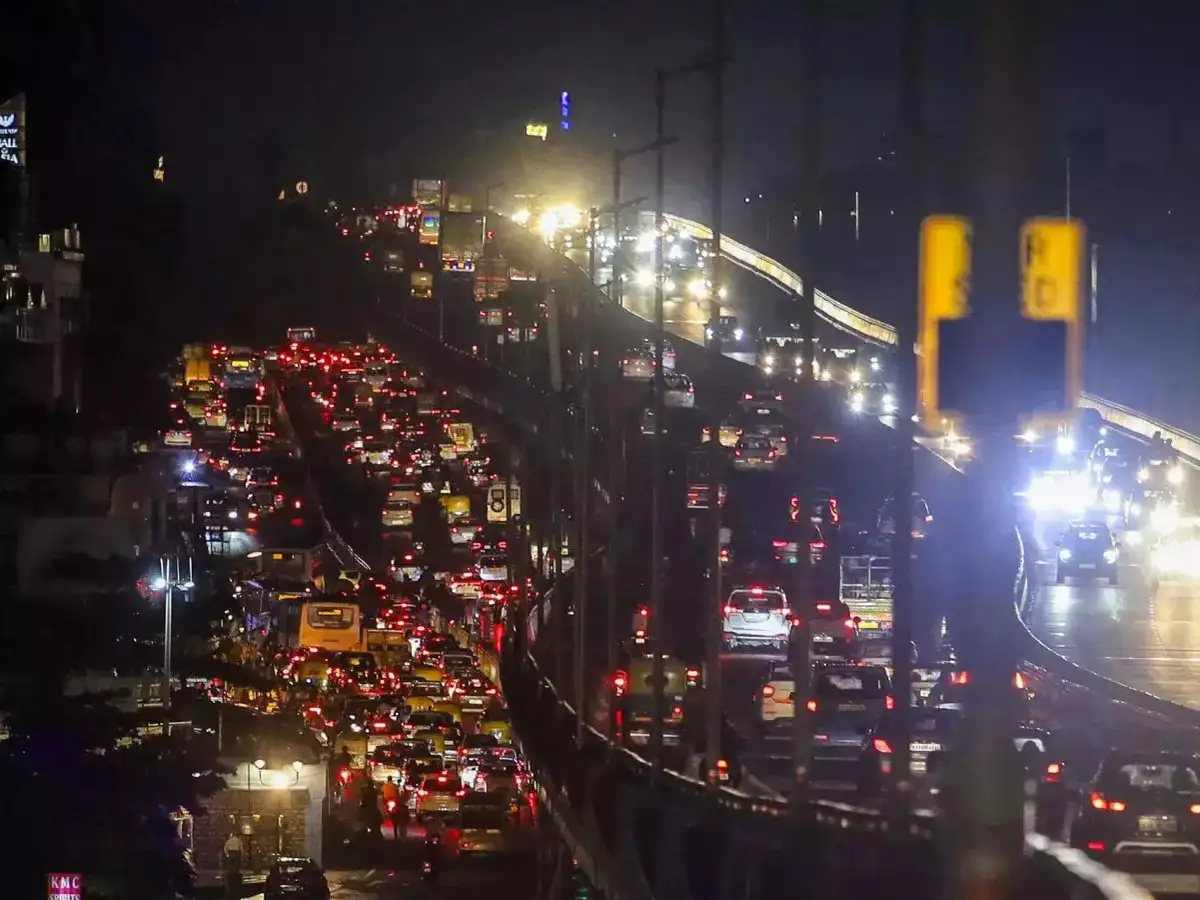
Recent traffic studies show Bengaluru remains among the world’s most congested cities. According to the 2025 TomTom Traffic Index, the average congestion level increased compared to the previous year, and a 10-kilometre drive now takes more than 36 minutes on average. During evening peak hours, average speeds fall to around 14 kmph, making even short journeys time-consuming.
Unlike the traditional Monday to Friday office routine, hybrid work has created uneven traffic patterns. Tuesdays, Wednesdays, and Thursdays often witness heavier congestion because many companies ask employees to attend offices on those days. This means rush hour is no longer concentrated only during conventional working hours.
Return-to-Office Policies Have Increased Road Pressure
Several technology companies have gradually increased mandatory office attendance during the past year. As more employees travel to campuses in Whitefield, Outer Ring Road, Electronic City, and Manyata Tech Park, traffic bottlenecks have intensified.
Industry reports indicate that vehicle entries near major technology parks rose sharply after return-to-office requirements expanded. At the same time, average commute durations have increased, with many professionals spending over two hours each day travelling between home and work. This trend has reignited discussions around whether flexible work arrangements should remain part of long-term workplace strategies.
Several viral social media posts from Bengaluru professionals describing commutes lasting two to three hours have further amplified the debate, reflecting frustrations shared by thousands of office workers.
Hybrid Work Is Changing Peak Travel Patterns
Transportation experts note that hybrid work does not automatically reduce congestion. Instead, it redistributes traffic across different hours and different weekdays.
Some employees leave home earlier to avoid peak congestion, while others begin office hours later and travel after the busiest period. Metro ridership data also suggests commuter peaks do not always perfectly match road congestion, indicating changing travel behaviour across the city.
Flexible office timings adopted by some employers have helped spread commuter movement throughout the morning rather than concentrating everyone within a narrow one-hour window. Even so, areas surrounding major IT corridors continue to experience severe delays because thousands of employees still travel simultaneously on common office days.
Infrastructure Still Plays the Biggest Role
Although hybrid work influences traffic patterns, experts argue that office attendance alone is not responsible for Bengaluru’s congestion.
Rapid urban expansion, increasing private vehicle ownership, ongoing infrastructure projects, limited road capacity, and last-mile connectivity challenges all contribute to slower travel speeds.
Industry associations representing companies along the Outer Ring Road have stated that behavioural changes such as increased carpooling or staggered office timings will have only limited impact unless public transport capacity and connectivity improve significantly.
Expansion of Namma Metro, new flyovers, better bus integration, and improved pedestrian access remain critical to reducing long-term congestion. Recent infrastructure upgrades in some parts of the city have demonstrated that targeted improvements can substantially reduce travel times, although several corridors continue to face heavy traffic.
Could Hybrid Offices Become a Permanent Traffic Solution?
Hybrid work alone is unlikely to solve Bengaluru’s traffic challenges. However, many urban mobility experts believe it can become one important part of a broader strategy.
Flexible office schedules, staggered reporting times, stronger public transport, expanded metro connectivity, and increased adoption of carpooling together could reduce pressure during peak periods.
For employers, hybrid work also offers benefits such as improved employee satisfaction and reduced commuting stress. For employees, fewer weekly office visits can save significant commuting time without completely eliminating in-person collaboration.
As Bengaluru continues to grow as India’s technology capital, balancing economic growth with efficient mobility will remain one of the city’s biggest policy and infrastructure challenges.
Key Takeaways
- Hybrid work has changed Bengaluru’s rush hour instead of eliminating it.
- Return-to-office policies have increased congestion around major IT corridors.
- Traffic patterns now vary more across weekdays because companies follow different office schedules.
- Long-term congestion relief will require better public transport, metro expansion, and smarter urban planning alongside flexible work policies.
Frequently Asked Questions
Q1. Has hybrid work reduced Bengaluru traffic?
Hybrid work has reduced commuting for some employees but has not eliminated congestion. Instead, traffic is spread across different days and time slots.
Q2. Why is Bengaluru still heavily congested?
Major reasons include increasing private vehicle ownership, concentrated IT corridors, infrastructure bottlenecks, ongoing construction, and growing population.
Q3. Which areas experience the highest office traffic?
Outer Ring Road, Whitefield, Electronic City, Hebbal, and Manyata Tech Park remain among the busiest office corridors during weekdays.
Q4. Can hybrid offices improve commuting in the future?
Hybrid work can contribute to better traffic management when combined with staggered office timings, improved public transport, metro expansion, and stronger last-mile connectivity.
(Primary Keyword: Bengaluru traffic, Secondary Keywords: hybrid offices Bengaluru, Bengaluru rush hour, return to office India, Bengaluru tech workforce, Outer Ring Road traffic, Namma Metro, Bengaluru commute, work from office, hybrid work policy)