































Andhra Pradesh declaring five model EV cities marks a policy push toward cleaner mobility and local economic growth. The move focuses on infrastructure, manufacturing, and job creation, with expected impact on transport systems in both urban and emerging Tier 2 regions.
Policy Overview of Andhra Pradesh Model EV Cities
Andhra Pradesh declares 5 model EV cities as part of its broader electric mobility strategy, positioning the state as a key player in India’s EV transition. This development is time sensitive and fits a news reporting tone because it reflects an ongoing policy rollout tied to infrastructure planning and investment decisions.
The initiative aims to create designated urban zones where electric vehicle adoption is prioritised through charging infrastructure, incentives, and policy support. These cities are expected to act as pilot ecosystems where EV usage becomes mainstream across public and private transport.
The plan aligns with India’s national push toward reducing fossil fuel dependence and lowering urban emissions. By focusing on specific cities, the state can implement targeted interventions instead of spreading resources thinly across regions.
EV Infrastructure Development and Charging Network Expansion
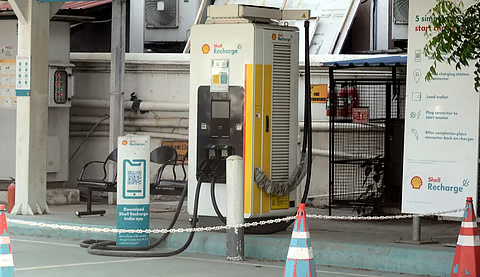
A major component of the Andhra Pradesh EV cities plan is the expansion of charging infrastructure. Reliable charging networks are essential for increasing EV adoption, especially in cities where range anxiety remains a barrier.
Under this initiative, authorities are expected to set up public charging stations across residential areas, commercial hubs, and highways. This includes fast charging points to support both two wheelers and four wheelers.
The development of EV infrastructure in Andhra Pradesh also opens opportunities for private players. Companies involved in charging technology, battery management, and grid integration may see increased demand.
The focus on infrastructure ensures that EV adoption is not limited to early adopters but becomes accessible to everyday users, including those in Tier 2 cities.
Impact on Local Jobs and Employment Opportunities
The Andhra Pradesh EV policy is likely to create a range of local job opportunities across multiple sectors. These include manufacturing, maintenance, charging station operations, and supply chain management.
As EV ecosystems grow, demand for skilled technicians and engineers is expected to rise. Training programs may be introduced to prepare the workforce for roles related to battery systems, electric drivetrains, and software integration.
Small businesses can also benefit. Local vendors may participate in installation, servicing, and support services around EV infrastructure. This can contribute to economic growth in cities that are part of the model EV program.
The job impact is particularly significant for younger populations in emerging urban areas, where new industries can provide alternative employment pathways.
Changes in Urban Transport and Public Mobility Systems
The shift toward model EV cities will influence how transport systems operate in Andhra Pradesh. Public transport fleets, including buses and shared mobility services, may gradually transition to electric alternatives.
This change can reduce air pollution levels in urban areas, improving overall quality of life. Electric buses and vehicles also offer lower operating costs over time, which can benefit transport authorities.
For daily commuters, the transition may lead to quieter, cleaner travel experiences. However, the success of this shift depends on efficient implementation and user adoption.
The integration of EVs into public mobility systems also requires coordination between government agencies, transport operators, and infrastructure providers.
Role of Government Incentives and Industry Participation
Government incentives play a crucial role in making EV adoption viable. Subsidies on vehicle purchases, tax benefits, and reduced registration fees can encourage consumers to switch from traditional vehicles.
The Andhra Pradesh EV cities initiative is expected to include such incentives, along with support for manufacturers setting up local production units. This can attract investment and strengthen the state’s industrial base.
Industry participation is equally important. Automakers, battery companies, and technology providers need to collaborate with the government to build a sustainable ecosystem.
The involvement of both public and private sectors ensures that the initiative is not limited to policy announcements but translates into real world implementation.
Challenges and Implementation Risks
Despite its potential, the model EV cities plan faces several challenges. Infrastructure rollout requires significant investment and coordination. Delays in charging station deployment can slow adoption rates.
Consumer awareness is another factor. Many users are still unfamiliar with EV benefits and limitations. Without proper education, adoption may remain limited.
There are also technical challenges related to power supply and grid capacity. Increased electricity demand from EV charging needs to be managed efficiently to avoid strain on existing systems.
Addressing these challenges will be critical to the long term success of the initiative.
What This Means for India’s EV Transition
The Andhra Pradesh initiative reflects a broader trend in India’s EV landscape, where states are taking proactive steps to accelerate adoption. By focusing on specific cities, the state can create scalable models that other regions may replicate.
If successful, these model EV cities could demonstrate how policy, infrastructure, and industry collaboration can drive large scale change. This could influence national strategies and encourage other states to adopt similar approaches.
For consumers, the shift signals increasing accessibility to electric mobility. For businesses, it opens new markets and investment opportunities.
The outcome of this initiative will likely shape how India approaches sustainable transport in the coming years.
Key Takeaways
- Andhra Pradesh has announced five model EV cities to boost electric mobility
- Infrastructure development is central to increasing EV adoption
- The initiative is expected to create jobs across multiple sectors
- Successful implementation depends on awareness, investment, and coordination
Frequently Asked Questions
What are model EV cities in Andhra Pradesh?
They are designated urban areas where electric vehicle adoption is prioritised through infrastructure and policy support.
How will this initiative impact jobs?
It can create employment in manufacturing, maintenance, and EV infrastructure services.
Will public transport shift to electric vehicles?
Yes, the plan includes gradual electrification of public transport systems.
What challenges could affect the plan?
Infrastructure delays, low awareness, and power supply issues may impact implementation.