





























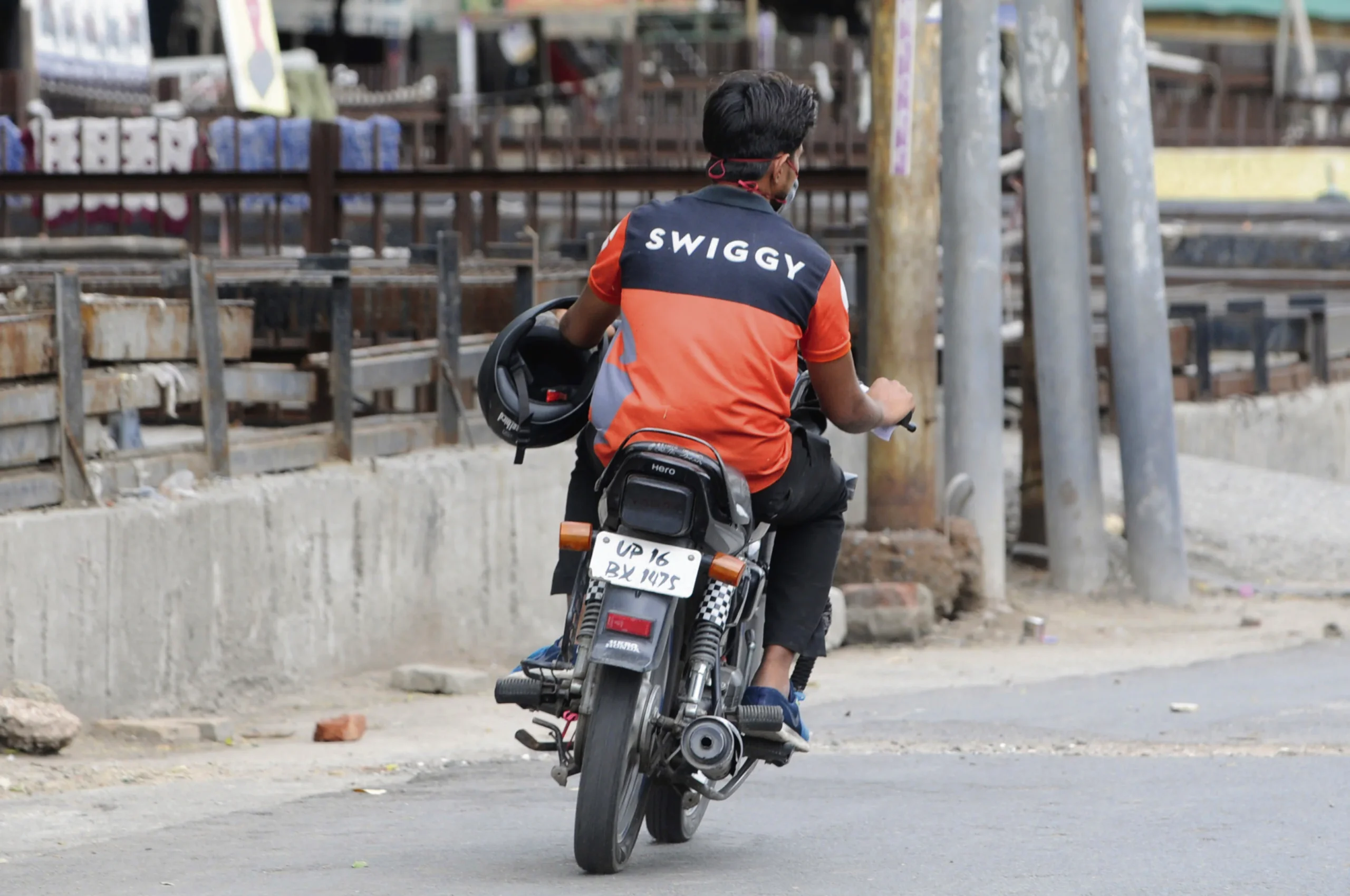
A Swiggy delivery note shared by a customer has gone viral for its emotional message, drawing attention to the everyday struggles of gig workers. The incident has triggered a wider conversation around working conditions, earnings, and empathy in India’s delivery economy.
The viral Swiggy delivery note has become a talking point across social media, with users reacting strongly to a simple handwritten message left by a delivery partner. The note, reportedly expressing fatigue and requesting patience, has sparked a broader debate about gig worker life in India’s fast-growing food delivery ecosystem.
Viral Swiggy Delivery Note Raises Questions on Gig Economy Conditions
The incident came to light when a customer posted a photo of the delivery note online. The message highlighted long working hours, pressure to complete multiple orders, and a request for understanding during delays. Within hours, the post gained traction across platforms like Instagram and X.
While such instances are not officially documented as widespread data points, they reflect known realities of gig work. Delivery partners often operate under tight timelines, especially during peak hours and adverse weather conditions. The viral nature of this note has made these challenges more visible to the general public.
The conversation is not limited to Swiggy alone. Similar concerns have been raised in the past regarding other platforms like Zomato and quick commerce services.
Gig Worker Life in India’s Delivery Economy
India’s gig economy has expanded rapidly over the past decade, driven by platforms such as Swiggy and Zomato. Millions of workers rely on these platforms for flexible income opportunities.
However, flexibility often comes with trade-offs. Delivery partners are typically paid per order, with incentives linked to performance metrics like delivery time and customer ratings. This creates pressure to complete more orders in less time.
Earnings can vary significantly based on city, demand, and time of day. While some workers benefit from surge pricing during peak hours, others struggle with inconsistent income during slower periods. Expenses such as fuel, vehicle maintenance, and mobile data are usually borne by the workers themselves.
Social Media Reactions and Public Sentiment
The viral Swiggy delivery note has triggered mixed reactions. A large section of users expressed empathy, urging others to treat delivery partners with respect and patience. Many shared similar experiences, either as customers or as workers.
At the same time, some users pointed out that delays and service issues can frustrate customers who are paying for convenience. This has led to a balanced discussion about expectations on both sides.
The emotional tone of the note has played a key role in its virality. Unlike formal reports or statistics, personal messages tend to resonate more strongly with audiences, making abstract issues feel immediate and relatable.
Platform Policies and Worker Support Measures
Companies like Swiggy have introduced various initiatives over time to support delivery partners. These include insurance coverage, safety measures, and incentive programs. However, the effectiveness of these measures often depends on implementation and awareness.
There is ongoing debate about whether gig workers should be classified as employees or independent contractors. This classification affects access to benefits such as minimum wages, social security, and health coverage.
The Indian government has also acknowledged the importance of gig workers in the digital economy. Policy discussions around social security frameworks for gig and platform workers are ongoing, though large-scale implementation is still evolving.
Larger Debate Around Gig Economy Sustainability
The viral incident has reignited a larger question about the sustainability of the gig economy model. While it offers convenience to consumers and flexible work opportunities, it also raises concerns about long-term financial stability for workers.
Experts suggest that improving transparency in earnings, reducing excessive performance pressure, and offering better support systems could help balance the model. At the same time, consumer behavior plays a role. Simple actions like tipping fairly and being patient during delays can make a difference.
The Swiggy delivery note serves as a reminder that behind every app-based service is a human workforce navigating real challenges. As the gig economy continues to grow, these conversations are likely to become more frequent.
Takeaways
- The viral note has highlighted real challenges faced by gig workers
- Delivery partners often work under time pressure with variable earnings
- Public sentiment is shifting towards greater empathy and awareness
- Policy and platform-level changes are still evolving in India
FAQs
What did the viral Swiggy delivery note say?
The note reportedly expressed fatigue and requested patience, reflecting the pressures of delivery work.
Are gig workers in India considered employees?
Most are classified as independent contractors, which limits access to traditional employee benefits.
Do platforms provide any support to delivery partners?
Yes, companies offer insurance and incentives, but coverage and effectiveness can vary.
Why is this issue gaining attention now?
Viral content and growing dependence on delivery services are bringing more visibility to worker conditions.