





























Made-in-India robotics innovations are becoming a key force behind the country’s manufacturing growth in 2026. From AI-powered industrial robots to autonomous warehouse systems, Indian companies are developing advanced automation technologies that improve productivity, reduce operational costs and strengthen global competitiveness across multiple industries.
India’s manufacturing sector is undergoing a significant transformation as robotics moves beyond large automobile factories into electronics, pharmaceuticals, logistics, food processing and small-scale manufacturing. Supported by initiatives such as Make in India, Digital India and the Production Linked Incentive (PLI) schemes, domestic robotics startups and engineering companies are designing automation solutions tailored to Indian industries. These innovations are helping manufacturers increase efficiency while addressing labour shortages, quality control challenges and rising global competition.
India’s Robotics Industry Is Moving Beyond Traditional Automation
Industrial robots have been used in automobile manufacturing for years, but the latest generation of Indian robotics companies is focusing on smarter and more flexible automation.
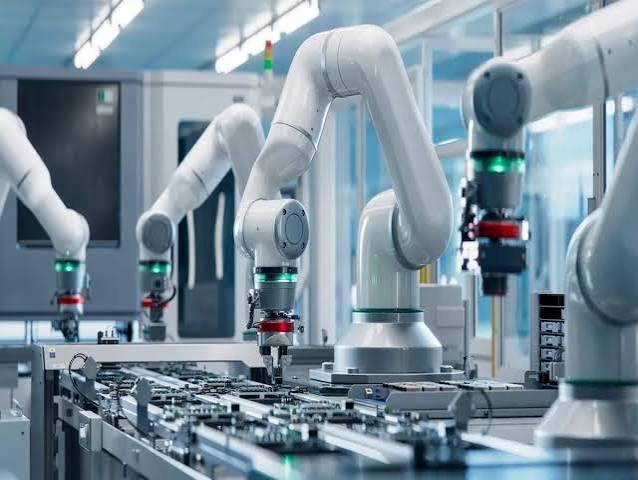
Unlike conventional robotic arms designed for repetitive assembly-line work, today’s systems combine artificial intelligence, machine vision, sensors and cloud-based software to perform more complex tasks. These robots can inspect products, sort materials, identify defects and adapt to changing production requirements with minimal human intervention.
Indian engineering firms are increasingly designing robotic solutions that are cost-effective and suitable for small and medium-sized enterprises. This is an important shift because MSMEs contribute significantly to India’s manufacturing output but often cannot afford expensive imported automation systems.
Affordable domestic robotics solutions are making automation accessible to a much larger segment of Indian industry.
AI and Machine Vision Improve Factory Efficiency
Artificial Intelligence has become one of the biggest drivers of robotics innovation in manufacturing.
Modern robots equipped with AI algorithms can analyse production data in real time, detect abnormalities and optimise workflows without constant manual supervision. Machine vision technology allows robots to inspect products with high precision, reducing manufacturing defects and improving quality assurance.
For example, electronics manufacturers use AI-powered robotic systems to identify tiny component defects that may be difficult for the human eye to detect consistently. Pharmaceutical companies are also deploying robotic inspection systems to ensure packaging accuracy and regulatory compliance.
These technologies not only improve product quality but also reduce material waste, resulting in better operational efficiency.
Collaborative Robots Are Changing Factory Workplaces
One of the fastest-growing segments in industrial automation is the use of collaborative robots, commonly known as cobots.
Unlike traditional industrial robots that operate inside safety cages, cobots are designed to work alongside human employees. They assist workers with repetitive, physically demanding or precision-based tasks while allowing humans to focus on supervision, problem-solving and quality management.
Indian manufacturers are increasingly adopting cobots in automotive assembly, electronics manufacturing, packaging and consumer goods production.
Because collaborative robots require less factory space and simpler installation, they are becoming attractive for medium-sized manufacturing units looking to modernise operations without completely redesigning production lines.
Rather than replacing workers, these robots are improving workplace productivity and reducing the risk of repetitive strain injuries.
Warehouse Robotics Supports India’s Growing Supply Chains
Manufacturing today extends beyond factory floors. Warehousing, inventory management and logistics have become equally important parts of production.
Indian robotics companies are developing autonomous mobile robots that transport raw materials, finished products and inventory inside warehouses with minimal human assistance.
These robots use sensors, cameras and navigation software to move safely through facilities while avoiding obstacles and selecting efficient routes. As e-commerce, retail and export industries continue expanding, automated warehouses help businesses process orders faster and reduce operational delays.
Warehouse robotics also improves inventory accuracy by integrating with digital management systems that monitor stock levels in real time.
This combination of robotics and software is creating smarter supply chains capable of supporting India’s growing manufacturing sector.
Robotics Adoption Expands Across Multiple Industries
Although the automotive industry remains the largest user of industrial robots, adoption is spreading rapidly across other sectors.
Electronics manufacturers use robotic assembly systems to improve precision. Food processing companies deploy automated packaging equipment to maintain hygiene standards. Textile manufacturers are introducing robotic material handling solutions to increase production efficiency.
The pharmaceutical industry continues investing in robotics for packaging, inspection and laboratory automation, while renewable energy manufacturers use robotic systems to assemble components for solar panels and batteries.
This wider adoption demonstrates that robotics is no longer limited to a few high-tech industries. It is becoming an essential productivity tool across India’s broader manufacturing economy.
Challenges Remain but Future Growth Looks Strong
Despite rapid progress, several challenges continue to influence robotics adoption in India.
High initial investment costs remain a concern for smaller businesses. Many manufacturers also require skilled engineers capable of operating, programming and maintaining robotic systems. Workforce training will therefore play a critical role in supporting future automation.
Infrastructure, cybersecurity and integration with existing factory equipment also require continued investment.
However, government incentives supporting domestic manufacturing, improvements in engineering education and increasing availability of affordable Indian robotics solutions are expected to accelerate adoption over the coming years.
As global companies diversify supply chains and expand manufacturing operations in India, locally developed robotics technologies will likely become an increasingly important competitive advantage.
Made-in-India robotics innovations are no longer simply replacing manual processes. They are helping manufacturers build smarter factories that combine automation, artificial intelligence and skilled human expertise to produce higher-quality products more efficiently.
Takeaways
- Indian robotics companies are developing affordable automation solutions for manufacturers.
- AI and machine vision are improving production quality, efficiency and defect detection.
- Collaborative robots are helping workers rather than replacing them.
- Warehouse automation and robotics are strengthening India’s manufacturing supply chains.
Frequently Asked Questions
Q1. What are Made-in-India robotics innovations?
They are robotic systems, automation technologies and AI-powered manufacturing solutions designed and developed by Indian companies for industrial applications.
Q2. Which industries are adopting robotics in India?
Automobiles, electronics, pharmaceuticals, food processing, logistics, textiles, renewable energy and consumer goods manufacturing are among the major sectors using robotics.
Q3. What is a collaborative robot?
A collaborative robot, or cobot, is designed to work safely alongside human workers by assisting with repetitive, physically demanding or precision-based tasks.
Q4. Why is robotics becoming important for Indian manufacturing?
Robotics improves productivity, reduces defects, enhances workplace safety, lowers operational costs and helps Indian manufacturers compete more effectively in global markets.
(Internal keyword suggestions: Made-in-India robotics, robotics innovation India, AI manufacturing India, industrial automation 2026, collaborative robots, smart factories India, warehouse robotics, manufacturing technology India, Industry 4.0 India, Indian robotics startups)