


























Local innovations are addressing rural transportation challenges across India, improving connectivity, accessibility, and economic opportunities. From electric mobility solutions to community transport initiatives, these innovations are transforming how people in remote areas commute and access essential services.
Why Rural Transportation Needs Innovation
Rural transportation in India faces persistent challenges, making this topic time sensitive as policymakers and startups explore scalable solutions. Poor road infrastructure, limited public transport, and dispersed populations create barriers for mobility in villages and small towns.
These constraints affect access to healthcare, education, and markets. For example, farmers often struggle to transport produce to nearby towns, and students rely on infrequent buses to reach schools. Local solutions that adapt to these unique challenges are critical for inclusive development.
Innovations that focus on cost efficiency, flexibility, and sustainability are particularly valuable in regions where government transport networks are sparse or unreliable.
Electric Mobility Solutions for Rural Areas
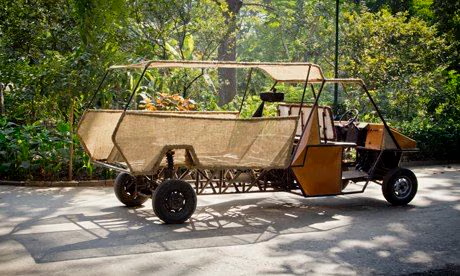
Electric vehicles are emerging as a practical solution for rural transport challenges. Startups are developing small electric vans, e-rickshaws, and battery-powered tractors suitable for short-distance travel and uneven terrain.
Companies like Yulu, eRickshaw makers, and regional EV startups are piloting programs in villages and semi-urban clusters. These vehicles reduce fuel costs, require lower maintenance, and minimise environmental impact compared to conventional diesel alternatives.
Solar-powered charging stations are also being introduced in some areas to support electric fleets, ensuring reliability in regions with inconsistent electricity supply. Such initiatives demonstrate that EV adoption is feasible beyond metro markets.
Community-Based Transport Initiatives
Community transport initiatives are another innovation addressing mobility gaps. Shared vans, pooled taxis, and cooperative transport services allow rural residents to access nearby towns without needing private vehicles.
These models rely on local management and often integrate digital booking platforms via smartphones. Villagers can schedule rides, track vehicle availability, and split costs efficiently, improving affordability and accessibility.
In regions like Mysuru districts and Muzaffarpur, community-led initiatives have increased travel frequency to marketplaces and hospitals, supporting economic and social inclusion.
Innovative Road and Infrastructure Solutions
Small scale infrastructure innovations also support rural mobility. Modular bridges, low-cost road surfacing techniques, and all-weather rural tracks are being implemented in hilly and flood-prone regions.
Local construction methods using recycled materials or community labour reduce costs while creating jobs. These solutions enable reliable transport even during monsoon seasons, ensuring continuity of essential services.
Some projects combine improved roads with local EV deployment, creating integrated solutions that address both vehicle efficiency and accessibility.
Role of Startups and Government Collaboration
Collaboration between startups, NGOs, and government agencies is central to scaling rural transport solutions. Pilot programs funded by government grants allow experimentation with electric mobility, community vehicles, and smart routing apps.
Data from these pilots informs policy, helping authorities prioritise areas for infrastructure investment and subsidies. Partnerships with local cooperatives also ensure maintenance, accountability, and adoption.
These collaborations demonstrate that rural mobility solutions can be both commercially viable and socially impactful.
Economic and Social Impacts
Enhanced rural mobility has a direct impact on livelihoods. Farmers can transport produce more efficiently, local businesses can reach customers in neighbouring towns, and employment opportunities expand as people gain access to larger job markets.
Improved access to education and healthcare is another major benefit. Students can attend schools further away, and villagers can reach clinics and hospitals without long delays. Overall, mobility innovations contribute to reducing regional inequalities.
Challenges in Scaling Rural Transport Solutions
Despite the potential, challenges remain. Limited financing, low digital literacy, and inconsistent infrastructure can hinder adoption. Maintenance of vehicles and charging stations in remote areas requires sustainable business models.
Awareness campaigns, local training, and government incentives are essential to address these issues. Technology solutions must also be adapted to low connectivity and irregular electricity availability to ensure reliability.
Future Outlook for Rural Mobility
Rural transportation in India is poised for transformation through local innovations. The combination of electric mobility, community transport, and cost-effective infrastructure creates scalable, sustainable solutions.
As more startups, NGOs, and government bodies collaborate, rural residents can expect better access to education, healthcare, and economic opportunities. These initiatives also provide a blueprint for addressing mobility challenges in emerging markets worldwide.
Key Takeaways
- Local innovations focus on electric mobility, community transport, and low-cost infrastructure
- Improved rural mobility enhances access to healthcare, education, and markets
- Startups and government collaborations are critical for scaling solutions
- Challenges include financing, maintenance, and low digital connectivity
Frequently Asked Questions
What types of innovations are addressing rural transport challenges?
Electric vehicles, community-based transport, and modular road infrastructure are key innovations.
Which regions are benefiting from these solutions?
Villages and semi-urban clusters across Karnataka, Bihar, and other rural districts are early beneficiaries.
How do startups contribute to rural mobility?
Startups provide EVs, digital booking systems, and maintenance solutions for sustainable rural transport.
What challenges remain for scaling rural transportation solutions?
Financing, infrastructure gaps, maintenance, and limited digital literacy are major challenges.