


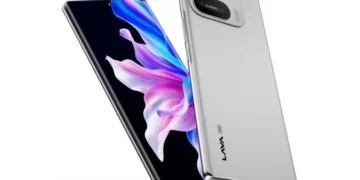





















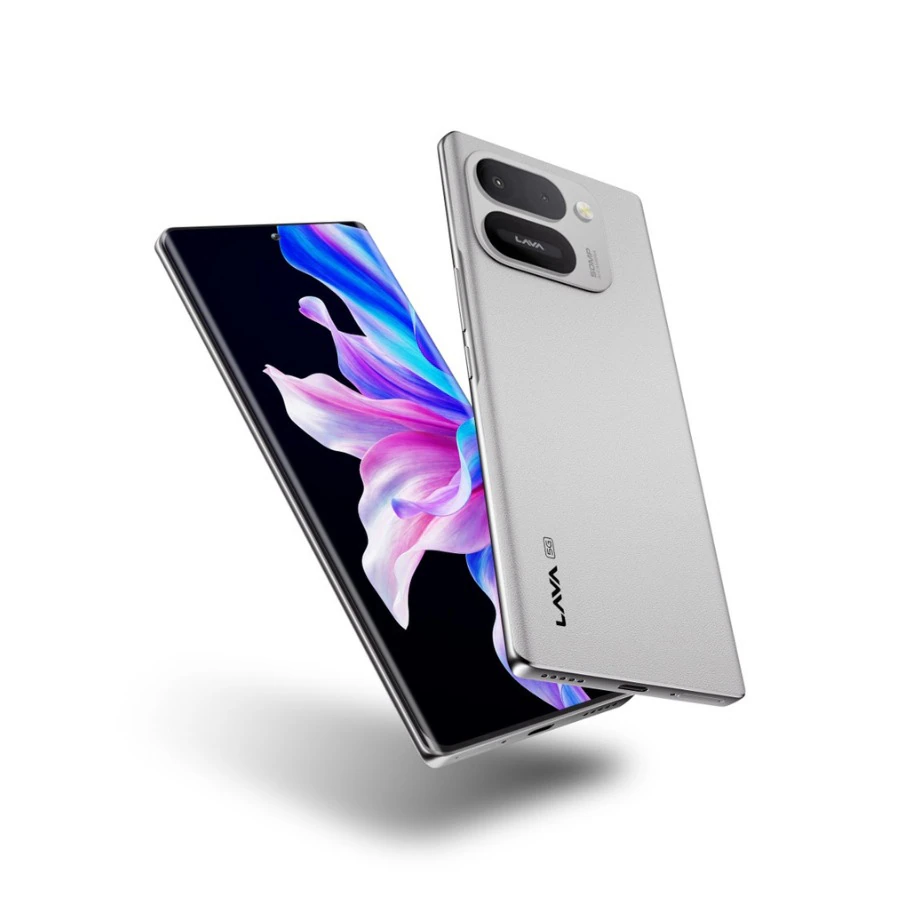
The Lava Virat Curve 5G brings a 3D curved AMOLED screen, a 6,000mAh battery and an unusual rear mini display to India’s mid-range smartphone market. With sales beginning today, September 28, the bigger question is whether the second screen adds genuine convenience or is mainly a design feature.
Lava Virat Curve 5G: What You Get for the Price
The Lava Virat Curve 5G is a newly launched smartphone aimed at buyers looking for distinctive hardware without moving into premium flagship pricing. It was announced in India on September 21 and goes on sale through Flipkart from September 28 at 7 PM. The phone has a listed price of ₹23,999, while the launch offer brings the effective price to ₹19,999.
The phone comes in a single 6GB RAM and 128GB storage configuration. Its headline specifications include a 6.67-inch FHD+ curved AMOLED display with a 120Hz refresh rate, MediaTek Dimensity 7100 processor, 50MP Sony IMX752 rear camera and 6,000mAh battery.
However, the feature getting the most attention is not the processor or battery. It is the small monochrome display placed on the rear, below the camera module.
That makes the Virat Curve different from most phones in its price segment.
Rear Mini Display: What Does It Actually Do?
The rear mini display is designed as a quick-information panel rather than a second full smartphone screen.
According to Lava’s specifications and early hands-on reviews, the screen can display the time, battery percentage, charging status, volume information, notifications, emojis and custom messages. Users can therefore glance at selected information without unlocking the main display.
This is where the feature starts making practical sense.
Suppose the phone is lying face down on a desk. Instead of picking it up and activating the large display to check basic information, the rear screen can provide a quick visual indication.
The notification implementation is more limited. Beebom’s hands-on review found that the rear screen can indicate which app has generated a notification, but it does not display the complete notification message.
So, the rear display is useful for checking information at a glance, but it should not be considered a replacement for the main screen.
Is the Rear Display Useful for Selfies?
One of the more interesting potential uses is photography.
The Lava Virat Curve has a 50MP Sony IMX752 primary camera with electronic image stabilisation and 2K video recording support.
Because the better camera is positioned on the back, a small rear display can potentially help users frame selfies while using the main camera.
This is particularly relevant for people who create Instagram Reels, short videos or social media content and want to use the rear camera instead of the front camera.
The benefit is straightforward. The rear camera generally has a stronger specification than the front-facing 13MP camera, and the small display gives the user some visual reference while positioning the phone.
It is still a niche use case rather than something everyone will need every day. But among the different functions offered by the rear screen, photography is arguably one of the more interesting ones.
Curved AMOLED Display Is the Bigger Everyday Feature
While the rear display gets most of the attention, the main screen is likely to have a much greater impact on everyday usage.
The Virat Curve uses a 6.67-inch 10-bit AMOLED panel with Full HD+ resolution and a 120Hz refresh rate. Lava also lists 1,100 nits of peak brightness and 1,920Hz PWM dimming for the display.
A 120Hz refresh rate can make scrolling through social media, websites and supported applications appear smoother than a conventional 60Hz panel.
The AMOLED technology should also provide deeper blacks and stronger contrast than LCD screens.
For users who spend several hours watching YouTube videos, browsing Instagram or consuming OTT content, this main display is likely to matter considerably more than the rear mini screen.
The curved design also gives the phone a more premium appearance, although curved screens remain a matter of personal preference.
Dimensity 7100 Performance and Android 16
The Lava Virat Curve 5G is powered by MediaTek’s Dimensity 7100 chipset, paired with 6GB of LPDDR5 RAM and 128GB storage. Lava also provides up to 6GB of virtual RAM.
The Dimensity 7100 is positioned as a mid-range processor, so the phone is not designed to compete with premium flagship devices in sustained gaming or demanding workloads.
For everyday activities such as WhatsApp, Instagram, YouTube, web browsing, video calls and regular multitasking, the hardware is targeted at a different requirement: consistent mid-range performance.
The phone runs Android 16. Lava has stated that it will receive two years of OS upgrades and three years of security updates.
That software support period is important for buyers planning to keep the phone for several years.
6,000mAh Battery, but Charging Has a Catch
Battery capacity is another major part of the Virat Curve’s specification sheet.
The phone packs a 6,000mAh battery and supports 45W fast charging. However, the charger supplied in the box is rated at 33W.
That distinction is worth noting before buying.
The large battery should be particularly useful for users who spend long hours away from a charger, including students, commuters and people who use their phones heavily for video, social media and navigation.
Lava claims up to 55 hours of talk time, 11 hours of continuous YouTube playback and up to 720 hours of standby time. These are company claims and should not be treated as guaranteed real-world battery results.
Camera and Build: More Than Just the Rear Screen
The primary camera uses a 50MP Sony IMX752 sensor with EIS and supports 2K video recording. Camera modes include Night Mode, Pro Video, Dual-View Video, Motion Photo and Sports Mode. The front camera is 13MP.
For durability, the phone has an IP64 rating and MIL-STD-810H certification. The body is made from polycarbonate, according to current specifications.
The combination of IP64 protection and the military-standard certification gives the phone some additional protection for everyday use, although these ratings should not be interpreted as making the device indestructible.
The phone is available in Heritage Indigo, Makrana Ivory and Ellora Slate.
So, Is the Rear Display Actually Useful?
The answer depends on what you expect from it.
The rear display is not just decorative. It can show time, battery status, charging information, volume, notifications, custom messages and emojis. Early hands-on testing also suggests that notification indicators can be useful for checking which app has sent an alert without immediately unlocking the phone.
At the same time, its functionality is limited compared with a conventional smartphone display. It does not provide full notification messages, and most users will not need a separate screen to check the time or battery level.
Its strongest practical use may therefore be a combination of quick information and rear-camera framing for selfies or content creation.
For some buyers, that will be genuinely useful. For others, it will remain an interesting feature that gets attention during the first few weeks and then sees less use.
That makes the rear screen a differentiating feature, but not necessarily the main reason to evaluate the phone.
Lava Virat Curve 5G: Who Should Consider It?
The phone is aimed at users who want a distinctive design along with a large battery and AMOLED display.
The 6,000mAh battery makes sense for heavy daily users. The 120Hz curved AMOLED panel is relevant for people who consume a lot of video and social media content. The rear display has particular appeal for users who like customisation or regularly create content using the primary camera.
On the other hand, buyers who prioritise maximum gaming performance, fast charging from the included adapter or long-term software support may need to compare the Virat Curve carefully with other phones around the ₹20,000 to ₹25,000 segment.
The most unusual feature is also the hardest to judge from a specification sheet. The rear display is functional, but its value depends heavily on individual usage.
Key Takeaways
- The Lava Virat Curve 5G includes a rear mini display for notifications, time, battery information, volume, emojis and custom messages.
- Early hands-on testing suggests the rear screen is genuinely useful for quick information, although it does not show complete notification messages.
- The phone combines a 120Hz curved AMOLED display, Dimensity 7100 chipset, 50MP Sony camera and 6,000mAh battery.
- The rear display is more than a gimmick, but its usefulness will depend on how often buyers use quick-glance information and rear-camera photography.
FAQs
What is special about the Lava Virat Curve 5G?
Its most unusual feature is a small rear mini display positioned below the camera module. It can show information such as time, battery percentage, notifications, volume, emojis and custom messages.
Can the rear display show full notifications?
No. Early hands-on testing found that it can indicate which app has generated a notification, but it does not currently display the complete notification message.
What is the Lava Virat Curve 5G price in India?
The listed price is ₹23,999 for the 6GB RAM and 128GB storage variant. Lava announced a launch offer bringing the effective price to ₹19,999, with sales starting on Flipkart on September 28 at 7 PM.
Does the Lava Virat Curve 5G have a large battery?
Yes. It has a 6,000mAh battery and supports 45W charging, although a 33W charger is supplied in the box.