




























Drone delivery pilots expanding to Tier-2 cities signal a new phase in India’s logistics and last mile delivery ecosystem. Companies are testing faster, cost efficient delivery models beyond metro areas to improve reach and service efficiency.
Drone Delivery Pilots Gain Ground in Tier-2 Cities
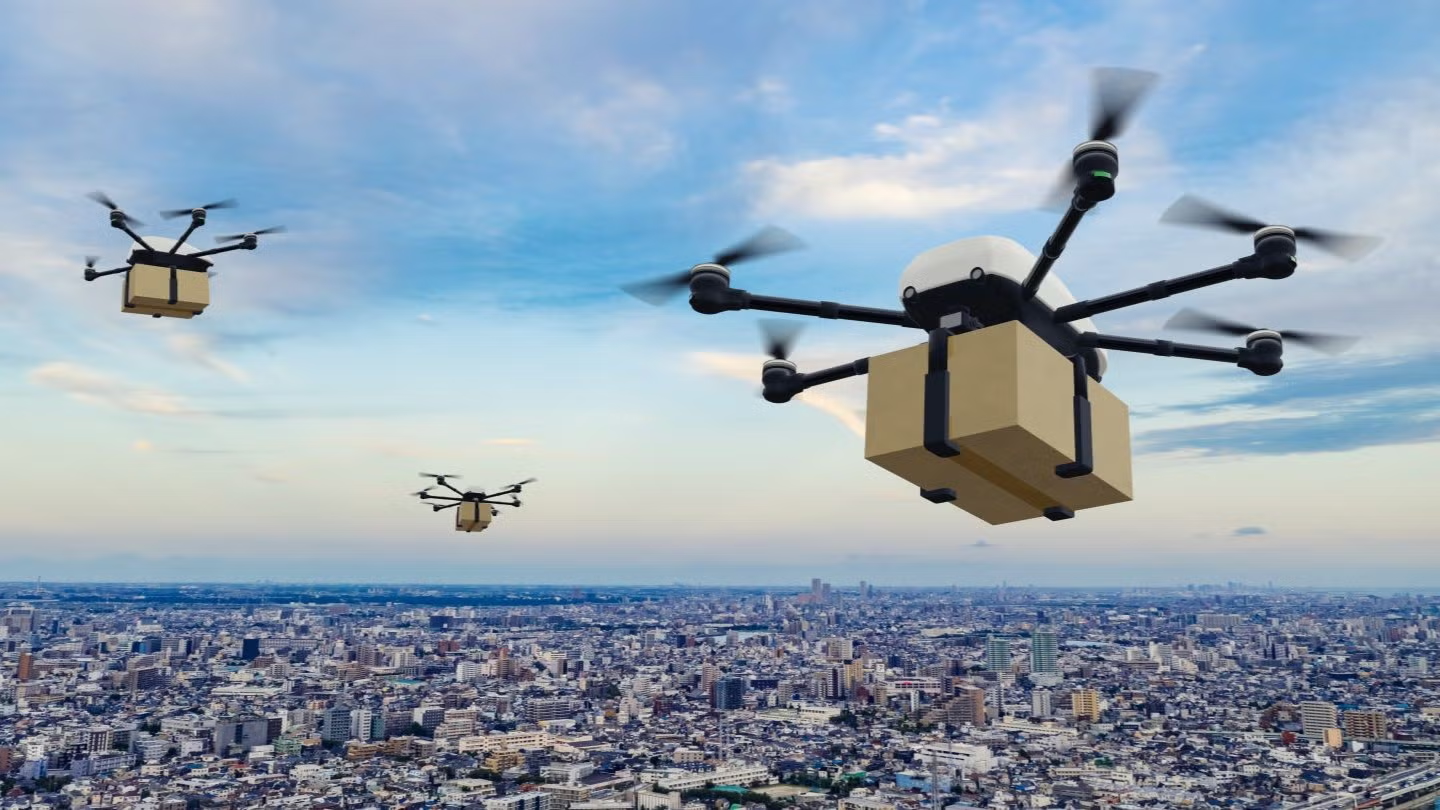
Drone delivery pilots expanding to Tier-2 cities mark a significant shift in how logistics companies are approaching last mile delivery in India. After initial trials in metro regions, companies are now testing drone based delivery systems in smaller urban centers.
These pilots are focused on delivering essential goods such as medicines, small parcels, and e commerce orders. Tier-2 cities offer a controlled environment with lower congestion, making them suitable for early stage implementation.
The move reflects growing confidence in drone technology as a viable solution for improving delivery speed and reducing operational costs.
Why Tier-2 Cities Are Ideal for Drone Delivery Testing
Tier-2 cities provide several advantages for drone delivery pilots. Compared to metros, these cities have less air traffic congestion and fewer regulatory complexities at a local level.
Cities such as Indore, Nagpur, and Jaipur are emerging as testing grounds due to their growing urban infrastructure and manageable population density.
Shorter distances between delivery points and less crowded skylines make drone operations more efficient. This allows companies to test routing, safety protocols, and delivery timelines effectively.
Additionally, local administrations in these cities are often more open to pilot projects that bring innovation and economic activity.
How Drone Delivery Technology Works
Drone delivery systems use unmanned aerial vehicles equipped with GPS navigation, sensors, and automated flight control systems. These drones can carry lightweight packages and deliver them directly to designated locations.
The process begins with order processing, followed by route planning and flight authorization. Once deployed, drones navigate predefined paths while avoiding obstacles using onboard sensors.
Companies are integrating these systems with logistics platforms to enable real time tracking and efficient fleet management. Advanced software ensures optimal route selection and delivery scheduling.
The use of drones reduces dependency on traditional transport methods, especially in areas with limited road connectivity.
Benefits for Logistics and E Commerce Sectors
The expansion of drone delivery pilots offers several benefits for logistics and e commerce companies. Faster delivery times are a key advantage, particularly for urgent shipments such as medical supplies.
Cost efficiency is another factor. Drones can reduce fuel and labor costs associated with traditional delivery methods. This is especially beneficial in regions where infrastructure challenges increase delivery expenses.
For consumers, drone delivery can improve service reliability and reduce waiting times. It also enhances accessibility in remote or hard to reach areas.
As e commerce continues to grow in Tier-2 cities, efficient delivery solutions will become increasingly important.
Regulatory Framework and Government Support
Drone delivery in India operates under regulations set by the Directorate General of Civil Aviation. Companies must obtain necessary approvals and adhere to safety guidelines.
The government has introduced policies to support drone innovation, including designated testing zones and simplified approval processes for pilot projects.
Initiatives promoting drone technology are encouraging startups and logistics companies to invest in this space. Public private partnerships are also playing a role in expanding pilot programs.
However, scaling beyond pilot stages will require further regulatory clarity and infrastructure development.
Challenges in Scaling Drone Delivery Operations
Despite promising pilots, several challenges remain in scaling drone delivery. Regulatory restrictions, including airspace management and safety requirements, can limit operations.
Payload capacity is another limitation. Current drones can carry only small packages, restricting their use cases. Weather conditions also impact flight reliability and safety.
Infrastructure requirements, such as landing zones and charging stations, need to be developed to support large scale deployment.
Public acceptance and trust are additional factors. Ensuring safety and addressing privacy concerns will be critical for widespread adoption.
Future Outlook for Drone Delivery in India
The expansion of drone delivery pilots into Tier-2 cities indicates a gradual shift toward advanced logistics solutions. As technology improves and regulations evolve, larger scale deployment is likely.
Integration with existing delivery networks will be key to success. Hybrid models combining drones with traditional logistics can enhance efficiency.
In the long term, drone delivery could become a standard option for specific use cases, particularly in healthcare and high priority shipments.
The ongoing pilots will play a crucial role in shaping the future of logistics in India.
Takeaways
- Drone delivery pilots are expanding into Tier-2 cities in India
- These cities offer ideal conditions for testing new logistics models
- Benefits include faster delivery and cost efficiency
- Challenges include regulations, payload limits, and infrastructure needs
FAQs
Q1. Why are drone delivery pilots moving to Tier-2 cities?
Tier-2 cities offer less congestion and suitable conditions for testing drone operations.
Q2. What can drones deliver in these pilots?
They are mainly used for small parcels, medicines, and e commerce orders.
Q3. Who regulates drone delivery in India?
The Directorate General of Civil Aviation sets guidelines and approvals for drone operations.
Q4. What challenges do drone delivery systems face?
Regulatory restrictions, limited payload capacity, and infrastructure requirements are key challenges.