































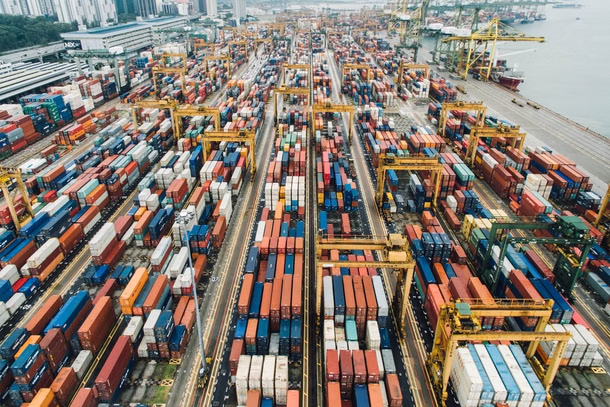
Nagpur is rapidly emerging as a logistics hub due to new infrastructure projects and its strategic central location. Government initiatives and connectivity upgrades are positioning the city as a major node for warehousing, transport, and distribution in India.
Nagpur Logistics Hub Growth Gains Momentum
Nagpur emerging as a logistics hub is driven by its geographic advantage and ongoing infrastructure push. Located near the center of India, Nagpur offers direct connectivity to multiple regions, making it ideal for distribution networks.
The city has long been considered a strategic point for transport, but recent investments have accelerated its transformation. Improved road, rail, and air connectivity are enabling faster movement of goods across states.
Government backed initiatives are focusing on turning Nagpur into a multimodal logistics center, which can handle large volumes of cargo efficiently.
Key Infrastructure Projects Driving Growth
Several major projects are contributing to Nagpur’s rise as a logistics hub. One of the most prominent is the development of the Multi-modal International Cargo Hub and Airport at Nagpur (MIHAN), which integrates air cargo facilities with industrial zones.
MIHAN is designed to support cargo operations, IT parks, and manufacturing units, creating a comprehensive ecosystem for logistics and business activities. The project aims to attract both domestic and international investments.
Additionally, national highway expansions and improved rail connectivity are strengthening Nagpur’s position. Freight corridors and expressways passing through the region reduce transit time and improve supply chain efficiency.
Strategic Location Advantage in Central India
Nagpur’s central location provides a unique advantage for logistics operations. Being equidistant from major metropolitan cities allows companies to distribute goods across the country with lower transportation costs.
This advantage is particularly valuable for e commerce companies, FMCG firms, and manufacturing units that require efficient supply chain networks. Setting up warehouses in Nagpur can reduce delivery timelines to multiple regions.
The city’s connectivity to both northern and southern markets makes it a preferred choice for companies looking to optimize logistics operations.
Impact on Warehousing and Industrial Development
The infrastructure push has led to increased demand for warehousing space in and around Nagpur. Developers are investing in large scale logistics parks and storage facilities to meet growing demand.
Industrial development is also gaining traction, with companies setting up units near logistics hubs to reduce transportation costs. This integration of manufacturing and logistics can improve efficiency and competitiveness.
The growth of logistics infrastructure is expected to generate employment opportunities and boost local economic activity.
Challenges in Developing a Logistics Ecosystem
Despite strong potential, there are challenges in establishing Nagpur as a fully developed logistics hub. Land acquisition, regulatory approvals, and infrastructure execution timelines can affect project progress.
Skilled workforce availability and last mile connectivity are additional factors that need attention. Efficient logistics operations require not just infrastructure but also trained personnel and streamlined processes.
Competition from established logistics hubs in other states also presents a challenge. Nagpur will need to continuously improve its infrastructure and policy environment to attract sustained investment.
Future Outlook for Nagpur Logistics Growth
The future outlook for Nagpur as a logistics hub remains positive. Continued investment in infrastructure and policy support is expected to strengthen its position in the coming years.
Projects like MIHAN and improved connectivity networks are likely to attract more companies looking to optimize supply chains. As demand for faster delivery grows, centrally located hubs like Nagpur will become increasingly important.
Urban planners and industry experts view Nagpur as a long term logistics destination with the potential to rival established hubs if development continues at the current pace.
Takeaways
- Nagpur is emerging as a logistics hub due to its central location and infrastructure push
- Projects like MIHAN are driving cargo and industrial development
- Improved connectivity is boosting warehousing and supply chain efficiency
- Challenges include execution delays and competition from other hubs
FAQs
Q1. Why is Nagpur becoming a logistics hub?
Its central location and improved infrastructure make it ideal for efficient distribution across India.
Q2. What is MIHAN and its role?
MIHAN is a major project integrating cargo, industrial, and commercial facilities to support logistics growth.
Q3. Which industries benefit from this development?
E commerce, FMCG, manufacturing, and logistics companies benefit the most.
Q4. What challenges does Nagpur face in this transition?
Land acquisition, infrastructure execution, and competition from other cities are key challenges.