
























Maharashtra farmers have suspended their march towards Mumbai after Chief Minister Devendra Fadnavis assured them of action on drought relief, pending financial assistance and crop insurance concerns. The decision followed talks between the state government and All India Kisan Sabha representatives on October 27, 2026.
Maharashtra Farmers Call Off March After Talks With Government
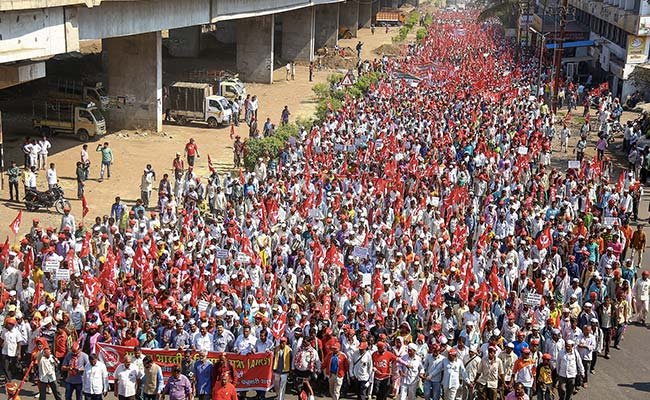
The All India Kisan Sabha (AIKS) suspended its vehicle march from Akole to Mumbai on October 27 after a meeting with Maharashtra Chief Minister Devendra Fadnavis and senior state government representatives. The protest was organised to demand stronger financial assistance for drought-affected farmers, the settlement of pending crop insurance claims and changes to existing farm loan relief measures.
The march began on October 26 and was halted at Shahapur in Thane district following discussions at the Sahyadri Guest House in Mumbai. According to reports published by Hindustan Times, more than 12,000 farmers had initially joined the protest movement.
The meeting brought together farmer representatives, Deputy Chief Ministers Eknath Shinde and Sunetra Pawar, cabinet ministers and senior officials. Following the discussions, the government gave assurances on several demands raised by farmers and other rural communities.
AIKS leaders said the march was being suspended in view of the assurances received from the government. However, the implementation of the commitments remains an important issue for the organisation and participating farmers.
Drought Relief Remains a Major Concern for Farmers
Drought and crop losses have placed additional financial pressure on agricultural households across Maharashtra. Farmers have sought compensation that reflects their losses, along with support to manage the costs of cultivation, household expenses and agricultural debt.
Earlier in October, the Maharashtra government announced interim financial assistance of ₹5,000 for farmers in drought-affected areas. The state also announced the extension of drought relief concessions to affected talukas. These measures included provisions relating to agricultural loans, electricity bills, land revenue and educational fees for eligible students.
However, farmer organisations argued that the initial assistance was inadequate in relation to the scale of agricultural losses. They demanded more substantial compensation and a system that accounts for actual crop damage.
During the latest meeting, the government assured the delegation that drought-affected farmers would receive assistance beyond the standard norms prescribed under the National Disaster Response Fund, according to reports citing farmer leaders.
The precise amount of additional assistance and the timeline for its distribution will be important factors in determining how far the government’s assurances address the concerns raised by cultivators.
Pending Namo Shetkari Payments and Crop Insurance
Another major demand concerns pending instalments under the Namo Shetkari Mahasanman Nidhi Yojana, a Maharashtra government scheme that provides financial assistance to eligible farmers.
The state government assured the delegation that two pending instalments would be released, according to reports by ThePrint and The Times of India. The payments are significant for farming households that depend on government assistance to manage expenses during difficult agricultural seasons.
Farmers also raised concerns about crop insurance payments. Insurance claims can play an important role in helping cultivators recover from crop losses caused by adverse weather and other covered risks.
The delegation sought action on pending claims and changes to the mechanisms used under the crop insurance scheme. According to reporting by Hindustan Times, the chief minister directed officials to examine the possibility of restoring previously used crop insurance triggers.
These discussions indicate that the negotiations covered both immediate financial support and the mechanisms through which farmers receive assistance after agricultural losses.
For affected farmers, the practical outcome will depend on the processing of claims, eligibility conditions and the timely transfer of funds.
Farm Loan Relief Demand Remains Under Consideration
Farm loan relief was another central issue raised during the protest. Farmer organisations have argued that agricultural households facing repeated crop losses need measures that reduce their debt burden and prevent financial distress.
The delegation called for changes to incentives for farmers who regularly repay their crop loans. The government indicated that the demand to increase the ₹50,000 incentive would be examined by the relevant loan waiver subcommittee, according to reports published after the meeting.
The proposal has not been confirmed as an approved increase. The final decision will depend on further discussions and the state’s financial position.
Farm loan relief is a complex policy issue because it involves balancing farmers’ financial needs with the fiscal cost of assistance. Timely support, transparent eligibility rules and effective implementation are therefore important for both indebted cultivators and those who have maintained regular loan repayments.
The government’s response suggests that the demand remains under consideration rather than being fully resolved.
Tribal Land Rights and Rural Workers Also Feature in Discussions
The protest was not limited to drought relief and agricultural payments. Representatives also raised issues affecting tribal communities, agricultural workers and other sections of the rural population.
Land rights formed an important part of the discussions, particularly claims relating to forest land and other land categories. Farmer and tribal organisations have long sought the settlement of pending claims and clearer recognition of eligible land rights.
The delegation also raised issues concerning access to water for tribal communities and the procurement of bal hirda, a forest produce item. According to ThePrint’s report, the government agreed to form a study group that would include Kisan Sabha representatives to examine procurement-related concerns.
Other demands concerned welfare benefits and payments to workers associated with rural services. The discussions also covered pending benefits under the Mukhyamantri Majhi Ladki Bahin Yojana for eligible women beneficiaries.
These issues demonstrate the wider scope of the negotiations. The movement brought together demands linked to agriculture, tribal rights, welfare payments and rural livelihoods.
November 4 Meeting to Review Implementation
The suspension of the march marks a temporary pause in the protest, with the next stage depending on the government’s follow-through.
According to ThePrint, a follow-up meeting is scheduled for November 4 to review implementation of the assurances. This meeting is expected to be important for assessing progress on the issues raised by the delegation.
For farmers, the immediate priorities include receiving pending payments, obtaining adequate drought compensation and securing timely decisions on crop insurance and loan-related demands.
The government will need to translate its commitments into clear decisions, administrative instructions and actual payments wherever applicable. Farmer representatives, meanwhile, are likely to assess progress against the assurances made during the negotiations.
The suspension of the march does not mean that every demand has been approved or implemented. Several proposals remain subject to further examination, and their outcomes will depend on subsequent decisions.
The November 4 review will therefore be an important point in determining whether the discussions lead to measurable relief for affected farming communities.
Key Takeaways
- The All India Kisan Sabha suspended its Akole-to-Mumbai vehicle march on October 27, 2026, after talks with the Maharashtra government.
- The government assured drought-affected farmers of assistance beyond standard National Disaster Response Fund norms and the release of two pending Namo Shetkari scheme instalments.
- Demands relating to crop insurance, farm loan incentives, tribal land rights and rural welfare payments were also discussed, but not all have been fully resolved.
- A follow-up meeting scheduled for November 4 will review the implementation of the assurances.
Frequently Asked Questions
1. Why did Maharashtra farmers suspend their march to Mumbai?
The All India Kisan Sabha suspended the march after receiving government assurances on drought relief, pending financial assistance, crop insurance and other demands affecting farmers and rural communities.
2. What relief did the Maharashtra government promise?
The government assured drought-affected farmers of assistance beyond standard National Disaster Response Fund norms and the release of two pending instalments under the Namo Shetkari Mahasanman Nidhi Yojana. Other demands were also discussed.
3. Has the government approved an increase in the farm loan repayment incentive?
The proposal to increase the incentive for farmers who regularly repay their crop loans remains under consideration by the relevant subcommittee. A final increase should not be treated as approved until an official decision is announced.
4. When will the government review the farmers’ demands?
A follow-up meeting is scheduled for November 4, 2026, to review the implementation of the assurances given during the negotiations.