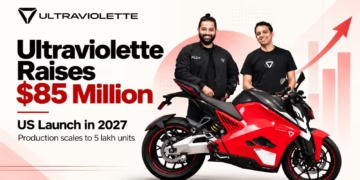




























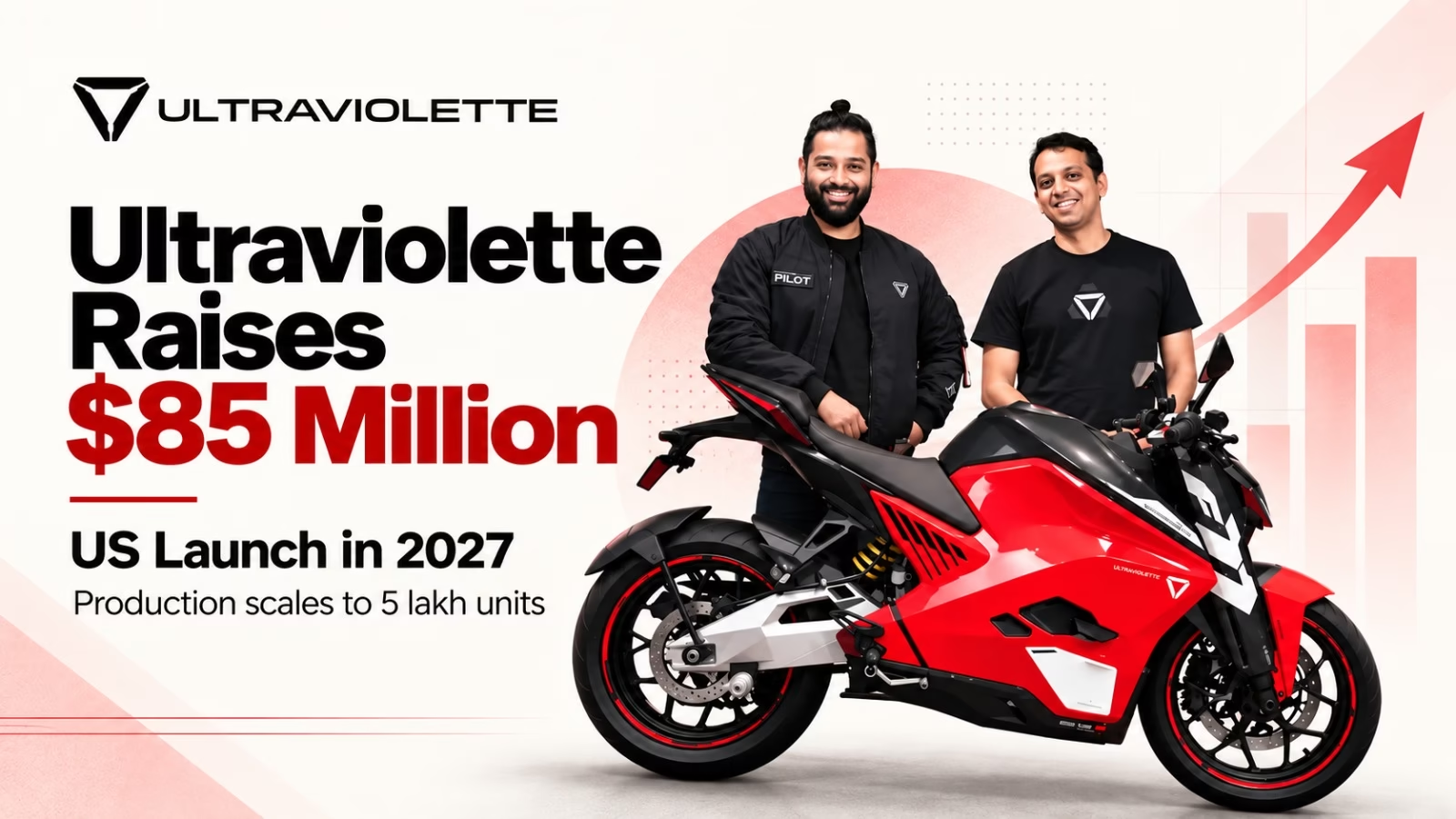
Ultraviolette Automotive has raised $85 million in fresh funding as the Bengaluru-based electric two-wheeler maker prepares to scale production, develop new EV platforms and expand internationally. The company is also targeting the US market in 2027.
Ultraviolette Funding Marks a New Growth Phase
The Ultraviolette funding announced on September 23, 2026, comes as the Indian electric two-wheeler company moves into a larger production and international expansion phase.
The company has raised $85 million, or roughly ₹807 crore, in a round led by deep-tech investors Yali Capital and TDK Ventures. Lip-Bu Tan, chairman of Walden International and an adviser to Ultraviolette, also invested in the round and joined the company as an adviser. Existing and long-term investors participated as well.
The fresh capital is expected to support production of Ultraviolette’s current electric motorcycles, the F77 and X-47, while also helping bring upcoming models such as the Tesseract electric scooter and Shockwave enduro motorcycle to market.
The company is also planning its next generation of global EV platforms, suggesting that the funding is aimed at both immediate manufacturing requirements and longer-term product development.
New EV Manufacturing Capacity in Hosur
One of the biggest priorities for Ultraviolette is manufacturing capacity.
The company has announced plans for a new manufacturing facility in Hosur, Tamil Nadu. The facility is expected to eventually support production capacity of up to 5 lakh units annually.
This expansion comes as India’s electric two-wheeler market becomes increasingly competitive. Established automobile manufacturers, electric-first startups and newer technology companies are all working to increase their presence in the segment.
For Ultraviolette, higher production capacity could allow the company to serve more customers while reducing some of the limitations associated with manufacturing at a smaller scale.
The funding and new plant are therefore closely connected. Capital can support product development and manufacturing expansion, while additional production capacity provides the infrastructure needed to sell those products at larger volumes.
F77 and X-47 Remain Core Products
Ultraviolette currently sells the F77 electric motorcycle and X-47 Crossover in India, while also having an international presence.
The F77 has positioned the company around performance-focused electric motorcycles rather than competing only on basic commuter requirements. The X-47 expands the product portfolio into a crossover-style motorcycle.
The latest funding will help scale production of both models, according to company statements reported by Business Standard and other automotive publications.
For Indian consumers, increasing production could eventually mean wider availability beyond the company’s current footprint.
That is particularly relevant as EV adoption gradually moves beyond India’s biggest cities. Better availability of electric motorcycles, service infrastructure and spare parts will be important if premium electric two-wheelers are to reach a wider customer base.
Tesseract and Shockwave Could Expand the Portfolio
The next stage of Ultraviolette’s product strategy extends beyond electric motorcycles.
The company is preparing the Tesseract electric scooter and Shockwave enduro motorcycle. The two products target different parts of the electric two-wheeler market and could give Ultraviolette a broader portfolio.
The Tesseract is particularly significant because electric scooters account for a large part of India’s electric two-wheeler market. Entering this category gives Ultraviolette an opportunity to apply its technology platform to a different vehicle format.
The Shockwave, meanwhile, is positioned as an electric enduro motorcycle.
The funding gives the company additional capital to move these products from development towards manufacturing and commercialisation.
However, funding alone does not guarantee that every planned model will launch on schedule. Product development, manufacturing readiness, regulatory approvals and supply-chain requirements will all influence the eventual rollout.
Ultraviolette Targets the US Market in 2027
International expansion is another major part of the company’s strategy.
Ultraviolette currently sells its products in India and 20 European countries. Business Standard reported that international sales account for around 15% of the company’s overall volumes, with the company expecting that share to rise to 25% as global operations expand.
The company is targeting entry into the US market in 2027 and has also identified markets in Latin America and Southeast Asia for future expansion.
Entering the US would represent a different challenge from expanding within India. Electric motorcycles need to meet local regulatory and safety requirements, while companies also need distribution, servicing and charging support.
The US market also has established motorcycle brands and a different consumer profile, making product positioning and after-sales support important parts of any expansion strategy.
Why Battery Technology Matters for Indian EVs
Ultraviolette’s strategy is not limited to vehicle design. The company has also invested in battery and vehicle-control technology.
Moneycontrol reported that Ultraviolette has developed battery architectures ranging from 48V to 400V and has applied for more than 50 patents related to battery technology. The company has also said that some vehicles in the field have crossed 100,000 km while retaining more than 96% of their original battery-rated capacity. These are company-provided claims reported by the publication and are not independent performance assessments.
Battery technology remains one of the most important areas for the Indian EV industry.
Range, charging time, thermal management, battery durability and replacement costs all influence whether consumers consider an electric vehicle practical for long-term ownership.
For buyers outside major metros, these factors can be even more important because access to specialised EV service centres may be more limited.
What the Funding Means for India’s EV Industry
The Ultraviolette funding is significant not simply because of the amount raised, but because of where the company plans to deploy the capital.
The money is going towards manufacturing, new products, technology development and international expansion. That combination reflects a broader shift in India’s EV industry from early-stage product development towards larger-scale commercial operations.
It also shows that investors continue to fund companies working on electric mobility and deep technology, although investment remains concentrated among businesses with differentiated technology, scalable products or international ambitions.
For Indian EV manufacturers, the next challenge is converting investment into production volumes, reliable products and sustainable customer demand.
That is particularly important in the two-wheeler segment, where affordability remains a major consideration for consumers.
What It Could Mean for Tier-2 and Tier-3 Cities
The next phase of India’s EV growth will not depend only on sales in Bengaluru, Mumbai, Delhi or other large cities.
Tier-2 and Tier-3 cities represent an important opportunity for electric two-wheelers because motorcycles and scooters are widely used for commuting, education, delivery work and small-business activities.
But wider adoption requires more than attractive specifications. Buyers also need accessible service centres, replacement parts, financing options and dependable charging facilities.
If Ultraviolette expands its production and distribution network, its products could become available to a wider set of Indian customers. The company’s international expansion could also create additional scale for its technology and manufacturing operations.
Whether that translates into significant adoption in smaller cities will depend on pricing, availability and local support.
A Bigger Test Begins After the Fundraise
The $85 million investment gives Ultraviolette additional financial capacity, but the next stage will be measured by execution.
The company needs to increase production, bring planned products to market, expand its service network and establish itself in additional international markets.
The proposed Hosur facility could provide substantial manufacturing capacity, while the F77, X-47, Tesseract and Shockwave give the company a broader product pipeline.
At the same time, India’s EV market remains highly competitive, and consumers have more choices than they did a few years ago.
For Ultraviolette, the latest funding therefore represents a transition from building a technology-led EV company to operating at a much larger commercial scale.
Key Takeaways
- Ultraviolette Automotive has raised $85 million in a funding round led by Yali Capital and TDK Ventures.
- The company plans to use the capital to scale F77 and X-47 production and develop the Tesseract and Shockwave.
- Ultraviolette is targeting the US market in 2027 while expanding further across Europe, Latin America and Southeast Asia.
- A planned Hosur manufacturing facility is expected to eventually support production capacity of up to 5 lakh units annually.
FAQs
How much funding has Ultraviolette raised?
Ultraviolette Automotive has raised $85 million, approximately ₹807 crore, in its latest funding round. The round was led by Yali Capital and TDK Ventures, with participation from Lip-Bu Tan and existing investors.
What will Ultraviolette use the new funding for?
The company plans to use the capital to scale production of the F77 and X-47, develop upcoming models such as the Tesseract and Shockwave, build next-generation EV platforms and expand internationally.
When does Ultraviolette plan to enter the US?
Ultraviolette is targeting entry into the US market in 2027. The company is also planning expansion across Latin America and Southeast Asia.
What is Ultraviolette’s new Hosur plant?
Ultraviolette has announced a new manufacturing facility in Hosur, Tamil Nadu, which is expected to eventually support annual production capacity of up to 5 lakh units.