































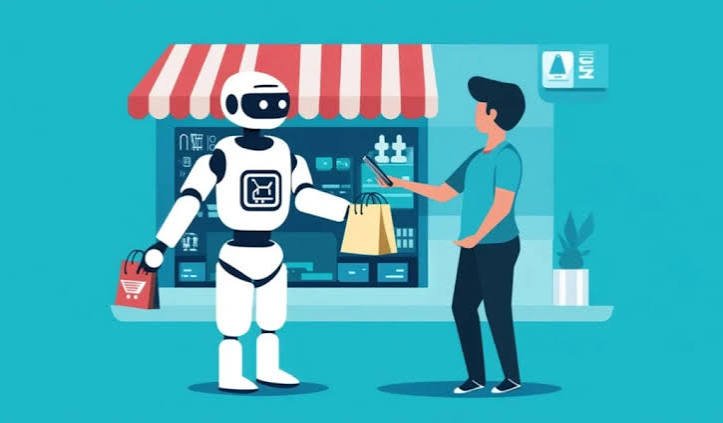
Artificial Intelligence is no longer limited to large corporations. Today, AI is changing everyday business operations for small Indian companies by helping them automate routine tasks, improve customer service, reduce costs, and make faster decisions. Affordable AI tools are allowing startups, retailers, manufacturers, and service providers to compete more efficiently in a rapidly evolving digital economy.
AI Adoption Is Growing Among Small Businesses
Artificial Intelligence has become increasingly accessible to small and medium-sized enterprises (SMEs) in India. Earlier, advanced technologies were often associated with large organizations that had significant budgets and dedicated IT teams. That situation has changed with the availability of cloud-based AI platforms, subscription software, and easy-to-use automation tools.
Many Indian businesses now use AI-powered chatbots to answer customer queries, generate invoices automatically, organize documents, and analyze sales trends. Even companies with fewer than 20 employees are adopting AI to save time and improve productivity.
Government initiatives promoting digital transformation, better internet connectivity, and widespread smartphone usage have also encouraged businesses in Tier 2 and Tier 3 cities to explore AI-based solutions. As digital adoption grows, AI is becoming a practical business tool rather than an experimental technology.
AI Tools Are Simplifying Daily Business Tasks
One of the biggest advantages of AI is its ability to automate repetitive work. Small businesses often operate with limited staff, making efficiency essential. AI helps reduce manual effort while allowing employees to focus on higher-value activities.
Retail stores use AI software to forecast inventory requirements and reduce stock shortages. Accounting firms rely on AI-assisted bookkeeping tools to categorize expenses and identify errors. Restaurants use AI-enabled ordering systems to manage customer requests more efficiently, while marketing agencies generate content ideas, analyze campaign performance, and schedule social media posts using AI-powered platforms.
Customer support has also improved significantly. AI chatbots can respond instantly to common questions, provide order updates, and collect customer information even outside business hours. This improves response times without requiring businesses to hire additional support staff.
Better Decision Making Through Data Analysis
AI is also helping business owners make informed decisions based on real-time data instead of guesswork. Modern AI platforms can process large volumes of information within seconds, identifying patterns that might otherwise go unnoticed.
For example, an online clothing store can analyze purchasing trends to determine which products are likely to sell during festive seasons. A local grocery chain can predict demand for specific products based on historical sales and weather conditions. Manufacturing businesses can monitor equipment performance and identify maintenance needs before costly breakdowns occur.
These insights allow small businesses to optimize inventory, manage expenses more effectively, and improve overall operational efficiency. Access to accurate data is becoming a competitive advantage, especially in fast-moving industries.
AI Is Transforming Marketing and Customer Engagement
Digital marketing has become one of the areas most influenced by AI. Small Indian businesses increasingly use AI tools to create advertisements, write marketing copy, edit images, generate videos, and personalize email campaigns.
AI-powered analytics help businesses understand customer preferences by studying browsing behavior, purchase history, and engagement patterns. This enables companies to recommend relevant products and deliver targeted promotions that improve conversion rates.
Social media management has also become easier with AI-assisted scheduling tools that recommend the best posting times, generate captions, and monitor audience engagement. These capabilities allow smaller teams to maintain an active online presence without investing heavily in additional manpower.
Challenges That Businesses Must Consider
Despite its advantages, AI adoption comes with responsibilities. Business owners must ensure that customer data is handled securely and in compliance with applicable privacy regulations. AI-generated content and automated decisions should also be reviewed by humans to minimize errors and maintain quality.
Another challenge is employee training. Successful AI implementation requires staff to understand how to use these tools effectively. Rather than replacing employees, AI often works best as a support system that enhances human productivity.
Businesses should also evaluate AI solutions carefully before investing. Selecting tools that align with operational needs and provide measurable benefits is more important than adopting technology simply because it is trending.
The Future of AI for Small Indian Companies
Artificial Intelligence is expected to play an even larger role in India’s small business ecosystem over the coming years. As AI software becomes more affordable and user-friendly, businesses across retail, healthcare, education, manufacturing, logistics, hospitality, and professional services are likely to increase adoption.
For entrepreneurs in Tier 2 and Tier 3 cities, AI offers opportunities to improve efficiency without significantly increasing operating costs. By automating routine processes, enhancing customer experiences, and enabling data-driven decisions, AI is helping smaller businesses compete with larger organizations on a more level playing field.
While human expertise will continue to remain essential, AI is becoming a valuable business partner that supports growth, innovation, and long-term competitiveness.
Key Takeaways
- AI is helping small Indian companies automate routine tasks and improve operational efficiency.
- Affordable AI tools are now accessible to startups and businesses in Tier 2 and Tier 3 cities.
- AI supports better decision making through real-time data analysis and predictive insights.
- Human oversight, employee training, and responsible data management remain essential for successful AI adoption.
FAQ
Q1. How are small businesses in India using AI today?
Small businesses use AI for customer support, accounting, inventory management, digital marketing, content creation, sales analysis, and workflow automation.
Q2. Is AI expensive for small companies?
Not necessarily. Many AI-powered tools are available through affordable monthly subscriptions, making them accessible even for startups and small enterprises.
Q3. Will AI replace employees in small businesses?
In most cases, AI is designed to assist employees by automating repetitive tasks, allowing staff to focus on creative, strategic, and customer-facing work.
Q4. Which industries benefit the most from AI in India?
Retail, e-commerce, healthcare, manufacturing, education, hospitality, logistics, financial services, and digital marketing are among the sectors seeing significant benefits from AI adoption.
(Internal keyword suggestions: AI for small businesses India, artificial intelligence in SMEs, AI business automation, AI tools for Indian companies, digital transformation India, AI customer service, AI marketing tools, AI productivity software, small business technology, business automation India)