































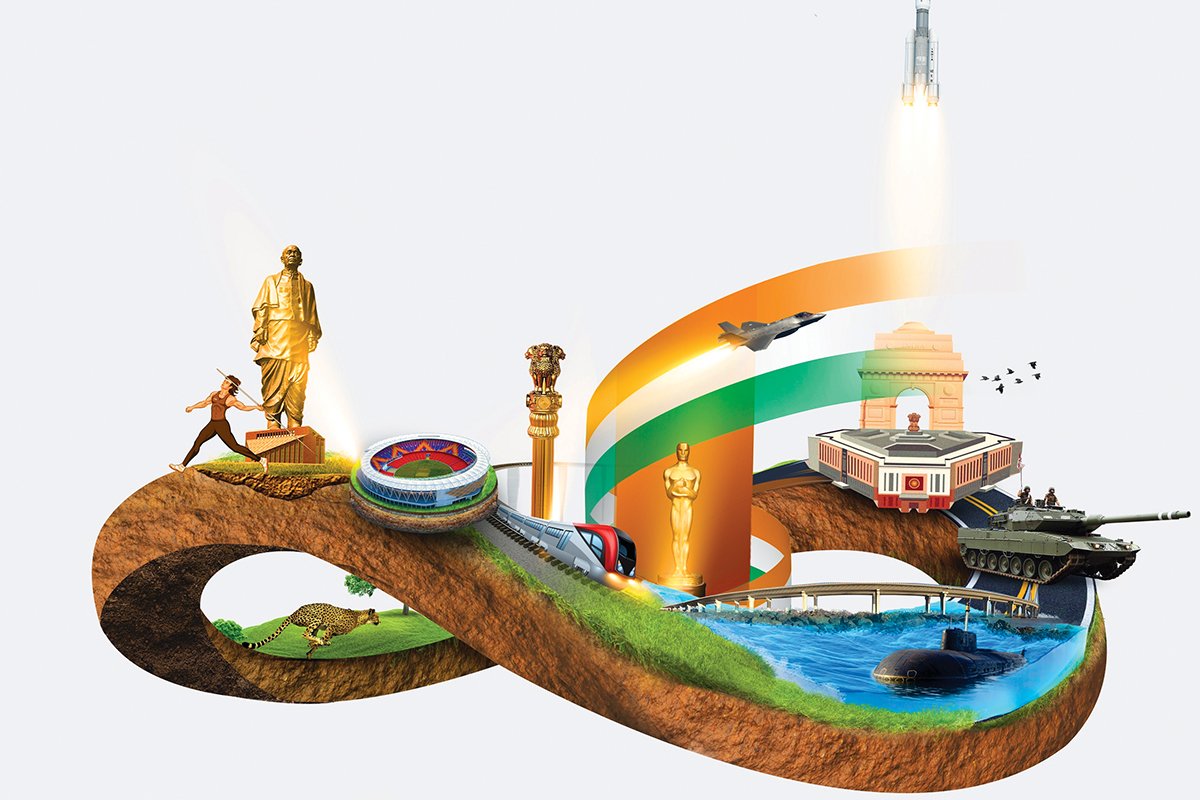
India’s innovation push is accelerating as emerging technologies begin transforming industries, public services, healthcare, manufacturing, and education. With growing investments in research, startups, and digital infrastructure, several technological trends are expected to play a major role in shaping India’s economic and social development over the next decade.
Why India’s Innovation Ecosystem Is Entering a New Phase
India’s innovation push has moved beyond software services and digital platforms. The country is increasingly focusing on deep technology, advanced manufacturing, artificial intelligence, semiconductors, clean energy, and space technology.
Over the past decade, initiatives promoting digital inclusion, startup growth, and technological self-reliance have created a stronger foundation for innovation. India now hosts one of the world’s largest startup ecosystems, supported by a growing network of incubators, research institutions, venture capital firms, and technology hubs.
The widespread adoption of digital payments, cloud computing, mobile internet, and e-governance platforms has also demonstrated how technology can scale rapidly across a diverse population. This experience is expected to support the next wave of innovation-driven growth.
Artificial Intelligence Becomes a Strategic Growth Driver
Artificial intelligence is widely expected to become one of the most influential technologies shaping India’s future. AI is already being used across sectors such as healthcare, banking, agriculture, logistics, manufacturing, and customer service.
In healthcare, AI-assisted diagnostics can help doctors identify diseases faster and improve patient outcomes. In agriculture, predictive analytics can assist farmers with crop planning, weather forecasting, and resource management. Businesses are increasingly using AI tools to automate repetitive tasks and improve decision-making.
As AI adoption expands, demand for skilled professionals in machine learning, data science, cybersecurity, and AI governance is likely to increase. Experts also expect greater emphasis on responsible AI development, data privacy, and regulatory frameworks.
Semiconductors and Advanced Manufacturing Gain Importance
Semiconductor manufacturing has emerged as a strategic priority for India. Modern technologies ranging from smartphones and automobiles to medical equipment and defense systems rely heavily on semiconductor chips.
Global supply chain disruptions in recent years highlighted the risks of depending on a limited number of manufacturing hubs. In response, India has launched initiatives to encourage semiconductor fabrication, chip design, and electronics manufacturing.
Advanced manufacturing technologies such as robotics, automation, industrial Internet of Things, and smart factories are also expected to transform production processes. These innovations can improve efficiency, reduce operational costs, and enhance global competitiveness for Indian manufacturers.
Clean Energy and Green Technology Drive Sustainability
The transition toward clean energy is likely to remain a major focus over the next decade. India has set ambitious renewable energy goals while expanding investments in solar power, wind energy, battery storage, and green hydrogen.
Electric vehicles are becoming an important part of this transformation. Advances in battery technology, charging infrastructure, and energy management systems are expected to support wider EV adoption across urban and rural markets.
Green technology innovation extends beyond transportation. Smart energy grids, carbon management solutions, water conservation technologies, and sustainable construction methods are attracting increased attention from policymakers and private investors alike.
These developments could help India address energy security concerns while supporting long-term environmental sustainability.
Space Technology and Deep-Tech Startups Expand Opportunities
India’s space sector has gained global recognition through successful satellite missions, cost-effective launches, and scientific achievements. The opening of the space sector to private participation has created new opportunities for startups and entrepreneurs.
Private companies are now developing satellite technologies, launch systems, communication solutions, and earth observation services. These innovations have applications in agriculture, disaster management, telecommunications, navigation, and climate monitoring.
Alongside space technology, deep-tech startups focusing on quantum computing, biotechnology, advanced materials, robotics, and autonomous systems are attracting increasing investor interest.
Although many of these technologies remain in early stages, they have the potential to create entirely new industries and high-value employment opportunities in the future.
Challenges That Could Influence Future Innovation
Despite strong momentum, several challenges remain. Research and development spending in India continues to be lower than that of many advanced economies. Bridging the gap between academic research and commercial applications remains an ongoing priority.
The availability of highly skilled talent in specialized fields such as semiconductor engineering, quantum computing, and advanced AI also needs improvement. Strengthening industry-academia collaboration will be critical for developing a future-ready workforce.
Cybersecurity, data protection, ethical technology deployment, and regulatory clarity will also play important roles as emerging technologies become more integrated into everyday life and business operations.
What the Next Decade Could Look Like
The coming decade is likely to witness a significant transformation in how Indians live, work, travel, communicate, and access services. Technologies that are currently emerging may become mainstream components of daily life.
Artificial intelligence, semiconductors, clean energy systems, advanced manufacturing, biotechnology, and space innovation are expected to drive economic growth and improve productivity across sectors.
If supported by continued investment, policy stability, talent development, and research excellence, India’s innovation ecosystem could become one of the most influential drivers of global technological advancement during the 2030s.
Key Takeaways
• Artificial intelligence is expected to influence healthcare, agriculture, banking, manufacturing, and public services.
• Semiconductor manufacturing and advanced electronics are becoming strategic priorities for India.
• Clean energy technologies and electric vehicles will play a major role in future economic growth.
• Space technology and deep-tech startups are creating new opportunities across multiple industries.
FAQ
Q1. Which technology is expected to have the biggest impact on India in the next decade?
Artificial intelligence is widely expected to have a major impact due to its applications across nearly every sector of the economy.
Q2. Why are semiconductors important for India?
Semiconductors power electronic devices, vehicles, communication systems, and industrial equipment, making them critical for technological self-reliance.
Q3. How will clean energy technologies affect India’s future?
Clean energy can improve energy security, reduce emissions, support sustainability goals, and create new industries and jobs.
Q4. What is deep-tech innovation?
Deep-tech refers to technologies based on significant scientific or engineering advances, including AI, quantum computing, robotics, biotechnology, and advanced materials.
(India innovation ecosystem, emerging technologies India, artificial intelligence India, semiconductor manufacturing India, clean energy technology, deep tech startups India, future technology trends, India’s digital transformation)