






























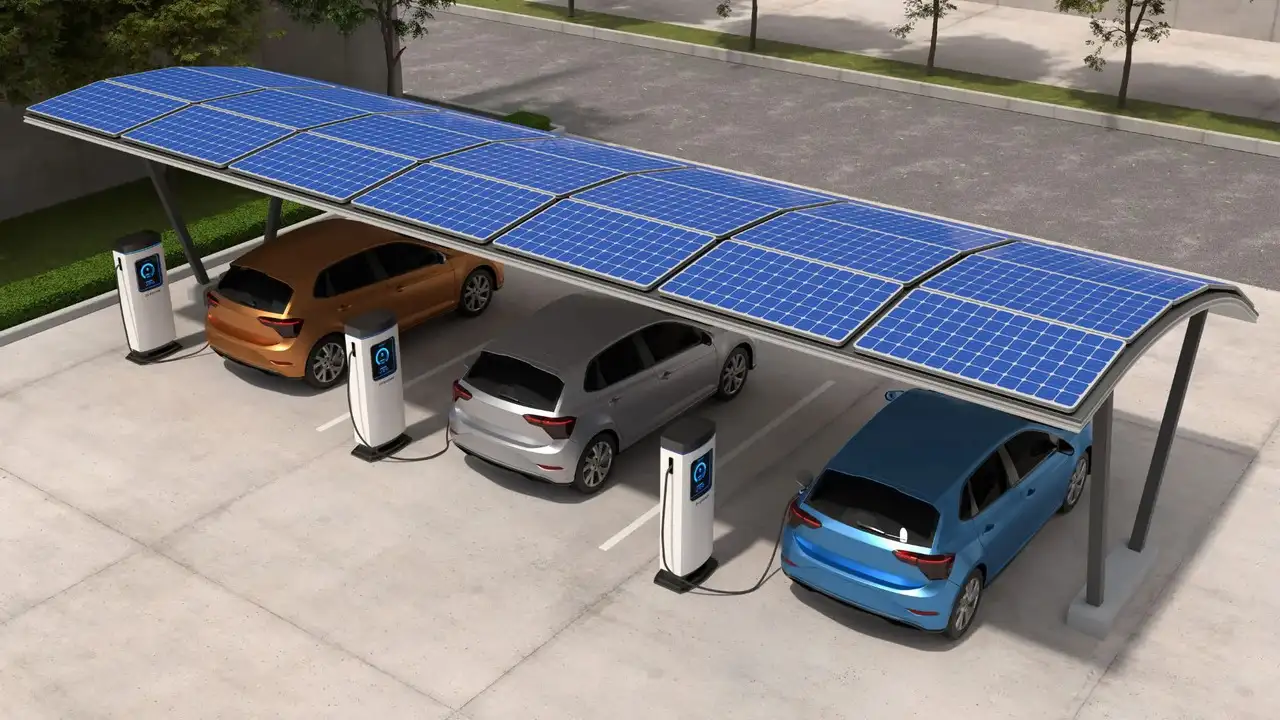
The rise of solar and EV integration in Indian cities is accelerating as policymakers, startups, and utilities collaborate to reduce urban emissions. Combining solar energy with electric vehicle charging is becoming a key strategy to improve sustainability and reduce reliance on conventional power grids.
How Solar and EV Integration Is Transforming Urban Mobility
The rise of solar and EV integration in Indian cities reflects a time sensitive shift in energy and transport policy. Cities are increasingly adopting solar-powered charging stations to support electric vehicles, addressing both energy security and environmental concerns.
This integration reduces dependence on fossil fuels while lowering operating costs for EV fleets. For example, public transport buses and delivery vehicles in cities like Bengaluru and Ahmedabad are beginning to rely on solar-supported charging hubs, combining renewable energy with electric mobility for cleaner urban transport.
Government Policies Encouraging Solar-EV Synergy
Government incentives are driving the adoption of solar plus EV infrastructure. Schemes like the FAME India Scheme provide subsidies for EV purchases and support development of renewable-powered charging stations.
State governments are also mandating renewable energy utilisation for public transport fleets and encouraging private sector participation. These policies aim to align environmental goals with urban mobility expansion, encouraging both municipal corporations and private operators to invest in integrated solutions.
By combining regulatory support with technological incentives, policymakers are enabling scalable adoption of solar-powered EV infrastructure.
Benefits for Urban Air Quality and Energy Efficiency
Integrating solar energy with EV charging has a direct impact on urban air quality. By replacing diesel and petrol vehicles with electric alternatives powered partially by solar energy, cities can reduce particulate matter and greenhouse gas emissions.
Energy efficiency is another benefit. Onsite solar generation reduces the load on conventional electricity grids during peak hours. Surplus energy from solar panels can also be stored or fed back into the grid, creating a more resilient urban energy network.
These measures are particularly impactful in high-pollution cities such as Delhi, Mumbai, and Chennai, where vehicular emissions are a major contributor to poor air quality.
Role of Startups and Private Sector Participation
Private sector startups are increasingly contributing to solar-EV integration. Companies are developing smart charging solutions that combine solar generation, battery storage, and real-time energy management.
Startups like Ather Energy, Sun Mobility, and Lithium Urban Solutions are creating scalable models for urban fleets and residential EV owners. Their solutions focus on optimising solar usage, reducing grid dependency, and enabling flexible charging schedules.
Private investment helps accelerate infrastructure rollout, particularly in Tier-2 and Tier-3 cities where government funding is limited. Startups often collaborate with municipal bodies to deploy pilot projects, proving feasibility before scaling operations.
Challenges in Scaling Solar-EV Infrastructure
Despite its potential, scaling solar-EV integration faces challenges. High upfront costs for solar panels, energy storage systems, and EV chargers remain a barrier. Land availability for solar hubs in dense urban areas is limited.
Grid management is another concern, as intermittent solar generation needs to be balanced with EV charging demand. Startups and municipal utilities must develop smart algorithms to coordinate energy flow and prevent overloads.
Public awareness and adoption are additional hurdles. Consumers and fleet operators need confidence in reliability and cost-effectiveness for solar-supported EV infrastructure to gain traction.
Future Outlook for Integrated Solar-EV Cities
The future of solar and EV integration is promising. As battery technology improves, energy storage becomes more cost-effective, and AI-enabled energy management tools advance, cities can achieve greater operational efficiency.
Expansion to Tier-2 cities such as Pune, Kochi, and Indore is expected to accelerate, making clean energy-powered urban mobility accessible nationwide.
Integration of solar energy with EV infrastructure represents a long term solution to urban pollution, climate change mitigation, and energy security. Successful deployment could serve as a blueprint for sustainable smart cities in India and beyond.
Key Takeaways
- Solar-EV integration reduces emissions and improves urban air quality
- Government policies and subsidies are critical for infrastructure growth
- Startups and private sector innovations accelerate deployment in Tier-1 and Tier-2 cities
- Challenges include high costs, grid management, and land constraints
Frequently Asked Questions
How does solar-EV integration benefit cities?
It reduces vehicular emissions, lowers electricity grid load, and supports sustainable urban mobility.
Which cities are adopting solar-supported EV infrastructure?
Bengaluru, Ahmedabad, Delhi, Mumbai, Chennai, and select Tier-2 cities are leading adoption.
What role do startups play in this ecosystem?
They provide smart charging solutions, energy management tools, and scalable solar-EV infrastructure.
What challenges exist in scaling this model?
High costs, land limitations, grid balancing, and public awareness are key challenges.