






























Safety ratings explained is becoming a critical topic for Indian car buyers as awareness around vehicle safety increases. With multiple rating systems and test protocols, understanding which Indian cars are truly safe requires looking beyond marketing claims.
Safety Ratings Explained Why They Matter for Buyers
Safety ratings explained helps buyers in India make informed decisions by evaluating how well a car can protect occupants during accidents. These ratings are based on crash tests, structural integrity, and safety features.
Organizations like Global NCAP and Bharat NCAP conduct standardized tests to assess vehicle safety.
Ratings typically range from 0 to 5 stars, with higher scores indicating better protection. These tests evaluate adult occupant protection, child safety, and sometimes pedestrian safety.
For buyers, safety ratings provide an objective benchmark that goes beyond brand perception or price.
How Car Safety Ratings Are Determined
Car safety ratings are based on controlled crash tests that simulate real world accident scenarios. Vehicles are tested for frontal impact, side impact, and sometimes rollover conditions.
Sensors and dummies are used to measure forces on different parts of the body during impact. The results are analyzed to determine injury risk.
Structural strength is a key factor. Cars with stable body shells and effective crumple zones perform better in tests.
Safety features such as airbags, seatbelt reminders, and electronic stability control also influence ratings. Advanced systems like ADAS are increasingly being included in evaluations.
Understanding these parameters helps buyers interpret what the ratings actually mean.
Indian Cars with High Safety Ratings
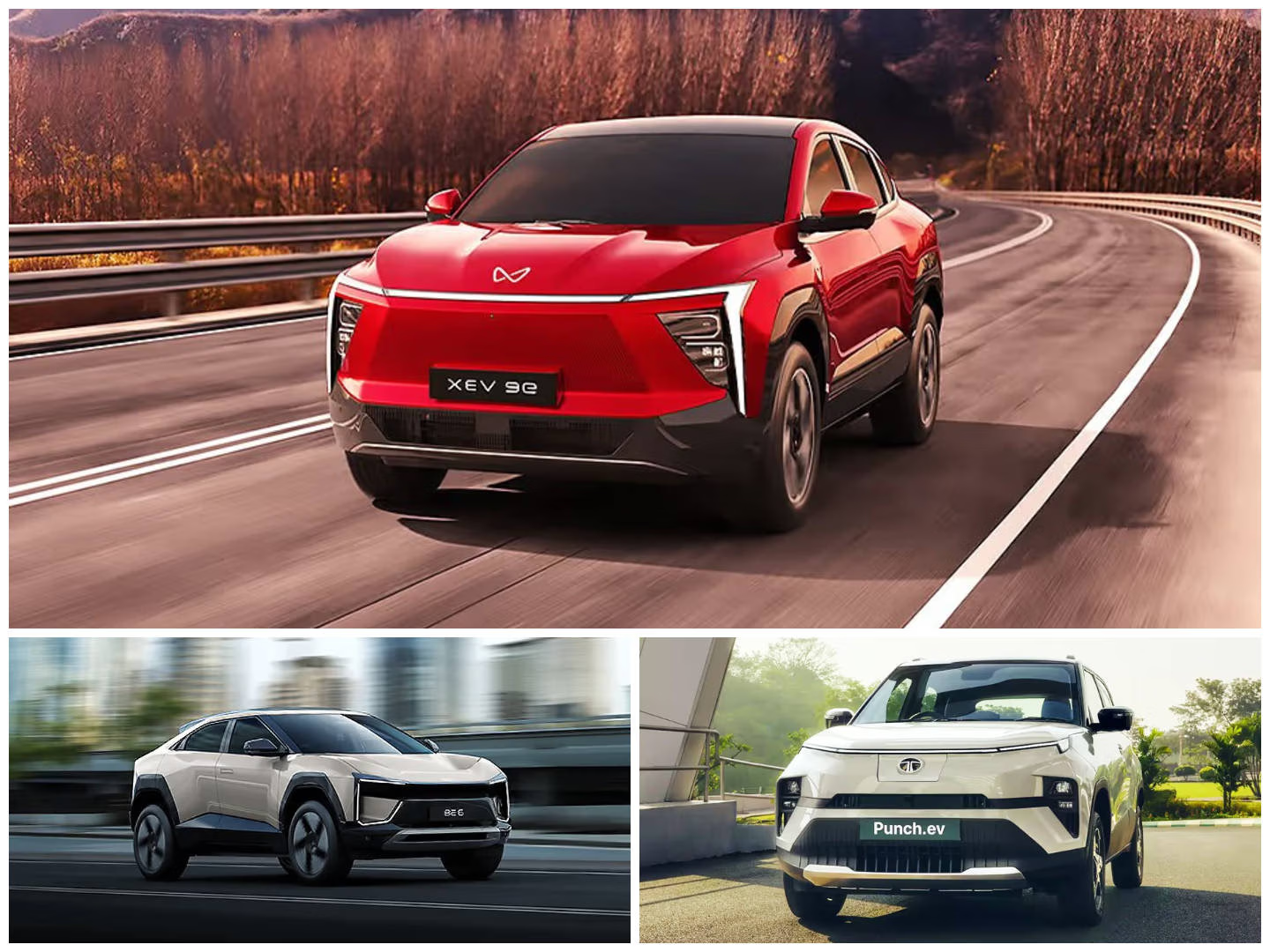
Several Indian cars have achieved high safety ratings in recent years. Models from Tata Motors, such as the Tata Nexon and Tata Punch, have received strong ratings for their structural integrity and safety features.
Vehicles from Mahindra, including the Mahindra XUV300, have also performed well in crash tests.
Some models from Volkswagen and Skoda are known for robust build quality and safety performance.
These cars demonstrate that high safety standards are achievable across different price segments.
Why Some Cars Score Lower in Safety Tests
Not all cars perform equally in safety tests. Lower ratings are often due to weaker structural integrity or lack of essential safety features.
Budget constraints can lead manufacturers to prioritize cost over safety, especially in entry level models. This may result in fewer airbags or less robust body structures.
Design choices and material quality also play a role. Cars with unstable body shells are more likely to fail crash tests.
However, regulatory changes in India are pushing manufacturers to improve safety standards across all segments.
Common Myths About Car Safety in India
There are several misconceptions about car safety that can mislead buyers. One common myth is that heavier cars are always safer. While weight can help, structural design and safety features are more important.
Another misconception is that all SUVs are safer than hatchbacks. In reality, safety depends on crash test performance rather than body type.
Buyers also often assume that more features mean better safety. However, cosmetic features do not replace core safety elements like airbags and structural strength.
Understanding these myths helps buyers focus on what truly matters.
How Buyers Can Choose a Safe Car
To choose a safe car, buyers should prioritize vehicles with high safety ratings from recognized organizations. Checking crash test results is an important first step.
Essential safety features to look for include multiple airbags, ABS with EBD, electronic stability control, and strong body structure.
Test driving and evaluating build quality can also provide insights. Consulting expert reviews and user feedback helps in making a balanced decision.
Budget should not be the only factor. Investing in safety can have long term benefits for both driver and passengers.
Future of Car Safety Standards in India
The future of car safety in India is expected to improve with stricter regulations and increased consumer awareness. Programs like Bharat NCAP are encouraging manufacturers to focus more on safety.
Advanced technologies such as ADAS, collision avoidance systems, and improved crash structures will become more common.
As competition increases, safety could become a key differentiator in the market.
Buyers are likely to demand higher standards, pushing the industry toward better practices.
Takeaways
- Safety ratings help identify truly safe cars in India
- Organizations like Global NCAP and Bharat NCAP conduct crash tests
- Cars from Tata, Mahindra, and others have achieved high ratings
- Buyers should focus on structural safety and essential features
FAQs
Q1. What is a good safety rating for a car?
A 4 or 5 star rating is generally considered good for safety.
Q2. Which organizations provide safety ratings in India?
Global NCAP and Bharat NCAP are key organizations.
Q3. Are SUVs always safer than hatchbacks?
No, safety depends on crash test performance, not vehicle type.
Q4. What features should I look for in a safe car?
Airbags, ABS, ESC, and strong build quality are essential.