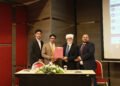


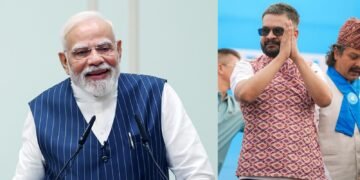







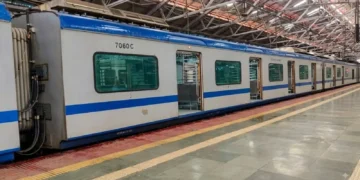














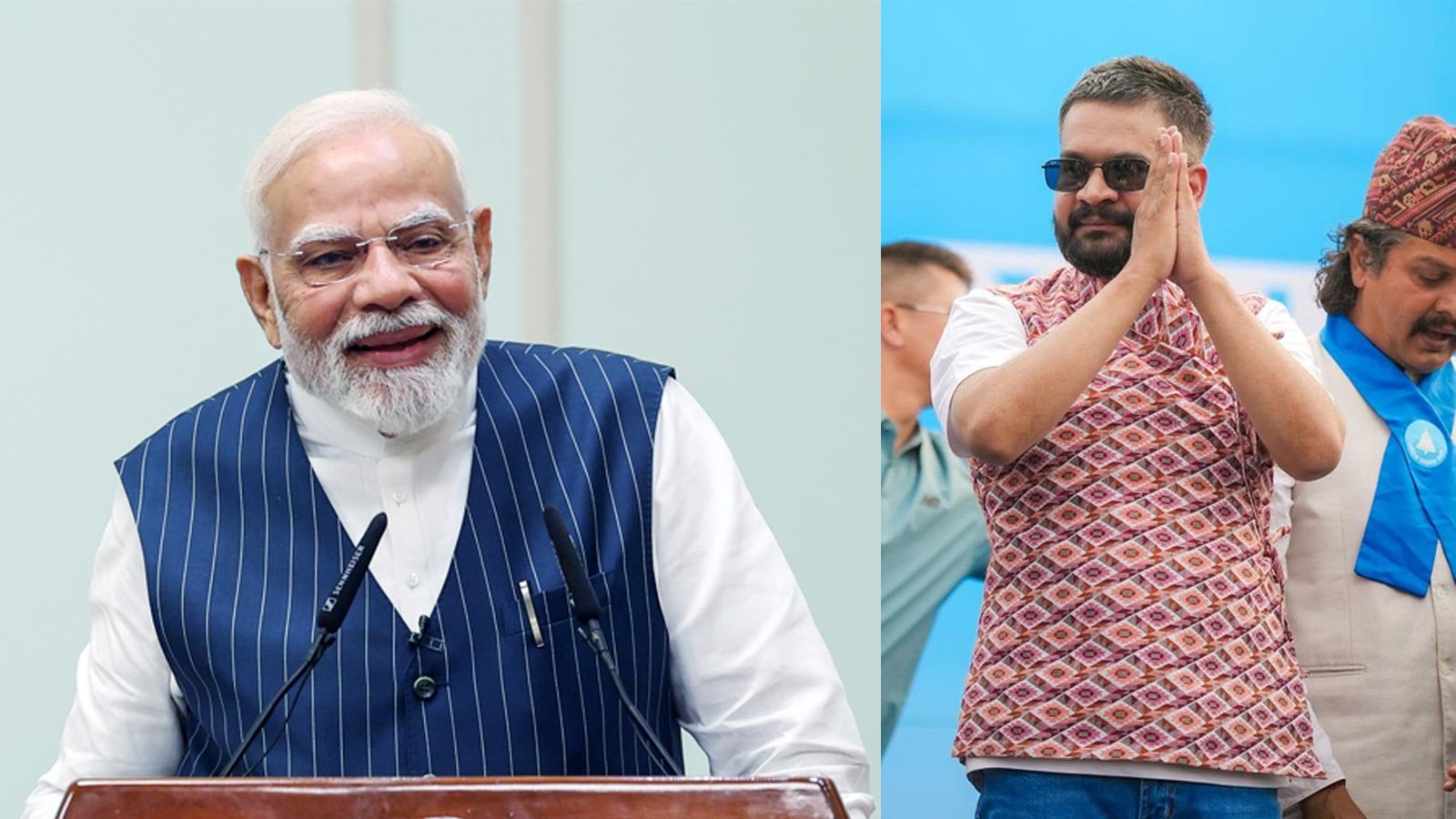
Prime Minister Narendra Modi and Nepal Prime Minister Balendra Shah are scheduled to hold bilateral talks in New Delhi on November 23, 2026. The discussions are expected to focus on the Ayodhya-Janakpur railway connection, energy cooperation, trade, infrastructure and Nepal’s post-flood reconstruction requirements.
India-Nepal Relations Enter an Important Phase
India-Nepal relations are back in focus as Prime Minister Narendra Modi prepares to meet Nepal’s Prime Minister Balendra Shah in New Delhi on November 23, 2026. The meeting is an important diplomatic development, particularly because it marks Shah’s first bilateral foreign visit since becoming Nepal’s Prime Minister.
Shah arrived in India on November 22 for a two-day state visit at the invitation of Narendra Modi. His visit comes at a time when both neighbouring countries are looking to strengthen cooperation in infrastructure, energy, trade, transportation and regional development.
According to reports, the two leaders are expected to review the overall relationship between India and Nepal and discuss new opportunities for cooperation. The proposed Ayodhya-Janakpur train service is also among the important developments connected with the visit. India News+2
Balen Shah’s First Bilateral Visit to India
Balendra Shah, popularly known as Balen Shah, became Nepal’s Prime Minister in March 2026. His political journey has attracted considerable attention because of his earlier work as Kathmandu’s mayor, where he developed a public profile through his focus on urban administration and governance.
His first bilateral visit to India carries diplomatic significance. India and Nepal share an open border, close cultural connections and extensive economic relationships. Both countries also depend on regular diplomatic engagement to address issues involving transportation, trade, security and development.
During his visit, Shah is scheduled to meet senior Indian leaders, including External Affairs Minister S. Jaishankar and President Droupadi Murmu. The programme also includes a ceremonial welcome and a visit to Rajghat.
The meeting with Modi is expected to provide direction to bilateral cooperation over the coming years. OnlineKhabar English News+2
Ayodhya-Janakpur Rail Link: A Major Connectivity Development
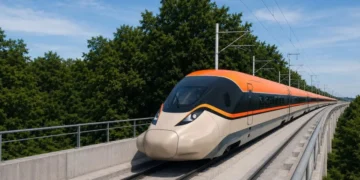
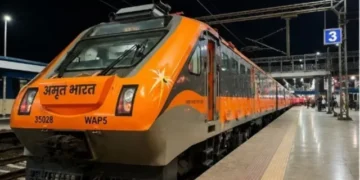
One of the most significant developments associated with the visit is the proposed weekly railway service connecting Ayodhya in Uttar Pradesh with Janakpur Dham in Nepal.
Indian Railways has approved the introduction of this service, which will connect two important destinations associated with the Ramayana tradition. Ayodhya is traditionally regarded as the birthplace of Lord Ram, while Janakpur Dham is revered as the birthplace of Goddess Sita.
According to the Ministry of Railways, the proposed service will cover approximately 604 kilometres between Janakpur Dham and Ayodhya Cantt. The route will pass through important towns and cities in Bihar and Uttar Pradesh.
The railway service is expected to improve cross-border travel for pilgrims, tourists and other passengers. It could also strengthen cultural connections between communities in India and Nepal.
The two prime ministers are scheduled to virtually flag off the Saryu-Kamala Express on November 23. The launch is expected to be among the key highlights of the diplomatic visit. Press Information Bureau+2
Why the Railway Connection Matters for Religious Tourism
The Ayodhya-Janakpur railway connection has significance beyond transportation. Both destinations hold an important place in the religious and cultural traditions shared by India and Nepal.
Ayodhya attracts visitors throughout the year because of its association with Lord Ram and the Ramayana. Janakpur, located in Nepal’s Madhesh Province, is an important pilgrimage destination associated with Goddess Sita. The Janaki Temple is among its most recognised religious landmarks.
A direct railway connection could make travel between these destinations more convenient, particularly for pilgrims and families travelling across the border.
For people from smaller cities and towns in Bihar, Uttar Pradesh and Nepal, improved rail connectivity could create additional travel opportunities. Religious tourism may also benefit local hotels, transport operators, restaurants, guides and small businesses.
However, the actual impact will depend on the train’s operating schedule, passenger demand, ticket prices and arrangements for cross-border travel.
Energy and Hydropower Cooperation on the Agenda
Energy cooperation is another important area expected to feature in the Modi-Shah discussions.
Nepal has considerable hydropower potential because of its Himalayan rivers and geographical conditions. India, meanwhile, has an expanding demand for electricity and opportunities to strengthen regional energy cooperation.
India and Nepal have already developed arrangements for cross-border electricity trade. Indian companies have also participated in hydropower projects in Nepal.
For Nepal, electricity exports to India represent an opportunity to generate revenue and support economic development. For India, access to additional hydropower can contribute to its electricity supply and support the transition towards cleaner energy sources.
The two countries are expected to explore ways to expand cooperation in electricity generation, transmission infrastructure and energy trade.
Such cooperation could also create opportunities for investment, employment and infrastructure development in Nepal’s relatively remote regions. India News – The Indian Express+2
Nepal’s Flood Reconstruction Needs Financial Support
Nepal’s reconstruction requirements following devastating floods in August 2026 are another important issue surrounding the diplomatic visit.
The floods caused extensive damage to infrastructure, including roads, bridges, power facilities, agricultural land and residential properties. The disaster created significant challenges for the Nepalese government.
According to Reuters, the disaster killed approximately 1,500 people, while more than 5,200 people remained missing, highlighting the scale of the humanitarian and economic crisis.
Nepal is looking for financial assistance to rebuild affected communities and restore essential infrastructure. Discussions around a possible assistance package from India are therefore particularly important.
India has historically provided development assistance to Nepal through grants, loans, infrastructure projects and humanitarian support.
Any additional financial assistance could help Nepal rebuild damaged facilities, improve transportation networks and restore economic activity in affected areas. However, the final structure and terms of any new package should be confirmed through official announcements. Reuters+2
Trade, Infrastructure and Regional Connectivity
India is Nepal’s largest trading partner and an important source of investment, essential supplies and development assistance.
The two countries share extensive commercial connections. Nepal relies on Indian routes for access to international markets, while Indian businesses have opportunities in Nepal’s energy, infrastructure, manufacturing and tourism sectors.
Improving cross-border connectivity can make these economic relationships more efficient.
Apart from the Ayodhya-Janakpur railway service, discussions are expected to cover other railway and infrastructure projects. One important proposal is the Raxaul-Kathmandu railway connection, which could improve passenger and freight movement between the two countries if developed.
Additional air connectivity is also an important consideration for Nepal. Better international flight access could support tourism, trade and business travel.
For businesses operating in border regions, improved transport infrastructure could reduce logistical difficulties and create opportunities for regional commerce. India News – The Indian Express+2
What the Meeting Could Mean for India and Nepal
The Modi-Shah meeting comes at a significant time for both countries. Nepal is looking to rebuild damaged infrastructure, strengthen its economy and expand international trade opportunities. India wants to maintain strong relations with its neighbouring countries while expanding cooperation in energy, connectivity and regional development.
The relationship also has a wider geopolitical dimension. China has increased its economic and infrastructure engagement with Nepal over the years. India and China both have strategic interests in the Himalayan region.
For India, maintaining constructive relations with Nepal remains important because of geographical proximity, historical connections, security considerations and economic interdependence.
For Nepal, maintaining balanced relations with its neighbours is important for development and diplomatic independence.
The outcome of the November 23 discussions could help establish priorities for future cooperation. However, the success of any agreements will depend on their implementation, financial commitments and continued engagement between the two governments.
Key Takeaways
- Narendra Modi and Nepal Prime Minister Balendra Shah are scheduled to hold bilateral talks in New Delhi on November 23, 2026.
- The proposed Saryu-Kamala Express will connect Ayodhya in Uttar Pradesh with Janakpur Dham in Nepal through a weekly railway service covering approximately 604 kilometres.
- Energy cooperation, hydropower, trade and Nepal’s post-flood reconstruction are important subjects on the diplomatic agenda.
- Better railway and infrastructure connectivity could support religious tourism, regional businesses and economic cooperation between the two neighbouring countries.
Frequently Asked Questions (FAQs)
1. When will Narendra Modi meet Nepal Prime Minister Balen Shah?
Narendra Modi and Nepal Prime Minister Balendra Shah are scheduled to hold bilateral talks in New Delhi on November 23, 2026, during Shah’s two-day state visit to India.
2. What is the Ayodhya-Janakpur railway service?
It is a proposed weekly train service connecting Ayodhya Cantt. in Uttar Pradesh with Janakpur Dham in Nepal. The approximately 604-kilometre connection aims to improve cross-border transportation and religious tourism.
3. Why is the Ayodhya-Janakpur railway link important?
The railway connection links two major religious destinations associated with the Ramayana tradition. It is expected to make pilgrimage travel easier and encourage tourism and cultural exchanges between India and Nepal.
4. What are the major issues India and Nepal are expected to discuss?
The discussions are expected to cover energy cooperation, hydropower, bilateral trade, railway connectivity, infrastructure development, technology and financial assistance for Nepal’s post-flood reconstruction.