































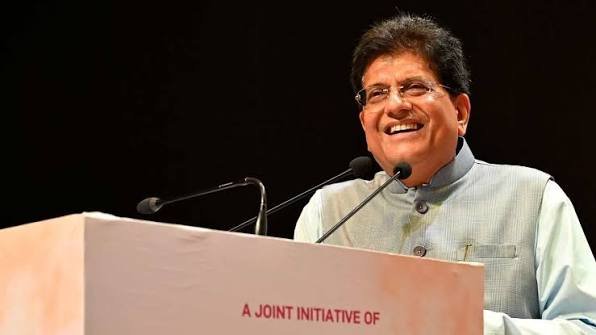
Union Commerce and Industry Minister Piyush Goyal has urged Indian startups to look beyond the domestic market and expand internationally, offering government support to help them showcase their products at global exhibitions and conferences. His remarks at the Economic Times Startup Awards 2026 highlight the growing importance of exports, international investment and global competitiveness for India’s startup ecosystem.
Piyush Goyal’s Global Expansion Push for Indian Startups
On October 12, 2026, Piyush Goyal called on Indian startups to move beyond the domestic market and pursue opportunities in international markets. Speaking in Bengaluru at the Economic Times Startup Awards 2026, the minister emphasised that Indian businesses should develop a sustained strategy for reaching overseas customers and attracting international investors.
According to reports published on Monday, Goyal said the government would support startups seeking to participate in international exhibitions and conferences. Such events can help young companies introduce their products to overseas buyers, build business relationships and explore partnerships with established businesses.
The minister indicated that a focused effort over three to five years could help Indian startups enter new markets and strengthen their international presence. The message was directed at entrepreneurs who have built businesses in India but may not yet have the resources, contacts or experience required to expand abroad.
The announcement comes as India seeks to strengthen its participation in global trade and supply chains. For startups, international expansion can offer access to a larger customer base, although success depends on product quality, pricing, regulatory compliance and the ability to compete with established international companies.
What Government Support Could Mean for Startups
Expanding into another country can be expensive for a young business. Startups may need to conduct market research, adapt products to local requirements, arrange distribution, obtain certifications and establish relationships with potential customers.
International exhibitions and industry conferences provide one way to manage the initial challenge of entering a new market. Entrepreneurs can demonstrate products, meet distributors, speak with potential investors and understand customer requirements without immediately setting up a permanent overseas office.
Government assistance with participation costs could therefore reduce one barrier for eligible startups, particularly smaller companies that lack the marketing budgets of larger competitors. It could also help businesses from emerging startup hubs reach international audiences.
However, government support for attending an exhibition does not guarantee foreign investment, export orders or commercial success. Companies still need a clear business strategy, reliable products and a plan for converting introductions into paying customers.
The precise eligibility criteria, application process and financial assistance available under the support mentioned by Goyal should be confirmed through official government announcements before entrepreneurs make spending decisions. Startups should not assume that all travel, exhibition or international marketing costs will automatically be covered.
How India’s Trade Agreements Can Help Startups Enter Foreign Markets
India’s expanding network of trade agreements could provide another route for startups seeking international customers. Such agreements can improve market access by reducing or removing tariffs on eligible products and establishing rules for trade between participating economies.
In February 2026, Goyal urged medical technology startups to explore overseas markets and use India’s trade agreements to expand internationally. The government highlighted opportunities across Africa, Latin America, Central Asia, Southeast Asia and developed economies.
The potential benefits extend beyond medical technology. Depending on the agreement and product category, businesses in engineering, electronics, consumer goods and other sectors may also find opportunities abroad.
Startups must nevertheless examine the specific rules applicable to their products. Trade agreements do not automatically eliminate every tariff, licensing requirement or regulatory barrier. Companies may need to meet rules of origin, product certification requirements, labelling standards and local registration procedures.
For founders, the practical first step is to identify a target market, estimate the cost of entering it and determine whether an applicable trade agreement offers a measurable advantage. Government export support and trade promotion agencies can help businesses understand these requirements before they commit substantial resources.
Why Indian Startups Need to Think Beyond the Domestic Market
India’s large consumer market allows startups to test products, refine business models and build revenue before expanding internationally. However, companies operating in specialised industries may eventually need a wider customer base to achieve sustainable growth.
For example, a software startup serving Indian small businesses might explore markets with similar business needs. A medical technology company could investigate regions where affordable diagnostic equipment is in demand. An industrial technology startup might approach overseas manufacturers seeking specialised components or automation solutions.
These examples illustrate potential opportunities rather than guaranteed outcomes. Each company must assess customer demand, competition, purchasing power and local business practices before choosing a market.
International expansion can also diversify revenue. A startup selling in several countries may become less dependent on economic conditions in one market. At the same time, overseas operations introduce new risks, including currency fluctuations, payment delays, unfamiliar tax rules and changing trade policies.
The most effective strategy is usually selective expansion rather than entering multiple countries at once. Startups can begin with one or two promising markets, establish distribution partnerships and use early customer feedback to refine their approach.
Global Ambitions and India’s Startup Ecosystem
India has developed a substantial startup ecosystem spanning software, financial technology, healthcare, manufacturing, logistics, consumer brands and artificial intelligence. Many businesses have demonstrated that products and services developed for Indian customers can also address needs in other economies.
Yet international growth requires more than a strong domestic business. Startups must build teams capable of handling overseas sales, customer support, compliance, logistics and partnerships. They may also need to adapt their products to different languages, technical standards and consumer expectations.
Funding is another consideration. Overseas expansion can increase working capital requirements before new markets begin generating meaningful revenue. Government-backed assistance may help with selected expenses, but companies must still plan for ongoing operating costs.
Intellectual property protection is equally important. Businesses entering foreign markets should understand how to protect their technology, trademarks and designs in the jurisdictions where they intend to operate.
For startups based in Tier-2 and Tier-3 cities, access to international networks can be particularly valuable. Founders outside established metropolitan startup hubs may have strong products but fewer direct connections to overseas investors, distributors and industry associations. Well-designed export programmes could help bridge that gap.
Could International Visa Restrictions Benefit Indian Startups?
Goyal also argued that tighter H-1B visa access in the United States could create opportunities for India by encouraging skilled professionals to remain in the country and bringing more international work to Indian capability centres.
The potential effect deserves attention, but it should not be treated as an automatic benefit. Immigration restrictions can influence where companies recruit and locate work, yet business decisions also depend on access to customers, labour costs, infrastructure, taxation and regulatory conditions.
If more skilled professionals choose to build businesses in India, the startup ecosystem could benefit from their technical knowledge, international experience and professional networks. Indian companies may also find opportunities to undertake work that might otherwise have been performed abroad.
However, visa restrictions alone cannot guarantee more startup funding or employment in India. The country must continue developing research capabilities, improving business conditions and creating opportunities for skilled workers to build globally competitive products.
For founders, the broader lesson is to focus on capabilities that customers need regardless of where a company operates. Strong technology, reliable delivery and an understanding of international markets are more sustainable advantages than relying on changes in immigration policy.
What Startups Should Do Next
Entrepreneurs interested in expanding overseas should begin by identifying a specific customer problem and testing whether their product offers a meaningful advantage in the target market.
They should then estimate the cost of international expansion, research relevant regulations and explore distribution or technology partnerships. Founders can also investigate government export assistance, startup support programmes and opportunities to participate in international exhibitions.
Before applying for any assistance, businesses should verify the programme’s current rules through official government channels. They should check whether their company and sector qualify, what expenses are covered and whether support is provided before or after expenditure.
Goyal’s October 12 message places international expansion firmly on the agenda for Indian startups. The real test will be whether support translates into sustained overseas sales, stronger partnerships and businesses capable of competing internationally.
Key Takeaways
- Piyush Goyal urged Indian startups to expand beyond the domestic market at the Economic Times Startup Awards 2026 on October 12.
- The government has indicated support for eligible startups participating in international exhibitions and conferences.
- India’s trade agreements may create opportunities for exporters, but companies must check product-specific rules and market requirements.
- International growth requires market research, sufficient funding, regulatory compliance and a clear strategy for acquiring overseas customers.
Frequently Asked Questions
1. What did Piyush Goyal announce for Indian startups?
Goyal encouraged startups to expand internationally and said government support would be available to help them showcase their products at global exhibitions and conferences. Specific eligibility and funding conditions should be checked through official announcements.
2. How can Indian startups expand into international markets?
Startups can research target markets, identify potential customers, work with overseas distributors, attend trade exhibitions and explore applicable trade agreements. They should also assess regulatory requirements and the financial risks of expansion.
3. Can startups from Tier-2 cities benefit from government export support?
Potentially, yes. Eligible startups outside major metropolitan centres may benefit from access to international exhibitions, buyers and business networks. Actual assistance depends on the relevant programme’s rules and eligibility conditions.
4. Do India’s trade agreements guarantee easier exports for every startup?
No. Trade agreements may reduce tariffs or improve market access for eligible goods and services, but businesses must still comply with applicable customs rules, certifications, local regulations and other requirements.














