































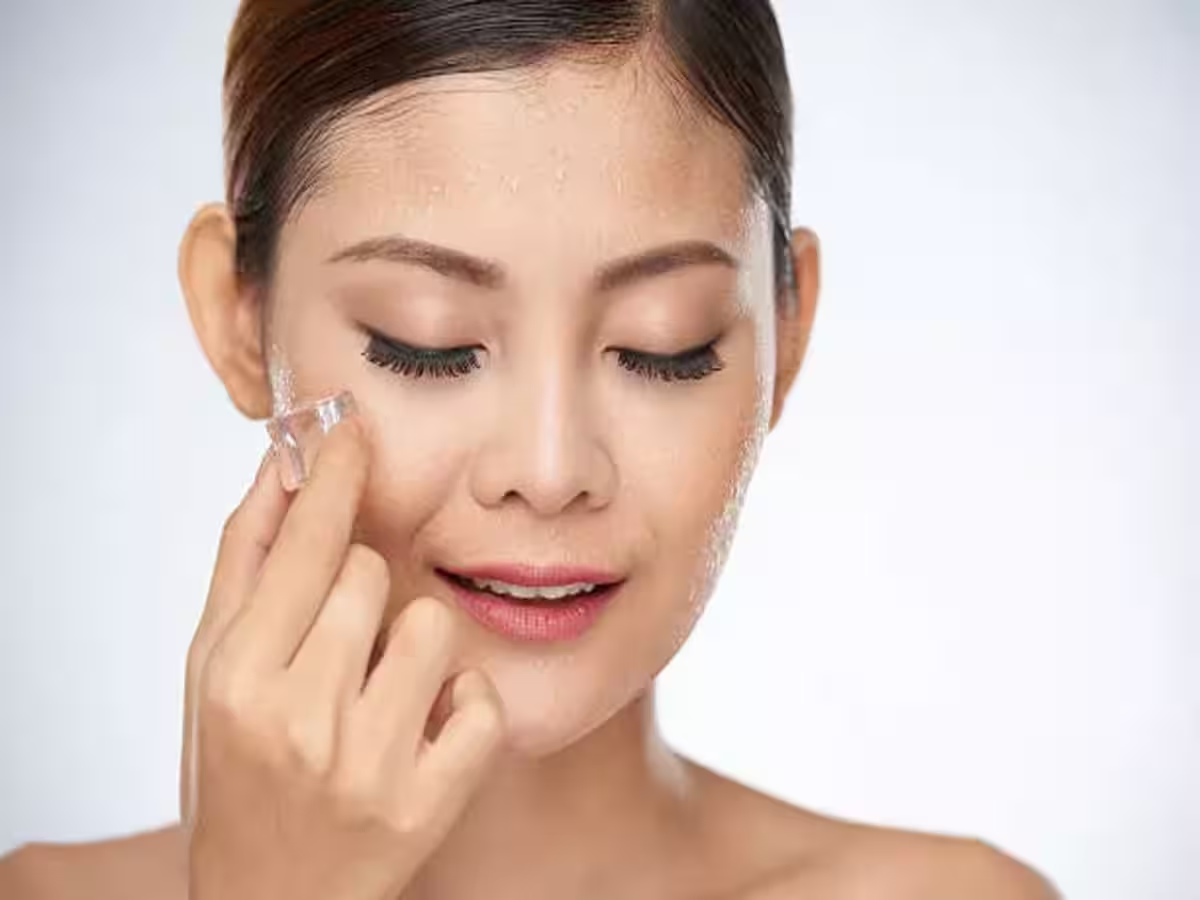
The ice facial trend is gaining fresh attention across social media, with users claiming that dipping the face in ice water can reduce puffiness, tighten pores and create an instant glow. But dermatology experts say the effects are mostly temporary, and the method needs to be used carefully.
Why Is the Ice Facial Trending Again?
Ice facials are not a completely new skincare idea, but the practice has found a new audience through Instagram, TikTok and short-form beauty content. Videos showing people dipping their faces into bowls of ice water or moving ice cubes across their cheeks often promise a quick, inexpensive route to fresher-looking skin.
The trend received additional attention in India after celebrities including Priyanka Chopra and Alia Bhatt discussed or demonstrated cold-water facial routines. Indian dermatology experts have explained that exposure to cold can temporarily narrow blood vessels in the skin, which may reduce puffiness and make the face appear more refreshed.
That does not mean every claim attached to the trend is scientifically established. A temporary change in appearance should not be confused with a permanent improvement in skin health.
What Actually Happens When Ice Touches Your Skin?
The main effect of facial icing comes from cold exposure. When skin is exposed to cold, blood vessels constrict, or become narrower. This can temporarily reduce blood flow to the surface and may decrease swelling and redness.
That is one reason the face can look less puffy immediately after a cold treatment. Cleveland Clinic notes that facial icing may help reduce swelling and the appearance of under-eye puffiness. However, it describes the effect as temporary rather than a long-term solution for skin concerns.
The cooling sensation can also make the skin feel firmer for a short period. This temporary tightening can make pores appear less noticeable. But the pores themselves are not permanently shrinking.
This distinction matters because social media before-and-after videos can make a short-lived cosmetic effect look like a major change in skin structure.
Can an Ice Facial Reduce Facial Puffiness?
Yes, this is one of the more realistic claims associated with the trend.
Cold can help reduce temporary swelling, which is why some people use facial icing after waking up with a puffy face or before applying makeup. The effect may be particularly noticeable around the eyes, where fluid accumulation can contribute to morning puffiness.
However, the reason behind facial puffiness matters. Lack of sleep, high-salt meals and temporary fluid retention can produce swelling that may respond to cooling. Genetic under-eye bags or structural changes will not disappear because of an ice cube.
In other words, facial icing can make the face look less swollen for a while, but it does not permanently change facial anatomy.
Does Ice Really Shrink Pores and Wrinkles?
This is where online claims need more caution.
Cold can temporarily tighten the appearance of skin, which may make pores look smaller immediately after icing. But there is no reason to treat this as permanent pore reduction.
Similarly, facial icing should not be considered an established treatment for wrinkles or skin ageing. The temporary tightening effect can make the skin appear smoother, but it does not mean that ice has reversed ageing or repaired damaged skin.
Healthline notes that claims around facial icing for acne and swollen eyes do not have strong scientific evidence behind them, while Cleveland Clinic describes icing mainly as a temporary way to reduce puffiness and provide a refreshed appearance.
For long-term concerns such as wrinkles, pigmentation, acne or uneven skin texture, a consistent skincare routine and appropriate dermatological treatment are more relevant than an occasional cold treatment.
What About Acne, Redness and Inflammation?
Cold can temporarily soothe swelling and discomfort, which may explain why some people feel that icing helps when their skin looks inflamed.
But that does not make an ice facial an acne treatment.
Active acne has multiple causes, including excess oil production, clogged pores, inflammation and hormonal factors. Cooling the skin may temporarily make redness or swelling less noticeable, but it does not address the underlying causes of acne.
People with persistent redness or inflammatory skin conditions should also be careful. A technique that feels refreshing to one person may irritate another person’s skin.
The American Academy of Dermatology advises protecting facial skin from harsh cold exposure because cold conditions can contribute to dryness and irritation.
How to Try an Ice Facial More Safely
If someone wants to try facial icing, directly pressing an ice cube against the skin for a prolonged period is not a good approach.
Cleveland Clinic recommends wrapping an ice cube in a thin cloth and keeping it moving across the face rather than leaving it in one place. The purpose is to reduce the intensity of direct cold exposure and lower the chance of irritation.
A cold compress or chilled facial tool can also provide cooling without requiring prolonged direct contact with an ice cube.
The important point is moderation. Stop if the skin becomes painful, intensely numb, very pale, blistered or unusually irritated. Prolonged direct exposure to ice can cause cold injury. Cleveland Clinic notes that ice and cold packs held directly against skin for too long can cause an ice burn, while Mayo Clinic states that direct contact with ice can contribute to frostbite.
Who Should Be Careful With Facial Icing?
Not everyone should experiment with an ice facial simply because it is popular online.
People with very sensitive or compromised skin may experience increased irritation. Cleveland Clinic specifically advises caution for people with thin or sensitive skin, visible broken capillaries and those recovering from cosmetic procedures such as lasers, peels or surgery.
People with cold urticaria, a condition in which exposure to cold can trigger itchy hives and swelling, should avoid casual experimentation and speak with a healthcare professional. In severe cases, extensive cold exposure can cause a serious allergic reaction.
Anyone who has recently undergone a dermatological or cosmetic procedure should also follow their dermatologist’s aftercare instructions rather than copying a social media routine.
So, Does the Viral Ice Facial Actually Work?
The short answer is yes, but only within limits.
An ice facial can temporarily reduce puffiness, make the skin feel refreshed and create a short-term tightening effect. Those changes are plausible effects of cold exposure and are supported by dermatology and medical guidance.
What it cannot reliably do is permanently shrink pores, erase wrinkles, cure acne, remove pigmentation or transform the structure of the skin.
That is the biggest difference between the social media version of the trend and the evidence-based explanation. The technique can be a simple cosmetic pick-me-up, but it should not be treated as a replacement for proper skincare or medical treatment.
For readers trying the trend at home, the safest approach is to avoid prolonged direct ice contact, use gentle cooling rather than extreme cold, and stop immediately if the skin reacts badly.
Key Takeaways
- Ice facials can temporarily reduce facial puffiness and make skin appear refreshed.
- Cold may temporarily make pores look smaller, but it does not permanently shrink them.
- Direct or prolonged ice contact can cause irritation, cold burns or other skin injury.
- People with sensitive skin, cold urticaria or recent cosmetic procedures should be especially cautious.
Frequently Asked Questions
Is an ice facial good for your skin?
It can provide temporary cosmetic benefits such as reduced puffiness and a refreshed appearance. It is not a proven long-term treatment for acne, wrinkles or pigmentation.
Can ice permanently shrink pores?
No. Cold can temporarily tighten the appearance of the skin, making pores appear less visible for a short time. It does not permanently change pore size.
Can I put an ice cube directly on my face?
It is safer to avoid prolonged direct contact. Cleveland Clinic recommends wrapping ice in a thin cloth and keeping it moving across the face rather than holding it against one area.
Who should avoid ice facials?
People with very sensitive or damaged skin, visible broken capillaries, recent cosmetic procedures or cold-triggered conditions such as cold urticaria should be cautious. Those with a known cold sensitivity should consult a healthcare professional before trying the trend.














