































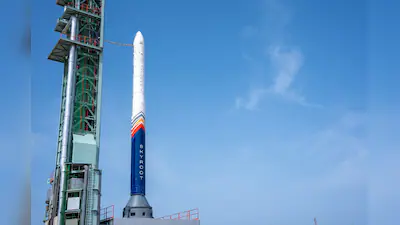
India’s spacetech sector has attracted about $871 million across 241 funding rounds involving 285 companies as of July 2026. The surge reflects growing investor confidence in launch vehicles, satellites, Earth observation, propulsion and other commercial space technologies.
India’s spacetech funding enters a new phase
India’s spacetech funding has reached a significant milestone as private companies attract increasing attention from venture capital and institutional investors. According to Tracxn data reported in July 2026, Indian spacetech startups had collectively raised about $871 million across 241 funding rounds. The funding involved 285 companies, although only 72 had raised institutional equity funding.
The number is notable because India’s private space ecosystem was much smaller just a few years ago. The sector raised only $43 million across 12 rounds in 2021. Funding then increased to a record $200 million across 53 rounds in 2025.
The latest numbers indicate that space technology is moving beyond being viewed mainly as a government-led research area. Private companies are increasingly developing commercial products and services around rockets, satellites, propulsion, Earth observation, space situational awareness and downstream data analytics.
Skyroot leads India’s private space funding race
Hyderabad-based Skyroot Aerospace has emerged as the best-funded spacetech company in India, with about $150 million raised, according to the Tracxn data. Its progress has also given the sector a major visibility boost.
In May 2026, Skyroot raised fresh capital that took its valuation to around $1.1 billion, making it India’s first spacetech unicorn. The company was founded in 2018 by former ISRO scientists Pawan Kumar Chandana and Naga Bharath Daka.
Skyroot subsequently achieved another major milestone on July 18, when its Vikram-1 rocket successfully reached a 450-kilometre low Earth orbit. The mission made Skyroot the first Indian private company to successfully conduct an orbital launch.
The achievement matters for investors because successful launches can demonstrate that capital is translating into operational technology. For startups in a technically demanding sector, that validation can be important when seeking future funding and commercial customers.
Funding is spreading beyond rocket companies
The growth of India’s spacetech ecosystem is not limited to launch vehicles.
Companies are working across several segments, including satellite manufacturing, propulsion, Earth observation, space situational awareness and space-based analytics. Pixxel, AgniKul Cosmos, Digantara and Bellatrix Aerospace are among the other companies that have attracted substantial funding.
Pixxel has raised about $96 million, while AgniKul Cosmos and Digantara have raised approximately $76 million and $67 million respectively, according to the July Tracxn data. Bellatrix Aerospace has raised about $34 million.
This diversification is important because the commercial space economy involves much more than putting rockets into orbit. Satellite data can support agriculture, mapping, infrastructure planning, disaster management and other applications.
That creates opportunities for startups that may not build rockets themselves but develop technologies around the information and services generated by space infrastructure.
Early-stage and late-stage investments are increasing
Another important change is the development of funding across different stages of the startup lifecycle.
Tracxn data showed seed-stage funding rising from $7 million in 2022 to $62 million in 2025. Late-stage funding, which was not recorded until recently, reached $17 million in 2025 and $53 million during the first seven months of 2026.
This suggests that India’s spacetech ecosystem is beginning to produce companies that investors consider capable of moving beyond early experimentation.
The distinction matters because space startups usually require significant capital before they can generate large commercial revenues. Rocket development, satellite manufacturing and advanced propulsion can involve long development cycles, specialised facilities and extensive testing.
A deeper pool of later-stage capital can therefore help promising companies continue developing rather than having to depend entirely on early venture rounds.
Government policy has helped unlock private investment
India’s private space industry received a major policy push in 2020 when the sector was opened to greater private participation.
The creation of the Indian National Space Promotion and Authorisation Centre, or IN-SPACe, provided an institutional framework for authorising and facilitating private space activities.
The policy changes also enabled private companies to use certain national space infrastructure and work more closely with the existing ecosystem.
The resulting investment trend shows why policy certainty matters in deeptech. Investors typically face greater technical and commercial risks in industries where products can take years to develop.
A clearer regulatory environment does not remove those risks, but it can make the sector more investable by giving companies and investors greater visibility over how commercial space activities can operate.
Bengaluru, Hyderabad and Chennai dominate funding
India’s spacetech funding is also concentrated geographically.
Bengaluru attracted about $495 million across 106 funding rounds, making it the country’s leading spacetech hub. Hyderabad followed with about $205 million, while Chennai attracted approximately $80 million, according to the July 2026 data.
These three cities account for a large share of the capital raised by India’s private space ecosystem.
The concentration is partly linked to existing aerospace, engineering and technology talent. Bengaluru has a long-established aerospace and technology ecosystem, while Hyderabad has developed a strong presence in launch technology and related industries. Chennai has also become an important base for space startups.
For other Indian cities, the opportunity could emerge through supporting industries rather than immediately competing with these established hubs.
What the funding means for new-age startups
The $871 million figure sends an important signal to entrepreneurs working in Indian deeptech.
For years, consumer internet businesses dominated India’s startup funding conversation. The latest spacetech numbers show that investors are increasingly willing to consider businesses requiring longer development periods and specialised engineering.
That does not mean every space startup will attract funding. More than 60 per cent of the sector’s total capital has gone to the 10 most-funded companies, showing that investment remains concentrated.
For new founders, technical differentiation, credible teams, intellectual property, regulatory understanding and a clear commercial pathway are likely to remain crucial.
The opportunity is therefore significant, but so are the barriers to entry.
Smaller cities could benefit from the space economy
The impact of India’s spacetech expansion could eventually extend beyond Bengaluru, Hyderabad and Chennai.
Space-based technologies have applications that are directly relevant to smaller cities and rural regions. Earth observation data can support agriculture, weather analysis, infrastructure planning and disaster management. Satellite connectivity can also help bridge gaps in communication and digital services.
This creates opportunities for startups that build applications using space-derived data rather than developing spacecraft themselves.
For Tier-2 and Tier-3 cities, that distinction is important. The next generation of space businesses may not necessarily need to manufacture rockets. They could develop software, analytics, mapping tools and specialised services that use satellite data for local problems.
India’s private space market still has challenges
The funding surge should not be interpreted as proof that India’s spacetech industry has already become commercially mature.
Space businesses face substantial technical, regulatory and financial challenges. Launch failures, long development timelines, limited customer markets and high capital requirements can affect startups even after successful fundraising.
There is also a difference between raising capital and building a sustainable business. Investors will increasingly look for recurring revenue, successful missions, reliable technology and evidence of customer demand.
Skyroot’s orbital success is an important milestone, but the broader ecosystem will need many more successful missions and commercially viable products to establish a durable private space industry.
What comes next for Indian spacetech startups
India’s $871 million spacetech funding milestone comes at a time when the country’s private space sector is moving from experimentation toward commercial operations.
The July 2026 data shows strong growth in funding, a wider investor base and increasing participation across different space technology segments. The successful Vikram-1 mission has added another layer of credibility to the ecosystem.
For new-age startups, the opportunity is broader than rocket launches. Satellite manufacturing, propulsion, Earth observation, space data, analytics and related software can all become part of India’s growing commercial space economy.
The next test will be whether this funding translates into sustainable companies, repeat customers and reliable technology. If it does, India’s spacetech ecosystem could become an important part of the country’s wider deeptech economy.
Takeaways
- Indian spacetech startups have raised about $871 million across 241 funding rounds as of July 2026.
- Skyroot Aerospace is the sector’s best-funded startup and became India’s first spacetech unicorn.
- Funding is expanding across launch vehicles, satellites, propulsion, Earth observation and space analytics.
- Bengaluru, Hyderabad and Chennai currently account for a large share of India’s private spacetech funding.
FAQ
How much funding has India’s spacetech sector raised?
Indian spacetech companies had raised approximately $871 million across 241 funding rounds involving 285 companies as of July 2026, according to Tracxn data reported by Indian business media.
Which is India’s best-funded spacetech startup?
Skyroot Aerospace is currently the best-funded Indian spacetech startup, with approximately $150 million raised according to the July 2026 Tracxn data.
Why is Skyroot Aerospace important for India’s space industry?
Skyroot became India’s first spacetech unicorn in 2026 and later successfully launched its privately developed Vikram-1 orbital rocket, marking a major milestone for India’s commercial space sector.
What opportunities does spacetech create for startups?
Opportunities extend beyond rockets to satellite manufacturing, propulsion, Earth observation, space situational awareness, satellite data analytics, mapping and software applications built around space-derived information.
(Internal keywords: India spacetech funding 2026, $871 million spacetech funding, Indian space startups, Skyroot Aerospace funding, India space tech startups, spacetech unicorn India, private space sector India, Indian deeptech startups, space startup funding India, Indian satellite startups)