































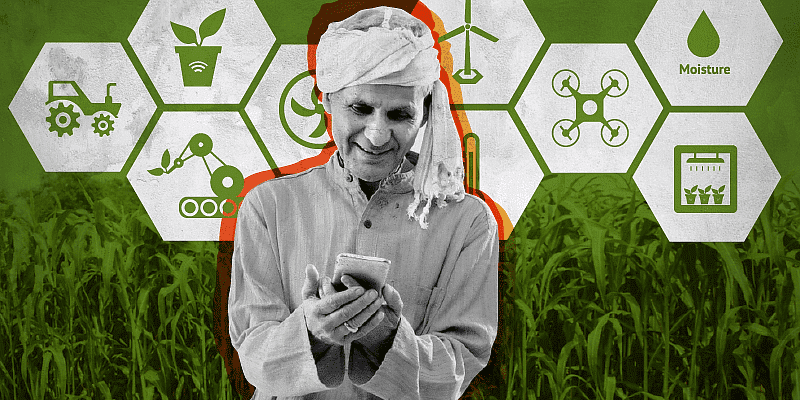
Indian agritech startups are continuing to attract investor interest in 2026 as funding increasingly flows toward companies solving real agricultural challenges through technology. From AI-powered crop management and supply chain platforms to sustainable farming solutions, investors remain optimistic about the sector’s long-term growth despite a selective funding environment.
India’s agritech startup ecosystem has entered 2026 with renewed momentum. While venture capital firms have become more cautious across several startup sectors, agriculture technology continues to receive attention because it addresses one of India’s largest economic sectors. Investors are now prioritizing startups with proven business models, measurable farmer impact, and scalable technology instead of growth at any cost.
Recent funding rounds reflect this trend. Companies working on agricultural biotechnology, digital marketplaces, precision farming, and climate-smart agriculture have secured fresh capital to expand operations and strengthen research capabilities. Recent investments in companies such as Ninjacart, Mandrake Bio and sustainable farming platform Rize highlight continued confidence in agriculture-focused innovation. These deals suggest investors are looking beyond short-term returns and focusing on technologies that can improve productivity and sustainability.
Investors Focus on Scalable Agritech Business Models
The Indian agritech sector has matured considerably over the past few years. Earlier, startups mainly concentrated on connecting farmers directly with buyers or offering digital advisory services. In 2026, the investment landscape has expanded to include artificial intelligence, satellite analytics, biotechnology, supply chain digitization, farm automation, and climate-resilient agriculture.
Investors are showing greater interest in startups that generate recurring revenue through subscription services, enterprise partnerships, and data-driven platforms. Rather than funding experimental ideas alone, venture capital firms are increasingly supporting businesses that demonstrate commercial adoption and measurable benefits for farmers.
Flipkart-backed Ninjacart’s fresh funding round in July 2026 is one example of this trend. The company continues to strengthen its agricultural supply chain while preparing for future expansion, reflecting investor confidence in scalable agritech platforms.
AI, Climate Technology and Precision Farming Drive Growth
Artificial intelligence has become one of the strongest themes within India’s agritech ecosystem. Startups are using AI to improve crop monitoring, disease detection, weather forecasting, irrigation management, and farm productivity.
Precision agriculture is also gaining traction. By combining satellite imagery, drone technology, IoT sensors, and predictive analytics, agritech companies are helping farmers reduce costs while increasing yields.
Climate-focused agriculture is another area attracting funding. Sustainable rice farming platform Rize recently raised significant capital to expand technology-led farming practices aimed at reducing greenhouse gas emissions while improving crop productivity. The company is also evaluating expansion into India, reflecting growing interest in sustainable agriculture across the region.
Meanwhile, Bengaluru-based Mandrake Bio secured funding to develop AI-powered programmable gene-editing technology with applications in agriculture and medicine, demonstrating increasing investor interest in deep-tech agricultural innovation.
Government Support Continues to Strengthen the Ecosystem
Government initiatives continue to play an important role in supporting India’s agritech ecosystem. Programs promoting digital agriculture, farmer producer organizations, AgriStack development, startup incubation, and agricultural innovation have created opportunities for early-stage companies.
Several state governments are also encouraging technology adoption through pilot projects, smart farming initiatives, and collaborations with startups. These efforts help startups test their products in real farming environments while improving farmer confidence in new technologies.
The combination of public support and private investment has helped India emerge as one of the world’s most active agritech startup markets. Better digital connectivity, smartphone adoption, and increasing awareness among farmers are also contributing to faster technology adoption.
Challenges Remain Despite Positive Funding Trends
Although investor interest remains strong, funding is becoming more selective. Investors now expect startups to demonstrate sustainable revenue, operational efficiency, and clear market demand before committing capital.
Agriculture itself presents unique challenges. Weather uncertainty, fragmented landholdings, varying crop patterns, and regional differences require startups to customize solutions for different markets. Scaling operations across multiple states can also be expensive.
However, experts believe companies that successfully combine technology with practical farming solutions are likely to remain attractive investment opportunities over the coming years.
As India’s agriculture sector continues its digital transformation, agritech startups are expected to play a larger role in improving productivity, reducing waste, strengthening food supply chains, and supporting sustainable farming practices. The continued flow of investment into innovative companies suggests that investors see long-term potential in technology-driven agriculture, making agritech one of the country’s most resilient startup segments in 2026.
Key Takeaways
- Indian agritech startups continue attracting investment despite a more selective funding environment.
- AI, biotechnology, precision farming, and climate-smart agriculture are major investment themes in 2026.
- Recent funding for Ninjacart, Mandrake Bio, and Rize reflects sustained investor confidence in agricultural innovation.
- Government support and growing technology adoption among farmers continue to strengthen the sector.
Frequently Asked Questions
Q1. Why are investors interested in Indian agritech startups in 2026?
Investors see strong long-term growth opportunities because agriculture remains a critical sector for India’s economy, and technology can improve productivity, efficiency, and sustainability.
Q2. Which technologies are attracting the most agritech funding?
Artificial intelligence, biotechnology, satellite analytics, precision farming, digital supply chains, and climate-smart agriculture are receiving significant investor attention.
Q3. Are agritech startups still receiving funding despite slower venture capital activity?
Yes. While investors have become more selective, startups with proven business models, measurable farmer impact, and scalable technology continue to secure funding.
Q4. What are the biggest challenges facing agritech startups?
Scaling across diverse farming regions, adapting to climate variability, achieving profitability, and driving farmer adoption remain key challenges.
(Internal keyword suggestions: Indian agritech startups 2026, agritech funding India, agriculture startups India, AI in agriculture, precision farming India, agritech investment, sustainable farming startups, Ninjacart funding, climate smart agriculture, Indian startup funding)