





























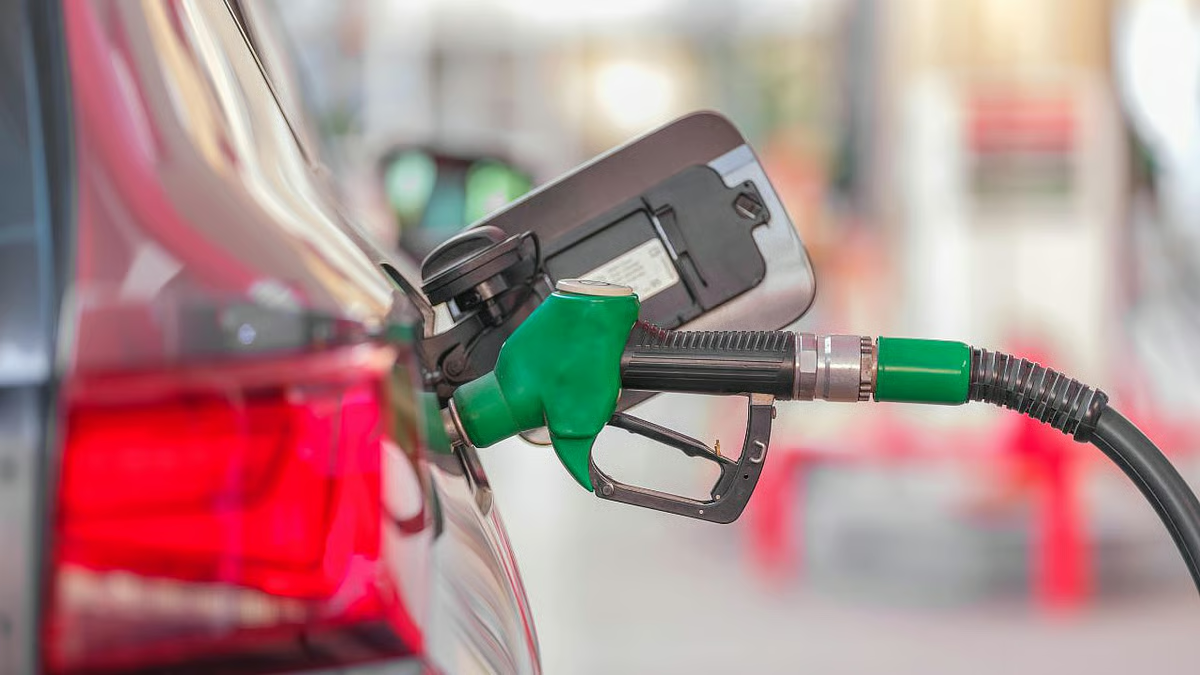
India has announced an excise duty waiver on ethanol-blended petrol, a move that aligns with the country’s long-term strategy to promote cleaner fuels and reduce dependence on imported crude oil. The decision has generated interest among motorists, fuel retailers, and industry experts who are assessing its potential impact on fuel prices and daily commuting costs.
Understanding the Excise Duty Waiver on Ethanol-Blended Petrol
The excise duty waiver applies to the ethanol component mixed with petrol under India’s ethanol blending program. Ethanol, which is primarily produced from sugarcane, maize, and other agricultural feedstocks, has become a key part of the government’s energy transition strategy.
India has steadily increased ethanol blending levels over the past decade. The country achieved significant progress toward its ethanol blending targets ahead of schedule, helping reduce fossil fuel consumption while supporting domestic agriculture.
By exempting the ethanol portion from excise duty, the government aims to make blended fuel more cost-effective and encourage wider adoption across the country.
What the Move Means for Daily Commuters
For ordinary commuters, the most important question is whether fuel prices will decrease immediately. The answer is more nuanced.
The excise duty waiver does not automatically translate into a sharp reduction in petrol prices at fuel stations. Retail fuel prices are influenced by multiple factors, including international crude oil prices, transportation costs, state-level taxes, dealer commissions, and exchange rate movements.
However, the waiver can help lower the overall tax burden on blended fuel. Over time, this may improve pricing efficiency within the fuel supply chain and potentially help stabilize fuel costs.
For commuters in cities where ethanol-blended petrol is widely available, the policy could contribute to more competitive fuel pricing in the long run, particularly if ethanol production continues to increase.
Ethanol Blending Program and Energy Security Goals
One of the major objectives behind ethanol blending is improving India’s energy security. The country imports a significant portion of its crude oil requirements, making it vulnerable to global price fluctuations and geopolitical disruptions.
Increasing the use of domestically produced ethanol reduces reliance on imported petroleum products. This helps conserve foreign exchange reserves and strengthens the country’s fuel supply resilience.
The government’s ethanol blending initiative has also created new opportunities for farmers and sugar mills. Agricultural producers benefit from additional demand for feedstock crops used in ethanol production, creating an alternative revenue stream beyond traditional food markets.
As blending levels rise, policymakers expect the economic benefits to extend across both the agriculture and energy sectors.
Environmental Benefits of Ethanol-Blended Fuel
Another important aspect of the excise duty waiver is its connection to environmental goals.
Ethanol is considered a renewable fuel because it is produced from plant-based materials. When blended with petrol, it can help reduce certain emissions compared to conventional fossil fuels.
India’s broader climate and sustainability commitments include expanding the use of cleaner energy sources across transportation, industry, and power generation. Ethanol blending supports these objectives by lowering the carbon intensity of fuel consumption.
While ethanol is not a complete replacement for fossil fuels, it serves as an important transitional fuel as the country expands electric mobility and other clean energy technologies.
Will Petrol Prices Fall Immediately?
Many consumers may expect a direct reduction in petrol prices following the excise duty waiver. However, fuel pricing mechanisms are complex.
The immediate impact on pump prices may be limited because the ethanol component represents only a portion of blended petrol. In addition, oil marketing companies consider several cost variables before adjusting retail prices.
Industry analysts suggest that the larger significance of the policy lies in encouraging ethanol adoption and improving the economics of blended fuel rather than creating an instant price cut.
Over the medium and long term, greater ethanol availability and lower taxation could help reduce cost pressures within the fuel ecosystem.
What Comes Next for India’s Fuel Strategy?
India is expected to continue expanding ethanol blending infrastructure, production capacity, and distribution networks in the coming years.
The government’s energy roadmap focuses on balancing affordability, sustainability, and energy security. Alongside ethanol blending, initiatives involving electric vehicles, biofuels, green hydrogen, and renewable energy are expected to play increasingly important roles.
The excise duty waiver represents another step in that broader transition. While commuters may not see dramatic fuel price reductions overnight, the policy supports a long-term strategy aimed at reducing import dependence, supporting domestic agriculture, and promoting cleaner transportation fuels.
Key Takeaways
• The excise duty waiver applies to the ethanol component of blended petrol.
• Immediate reductions in petrol prices may be limited due to multiple pricing factors.
• The policy supports India’s energy security and reduces dependence on imported crude oil.
• Increased ethanol use can benefit farmers, sugar mills, and environmental sustainability goals.
FAQ
What is ethanol-blended petrol?
Ethanol-blended petrol is conventional petrol mixed with ethanol, a renewable fuel produced from agricultural feedstocks such as sugarcane and maize.
Will petrol become cheaper because of the excise duty waiver?
Not necessarily in the short term. Fuel prices depend on several factors including crude oil prices, taxes, transportation costs, and market conditions.
Why is India promoting ethanol blending?
India promotes ethanol blending to reduce crude oil imports, improve energy security, support farmers, and lower emissions from transportation fuels.
Is ethanol better for the environment?
Ethanol is considered a cleaner and renewable fuel source that can help reduce the carbon footprint of transportation when blended with petrol.
(India ethanol blending, ethanol-blended petrol, excise duty waiver, fuel price impact, petrol prices India, ethanol fuel policy, energy security India, renewable fuel India, E20 petrol, fuel tax changes)