






























Researchers at the Indian Institute of Science (IISc), Bengaluru, have developed an innovative ultrasound-based technique that selectively targets oral cancer cells while leaving healthy cells largely unaffected. Although still in the research phase, the discovery could pave the way for safer and less invasive cancer treatments in the future.
IISc Researchers Discover a New Way to Target Oral Cancer Cells
The main keyword IISc researchers develop ultrasound technique that targets oral cancer cells has attracted national attention after scientists announced a promising breakthrough in cancer research.
The study, conducted by researchers from IISc in collaboration with clinicians at MS Ramaiah Medical College and Hospitals, explored whether low-frequency ultrasound could destroy oral cancer cells without causing significant damage to surrounding healthy tissue. The findings showed that cancer cells responded very differently to ultrasound than normal oral cells, opening a potential pathway for more precise treatment strategies.
Unlike conventional cancer therapies such as chemotherapy and radiotherapy, which can affect both cancerous and healthy tissue, this approach aims to exploit a biological weakness found specifically in oral cancer cells.
Researchers emphasized that the work is currently based on laboratory studies using patient-derived tumour samples and requires further preclinical validation before it can be tested routinely in clinical settings.
How the Ultrasound Technology Works
The secondary keyword low-frequency ultrasound for oral cancer is central to the study.
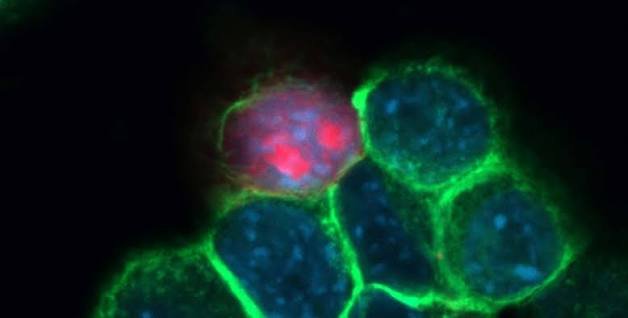
Scientists found that oral cancer cells contain lower levels of a protein called Tropomyosin 2.1, which normally helps healthy cells sense and tolerate mechanical stress. Because of this reduced protection, cancer cells become particularly vulnerable when exposed to controlled low-frequency ultrasound waves.
Instead of relying on heat or chemical drugs, the ultrasound delivers moderate mechanical stimulation. The mechanical forces damage cancer cells beyond their ability to recover, leading to selective cell death while healthy oral epithelial cells remain largely unaffected.
Researchers also observed another important effect. The ultrasound significantly reduced the ability of cancer cells to migrate and invade nearby tissue, two characteristics associated with tumour progression.
These findings suggest that ultrasound may eventually become part of a broader treatment strategy rather than replacing existing therapies entirely.
Why This Research Matters for India
India carries one of the world’s highest burdens of oral cancer. Tobacco consumption, smokeless tobacco products and areca nut chewing remain major risk factors, particularly in many states.
According to public health experts, early diagnosis continues to be one of the biggest challenges because many patients seek treatment only after the disease has reached an advanced stage.
Current treatment options generally include surgery, chemotherapy and radiation therapy. While these treatments save lives, they can also affect healthy tissue around the mouth, leading to difficulties in speaking, eating and swallowing.
A therapy capable of targeting only cancer cells could reduce treatment-related complications and improve patients’ quality of life.
Because the IISc team used tumour samples obtained from Indian patients instead of relying only on laboratory cell lines, researchers believe the findings may better reflect the biological characteristics of oral cancer commonly seen in India.
The Research Could Improve Existing Cancer Treatments
Another significant finding involved the tumour microenvironment.
Researchers created a three-dimensional laboratory model that closely resembles real oral tumours. They discovered that ultrasound disrupted the dense protective barrier surrounding cancer cells.
These barriers often prevent chemotherapy drugs and immune cells from reaching the centre of tumours, reducing treatment effectiveness.
By weakening this protective layer, ultrasound may improve the delivery of medicines and enhance the effectiveness of existing cancer therapies.
The research team has indicated that future studies will examine whether combining ultrasound with chemotherapy or other treatments can improve patient outcomes even further.
This combination approach may eventually prove more effective than relying on a single treatment method alone.
What Happens Next?
Although the results are highly encouraging, researchers caution that this is not yet a treatment available in hospitals.
The technology must undergo advanced preclinical studies followed by carefully monitored clinical trials to establish its safety, effectiveness and optimal treatment protocols.
Clinical trials are necessary because treatments that perform well in laboratory settings do not always produce identical results in human patients.
If future research confirms the current findings, low-frequency ultrasound could become a valuable non-invasive option for treating oral cancer and potentially other accessible cancers such as breast and skin cancers.
The study also demonstrates India’s growing contribution to biomedical innovation. Institutions such as IISc continue to produce research with the potential to improve healthcare not only in India but globally.
Key Takeaways
- IISc researchers have developed a low-frequency ultrasound technique that selectively destroys oral cancer cells in laboratory studies.
- Healthy oral cells were largely spared because cancer cells possess a unique mechanical weakness.
- The technology remains experimental and requires further preclinical studies and clinical trials before becoming an approved treatment.
- The research may eventually improve the effectiveness of existing cancer therapies while reducing damage to healthy tissue.
FAQs
Q1. What did IISc researchers discover?
Researchers found that low-frequency ultrasound can selectively destroy oral cancer cells while largely sparing healthy oral cells in laboratory studies.
Q2. Is this treatment currently available in hospitals?
No. The technique is still in the research stage and must complete additional preclinical testing and clinical trials before it can become a routine treatment.
Q3. Why is this discovery important?
It could lead to safer, less invasive cancer treatments that reduce damage to healthy tissue and improve the effectiveness of existing therapies.
Q4. Can ultrasound completely replace chemotherapy or surgery?
No. Researchers have not suggested replacing current treatments. Future studies will evaluate whether ultrasound can complement existing therapies to improve patient outcomes.
(Internal keyword suggestions: IISc oral cancer research, ultrasound oral cancer treatment, IISc ultrasound breakthrough, oral cancer India, low-frequency ultrasound therapy, cancer research India, IISc Bengaluru, non-invasive cancer treatment, oral tumour research, medical innovation India)