







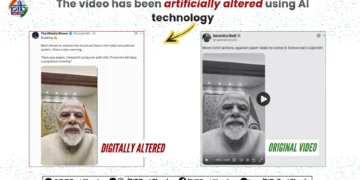
















AI-generated scam videos are rapidly spreading across social media, using deepfake technology to impersonate celebrities, politicians and business leaders. Indian authorities have issued fresh warnings as fraudsters exploit public trust to promote fake investment schemes and steal money from unsuspecting users.
Artificial intelligence is changing how people create content, but it is also transforming online fraud. AI-generated scam videos have become one of the fastest-growing cyber threats, with deepfake celebrity ads appearing across Facebook, Instagram, YouTube and other platforms. These fake videos often show well-known personalities appearing to endorse investment opportunities, cryptocurrency schemes or miracle products that they have never actually supported.
Recent warnings from Indian authorities and multiple high-profile deepfake incidents show that this is no longer an isolated problem. It is now a mainstream cybercrime challenge affecting thousands of internet users across the country.
What Are AI-Generated Scam Videos and Why Are They Spreading?
AI-generated scam videos use artificial intelligence to manipulate a person’s face, voice and expressions, making it appear as though they are speaking words they never said. Modern generative AI tools can create highly convincing videos within minutes, allowing cybercriminals to produce fraudulent advertisements at scale.
Unlike traditional scams that rely on poorly written messages or suspicious emails, deepfake videos appear far more authentic. Fraudsters frequently use the faces of Bollywood celebrities, business leaders, politicians and financial experts because people naturally trust familiar personalities.
The Indian Cyber Crime Coordination Centre (I4C) recently warned citizens that scammers are circulating fake investment advertisements featuring manipulated videos and photographs of prominent public figures. These advertisements falsely promise extraordinary financial returns and direct users to fraudulent websites or messaging platforms.
Why Deepfake Celebrity Ads Are Fooling Thousands
Several factors explain why these scams continue to succeed despite growing awareness.
First, AI technology has improved significantly. Lip movements, facial expressions and voice cloning have become much more realistic than they were just a few years ago.
Second, social media algorithms help fraudulent advertisements reach large audiences before they are detected and removed. Sponsored posts often appear alongside legitimate content, making them seem trustworthy.
Third, scammers combine deepfake videos with fake news websites, fabricated testimonials and professionally designed investment dashboards. Victims often believe they are participating in genuine government-backed or celebrity-endorsed financial opportunities.
A recent Bengaluru case highlighted the financial impact of these scams after a retired professor reportedly lost more than ₹61 lakh to fraudsters who used a deepfake video falsely portraying Union Finance Minister Nirmala Sitharaman endorsing an investment platform.
India Sees Rising Action Against Deepfake Misuse
Authorities and public figures are increasingly taking legal action against AI-generated misinformation.
Earlier this month, the Bombay High Court directed online platforms to remove specified AI-generated deepfake content involving actor Preity Zinta, while also emphasizing the responsibility of digital platforms to curb such misuse.
More recently, Union Commerce Minister Piyush Goyal filed a police complaint after an AI-generated deepfake video allegedly altered his public remarks and circulated them online to spread misinformation. An FIR was registered following the complaint.
Maharashtra Cyber Cell has also reported investigations into coordinated AI-generated misinformation campaigns involving manipulated videos and cloned voices designed to influence public opinion during recent protests.
These developments indicate that deepfakes are no longer limited to entertainment or social media pranks. They now present legal, financial and national security concerns.
How to Identify a Deepfake Scam Before Losing Money
Although AI-generated videos continue to improve, many still leave warning signs.
Users should be cautious if a celebrity or public figure suddenly promotes guaranteed investment returns, asks viewers to join a Telegram or WhatsApp group, or promises unrealistic profits within days.
Other warning signs include unusual facial movements, unnatural blinking, mismatched lip synchronization, robotic voice patterns, grammatical mistakes in advertisements and websites that request immediate payments.
The safest approach is to verify any financial claim through official government portals, verified company websites or trusted news organizations before investing money.
Cybersecurity experts also recommend enabling two-factor authentication, avoiding links received through unsolicited advertisements and reporting suspicious content directly to both the platform and India’s cybercrime portal.
Social Media Platforms Face Growing Pressure
Technology companies are investing in AI detection systems, content moderation and identity verification. However, experts argue that fraudsters are adapting faster than moderation tools can respond.
Many fake advertisements remain online long enough to reach thousands of users before removal. The growing availability of free AI video generators has further lowered the barrier for cybercriminals.
Governments worldwide are now considering stronger regulations requiring clearer labeling of AI-generated content, faster takedown mechanisms and stricter penalties for digital impersonation.
As artificial intelligence becomes more powerful, cooperation between governments, technology companies and users will become essential to reduce the spread of deepfake scams.
Takeaways
- AI-generated deepfake videos are increasingly being used for financial scams across social media.
- Indian authorities have issued fresh warnings about fake investment advertisements using celebrity and public figure identities.
- Users should independently verify every investment opportunity and avoid offers promising guaranteed high returns.
- Legal action against deepfake misuse is increasing, but public awareness remains the strongest first line of defense.
FAQ
Q1. What is a deepfake scam video?
A deepfake scam video uses artificial intelligence to manipulate a person’s appearance or voice, making it falsely appear that they are promoting a product, investment or service.
Q2. Which platforms are most commonly used for these scams?
Fraudulent deepfake advertisements have appeared on Facebook, Instagram, YouTube and other social media platforms where paid advertisements can reach large audiences.
Q3. How can users verify whether a celebrity advertisement is genuine?
Always check the celebrity’s verified social media accounts, official company announcements or trusted news reports before believing or acting on promotional claims.
Q4. What should someone do after encountering a suspected deepfake scam?
Avoid clicking any links, report the advertisement to the platform, preserve screenshots if needed and report financial fraud through the National Cyber Crime Reporting Portal if money has been lost.
(Internal keyword suggestions: AI-generated scam videos, deepfake celebrity ads, AI deepfake scams India, fake investment ads, social media scams, cyber fraud India, deepfake technology, online investment scams, AI misinformation, celebrity deepfake fraud)