





















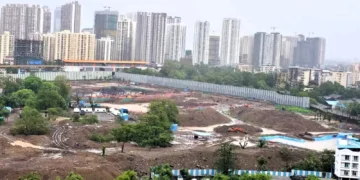









Bengaluru is facing another water crisis in 2026, with tech parks and residential areas increasingly dependent on private water tankers. The situation reflects recurring supply gaps, rising demand, and pressure on groundwater resources across the city.
Bengaluru water crisis 2026 hits tech corridors hard
The Bengaluru water crisis 2026 has once again exposed the city’s fragile water supply system, particularly in major tech hubs such as Whitefield, Electronic City, and Outer Ring Road. Several offices and gated communities are relying heavily on private tankers to meet daily water needs.
As summer intensifies, water demand rises sharply across the city. However, supply from the Cauvery river pipeline remains limited and unevenly distributed. This mismatch between demand and supply has pushed many areas into dependency on tanker services.
Tech companies operating in these corridors have reported increased operational costs due to water procurement. Residential societies in nearby areas are also facing similar challenges, with frequent tanker bookings becoming a routine necessity.
Private water tanker demand surges across Bengaluru
Private water tanker services have seen a significant surge in demand during the current crisis. Tankers are being sourced from surrounding regions, often transporting groundwater extracted from rural and peri urban areas.
Prices for tanker water have reportedly increased due to high demand and limited availability. In some localities, residents are paying multiple times the usual rates, adding to household expenses.
The reliance on tanker water is not new for Bengaluru. However, its scale during peak summer months continues to grow each year. Experts point out that this system is not sustainable in the long term, as it puts pressure on groundwater reserves outside the city.
Additionally, tanker operations often lack uniform regulation, raising concerns about water quality and fair pricing.
Cauvery water supply limitations and infrastructure gaps
Bengaluru’s primary water source is the Cauvery river, managed through a series of supply phases. While expansions have been planned and partially implemented, they have not kept pace with the city’s rapid growth.
Many newly developed areas, especially in the IT corridors, are still not fully connected to the Cauvery network. This leaves them dependent on borewells and tanker water.
Groundwater levels in several parts of Bengaluru have declined significantly over the years due to over extraction. Borewells that once supplied water are either drying up or yielding less, further worsening the crisis.
Infrastructure challenges such as leakages, uneven distribution, and delayed projects continue to affect the efficiency of the water supply system. Addressing these issues requires long term planning and consistent execution.
Impact on IT companies and urban lifestyle
The water crisis has a direct impact on Bengaluru’s IT sector, which is a major driver of the city’s economy. Companies are taking measures such as optimizing water usage, recycling wastewater, and coordinating tanker supplies to maintain operations.
Some offices have introduced restrictions on non essential water use, including landscaping and cleaning activities. Employees working from office locations in affected areas have also reported disruptions.
For residents, the situation has led to changes in daily routines. Water conservation practices such as limited usage, reuse of grey water, and staggered supply timings are becoming more common.
The crisis highlights the vulnerability of urban infrastructure in fast growing cities. As Bengaluru continues to expand, ensuring reliable access to basic resources like water remains a critical challenge.
Long term solutions and sustainability concerns
Experts emphasize that recurring water crises in Bengaluru require structural solutions rather than temporary fixes. Rainwater harvesting, wastewater recycling, and better groundwater management are often cited as key measures.
Many residential societies have already implemented rainwater harvesting systems, but their effectiveness varies depending on maintenance and scale. Similarly, treated wastewater reuse can reduce dependence on fresh water if adopted widely.
Urban planning also plays a crucial role. Protecting lakes, restoring water bodies, and preventing encroachment can improve the city’s natural water retention capacity.
Policy interventions and stricter regulation of tanker operations may also be necessary to ensure fair practices and sustainability. Without coordinated efforts, the cycle of seasonal water shortages is likely to continue.
Takeaways
- Bengaluru water crisis 2026 has increased dependence on private water tankers
- Tech hubs and residential areas are facing supply shortages during peak summer
- Limited Cauvery supply and declining groundwater are key challenges
- Long term solutions like rainwater harvesting and recycling are essential
FAQs
Q1. Why is Bengaluru facing a water crisis again in 2026?
The crisis is due to rising demand, limited Cauvery supply, declining groundwater levels, and rapid urban expansion.
Q2. Why are tech hubs relying on tanker water?
Many tech corridors are not fully connected to the main water supply network, making them dependent on private tankers.
Q3. Is tanker water safe for use?
Quality can vary, as tanker operations are not uniformly regulated. Users often rely on filtration and treatment systems.
Q4. What are the long term solutions to this problem?
Key solutions include rainwater harvesting, wastewater recycling, improved infrastructure, and better groundwater management.