




























April 2026 car sales boom highlights a clear shift in India’s automotive market, with SUVs and electric vehicles dominating demand. Strong consumer preference, improved financing options, and expanding EV infrastructure are shaping buying patterns across both metro and Tier-2 cities.
April 2026 Car Sales Boom Signals Market Shift
The April 2026 car sales boom is a time sensitive development based on recent monthly sales trends reported by automakers. Passenger vehicle sales have shown strong momentum, with SUVs and EVs contributing a major share of growth.
Manufacturers such as Maruti Suzuki, Hyundai Motor India, and Tata Motors have reported increased bookings and dispatches in April. The surge reflects both pent up demand and changing consumer preferences.
Industry data suggests that SUVs now account for a dominant portion of passenger vehicle sales, while EV adoption is steadily rising. This combination is redefining how the Indian auto market evolves in 2026.
Why SUVs Continue to Dominate Indian Roads
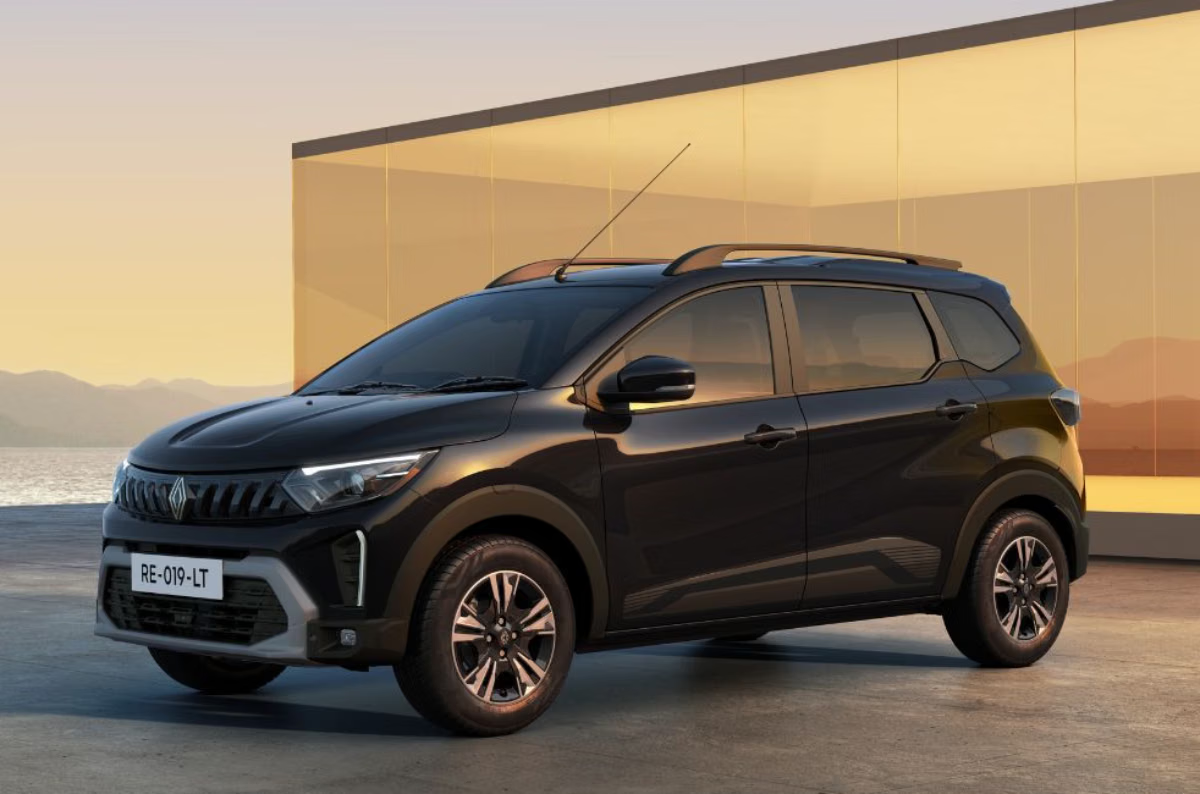
SUVs have become the preferred choice for Indian buyers due to their design, practicality, and perceived value. Higher ground clearance, spacious interiors, and road presence make them suitable for diverse driving conditions.
In cities like Delhi and Mumbai, SUVs are popular for urban commuting and highway travel. In Tier-2 regions, they are valued for handling uneven roads and longer distances.
Automakers have also expanded SUV portfolios across price ranges, making them accessible to a wider audience. Compact SUVs cater to budget buyers, while mid-size and premium models attract aspirational customers.
This broad segmentation has helped SUVs capture a larger share of the market compared to traditional hatchbacks and sedans.
EV Growth Accelerates Alongside SUV Demand
Electric vehicles are emerging as a strong growth segment within the April 2026 car sales boom. Rising fuel prices and environmental awareness are encouraging consumers to consider EVs as a viable alternative.
Companies like Tata Motors and Mahindra & Mahindra are expanding their EV portfolios, offering options across different price points.
Government incentives under programs such as FAME India Scheme continue to support adoption. Additionally, improvements in charging infrastructure are reducing range anxiety.
The combination of policy support and product availability is driving steady growth in EV sales, contributing to the overall market expansion.
Role of Financing and Consumer Affordability
Easy financing options have played a crucial role in boosting car sales. Banks and NBFCs are offering competitive interest rates, flexible repayment plans, and higher loan-to-value ratios.
These financial products make it easier for first-time buyers to enter the market, particularly in Tier-2 and Tier-3 cities. Rising disposable incomes and improved access to credit further support demand.
Exchange offers and discounts also encourage upgrades from older vehicles to new models, especially in the SUV and EV segments.
Affordability, combined with aspirational buying behaviour, is a key driver behind the sales boom.
Tier-2 and Tier-3 Cities Driving Growth
A significant portion of the April 2026 car sales boom is coming from Tier-2 and Tier-3 cities. These regions are witnessing increased demand due to infrastructure development and rising income levels.
Cities like Indore, Nagpur, and Lucknow are contributing to higher vehicle registrations.
SUVs are particularly popular in these areas due to their versatility, while EVs are gaining traction as charging networks expand beyond metros.
The growth in these regions reflects a broader shift in India’s consumption patterns, where non-metro markets are becoming key drivers of demand.
Challenges Amid Strong Sales Growth
Despite strong performance, the automotive sector faces challenges. Supply chain constraints, especially related to semiconductors and battery components, can impact production.
Rising input costs may lead to price increases, affecting affordability. Additionally, infrastructure gaps in EV charging networks remain a concern in certain regions.
Competition among manufacturers is intensifying, requiring continuous innovation and differentiation. Companies must balance growth with cost management to sustain momentum.
Addressing these challenges will be critical for maintaining long-term growth in the market.
What This Means for India’s Auto Industry
The April 2026 car sales boom indicates a structural shift in India’s automotive industry. SUVs and EVs are no longer niche segments but are becoming mainstream choices.
This trend is likely to influence future product strategies, with automakers investing more in electric mobility and SUV platforms. The focus will be on technology, safety, and sustainability.
For consumers, this means more options and improved features across price segments. For the industry, it signals a transition toward a more diversified and competitive market.
As demand continues to evolve, the auto sector is expected to adapt quickly to meet changing expectations.
Key Takeaways
- April 2026 car sales boom is driven by SUVs and EVs
- SUVs dominate due to practicality and wide price range
- EV adoption is increasing with policy and infrastructure support
- Tier-2 cities are emerging as major contributors to sales growth
Frequently Asked Questions
Why are SUVs so popular in India?
They offer better ground clearance, space, and versatility for varied road conditions.
What is driving EV growth in 2026?
Government incentives, rising fuel costs, and improved charging infrastructure.
Which regions are contributing most to sales growth?
Tier-2 and Tier-3 cities are playing a major role.
Are there challenges affecting car sales?
Yes, including supply chain issues, rising costs, and infrastructure gaps.