


























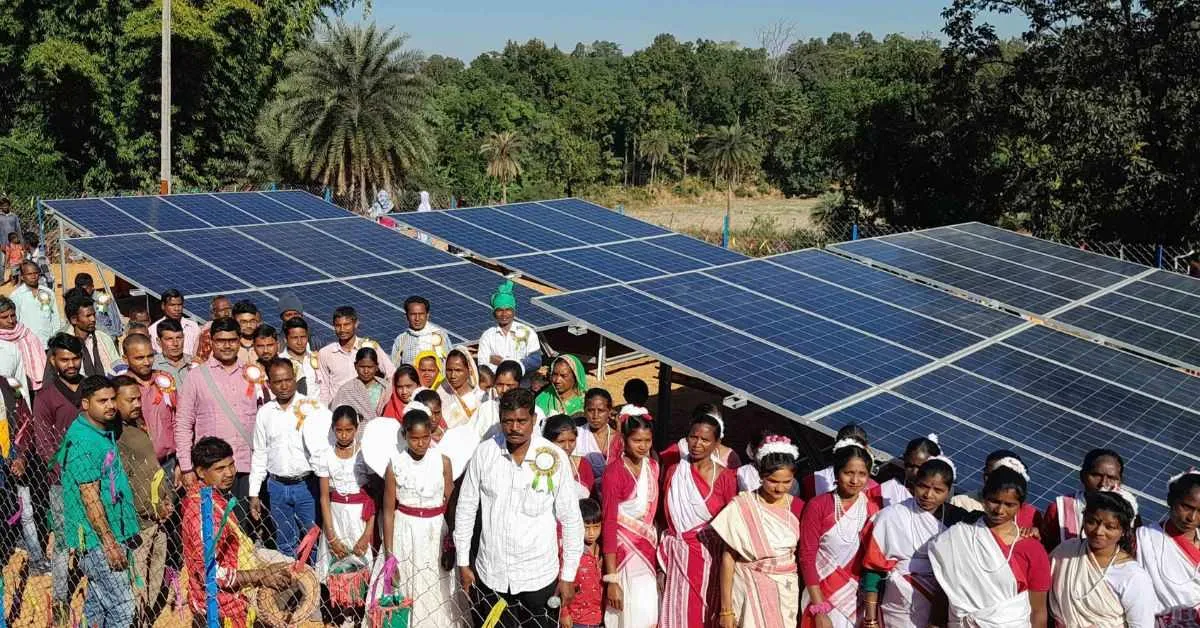
Solar powered micro grids are gaining popularity in villages across India as a reliable and sustainable energy solution. These systems are helping improve electricity access in rural areas where traditional grid connectivity remains inconsistent or unavailable.
Solar Powered Micro Grids Transform Rural Energy Access
Solar powered micro grids gaining popularity in villages reflects a major shift in rural electrification strategies in India. These decentralized energy systems generate and distribute electricity locally using solar panels and battery storage.
Unlike conventional power grids, micro grids operate independently or in conjunction with the main grid. This makes them particularly effective in remote or underserved areas where extending traditional infrastructure is costly and time consuming.
Villages that previously faced frequent outages or limited supply are now experiencing more reliable access to electricity. This has significant implications for daily life and economic activity.
How Solar Micro Grids Work in Rural Areas
Solar powered micro grids consist of solar panels, inverters, battery storage systems, and local distribution networks. The panels generate electricity during the day, which is either used immediately or stored in batteries for later use.
The system distributes power to households, small businesses, and community facilities through a localized network. Smart meters are often used to monitor consumption and manage load efficiently.
These micro grids are designed to be scalable, allowing additional capacity to be added as demand grows. Maintenance requirements are relatively low compared to traditional infrastructure.
The decentralized model ensures that even isolated communities can access consistent power without relying entirely on central grids.
Benefits for Rural Communities and Local Economies
The rise of solar powered micro grids is improving quality of life in villages. Reliable electricity enables better lighting, access to digital services, and improved healthcare facilities.
For local economies, consistent power supply supports small businesses, agricultural processing, and cottage industries. This can lead to increased income and employment opportunities.
Students benefit from better study conditions, while healthcare centers can operate equipment more effectively. Access to electricity also supports the use of mobile devices and internet services.
The environmental impact is another advantage. Solar energy reduces dependence on diesel generators and lowers carbon emissions.
Role of Government and Policy Support
Government initiatives are playing a crucial role in promoting solar powered micro grids in India. Programs focused on renewable energy and rural electrification are encouraging adoption.
Policies supporting decentralized energy systems and subsidies for solar installations are making these solutions more affordable. Collaboration between public agencies and private companies is driving implementation.
Efforts are also being made to integrate micro grids with national energy goals, ensuring long term sustainability and scalability.
State level initiatives are further supporting deployment in regions with limited grid connectivity.
Challenges in Scaling Solar Micro Grids
Despite their benefits, solar powered micro grids face challenges in scaling across rural areas. Initial installation costs can be high, requiring financial support or innovative funding models.
Maintenance and technical support are essential to ensure long term performance. Training local personnel is critical for effective operation.
Seasonal variations in sunlight can affect energy generation, making storage solutions important. Battery costs and lifespan are key considerations.
Regulatory frameworks and integration with existing power systems can also influence expansion. Clear policies are needed to support widespread adoption.
Growing Private Sector and Startup Involvement
Private companies and startups are increasingly entering the solar micro grid space. These organizations are developing innovative business models to make energy access more affordable.
Pay as you go systems and community based models are being used to reduce upfront costs for users. This approach improves accessibility and adoption rates.
Cities like Bengaluru and Delhi are serving as innovation hubs, while deployment is focused on rural regions.
Investment in renewable energy startups is also contributing to the growth of this sector.
Future Outlook for Rural Solar Energy Solutions
The future of solar powered micro grids in India looks promising as demand for reliable and sustainable energy continues to grow. Advances in technology are expected to improve efficiency and reduce costs.
Integration with smart grids and energy management systems could enhance performance and scalability. Increased investment and policy support will further accelerate adoption.
As more villages adopt these systems, solar micro grids could play a key role in achieving universal electrification and supporting rural development.
Takeaways
- Solar powered micro grids are improving electricity access in rural villages
- They provide reliable, decentralized, and sustainable energy solutions
- Government support and private investment are driving adoption
- Challenges include costs, maintenance, and energy storage limitations
FAQs
Q1. What are solar powered micro grids?
They are localized energy systems that generate and distribute electricity using solar power.
Q2. Why are they important for villages?
They provide reliable electricity where traditional grid access is limited or inconsistent.
Q3. What are the main benefits of micro grids?
Improved energy access, economic growth, and reduced environmental impact.
Q4. What challenges do they face?
High initial costs, maintenance needs, and dependence on sunlight are key challenges.