





























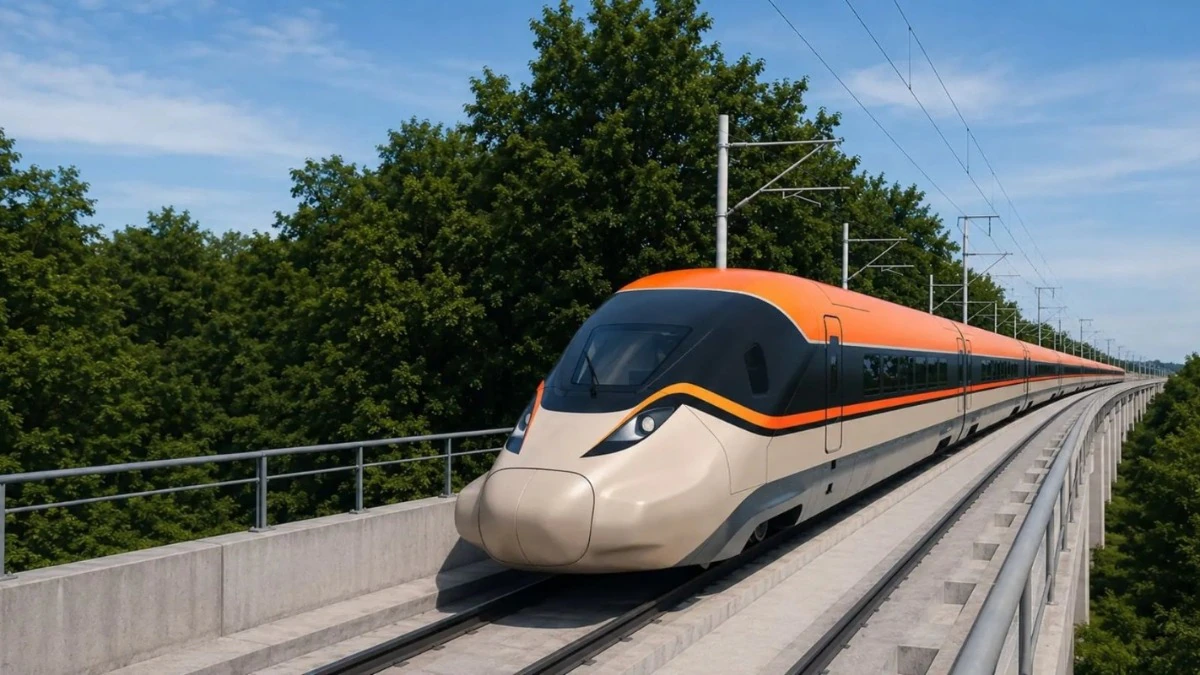
India’s proposed Delhi-Guwahati bullet train corridor could significantly change long-distance travel between northern and northeastern India. The approved expansion of the Northern High-Speed Rail Corridor is expected to connect major cities across five regions, although surveys, technical planning and construction details are still to be finalised.
Delhi-Guwahati Bullet Train Corridor: What Has Been Announced?
India’s bullet train expansion has taken a significant step with the approval of the Northern Bullet Train Corridor connecting Delhi with Guwahati through Siliguri.
Railway Minister Ashwini Vaishnaw announced the approval on October 31, 2026, explaining that the proposed high-speed rail network would connect important cities across Uttar Pradesh, Bihar, West Bengal and Assam.
The development expands the original Delhi-Siliguri high-speed rail plan towards the Northeast. Assam Chief Minister Himanta Biswa Sarma had requested the extension of the corridor to Guwahati during discussions with the Railway Minister.
The announcement has brought renewed attention to the possibility of faster rail connectivity between the national capital and the northeastern region.
However, approval of the corridor should not be confused with the beginning of construction. Several important stages, including detailed surveys, alignment finalisation, technical assessments and project planning, will be required before construction can progress.
Proposed Delhi-Guwahati Bullet Train Route and Stations
The Northern Bullet Train Corridor is expected to connect major urban centres across northern and eastern India.
According to the route details shared by Railway Minister Ashwini Vaishnaw, the proposed network will pass through the following cities:
- Delhi
- Agra
- Kanpur
- Lucknow
- Ayodhya
- Varanasi
- Prayagraj
- Patna
- Siliguri
- Guwahati
The proposed route will connect Delhi with several important cities in Uttar Pradesh before entering Bihar and West Bengal and continuing towards Assam.
For passengers, the network could provide faster connections between major educational, commercial, religious and tourism destinations.
Cities such as Agra, Varanasi, Ayodhya and Patna could benefit from improved intercity accessibility. Guwahati, meanwhile, could become more closely connected with the national capital through a dedicated high-speed rail network.
The final alignment, station locations and operational arrangements will depend on the detailed project studies.
Delhi-Guwahati Bullet Train Travel Time: How Much Time Could Passengers Save?
One of the biggest attractions of the proposed corridor is the potential reduction in travel time.
During the announcement, the Railway Minister shared indicative journey times for several sections of the proposed Northern Bullet Train Corridor.
Some of the journey estimates include:
- Delhi to Agra: Approximately 59 minutes
- Delhi to Kanpur: Approximately 1 hour 45 minutes
- Delhi to Lucknow: Approximately 2 hours 12 minutes
- Lucknow to Varanasi: Approximately 1 hour 21 minutes
- Varanasi to Patna: Approximately 1 hour
- Varanasi to Delhi: Approximately 3 hours 33 minutes
Assam Chief Minister Himanta Biswa Sarma also described the proposed Guwahati-Delhi connection as a journey that could take under eight hours.
These figures are indicative estimates shared in connection with the proposal, not confirmed commercial schedules. Actual journey times will depend on the final route, station stops, operating speeds and train frequency.
If achieved, the reduction could make high-speed rail an alternative for people who currently depend on long-distance conventional trains or domestic flights.
Why the Siliguri Corridor Is a Major Engineering Challenge
One of the most important challenges facing the Delhi-Guwahati bullet train project is the Siliguri Corridor, popularly known as the Chicken’s Neck.
This narrow stretch of land connects mainland India with the northeastern states. It is strategically and geographically important because road and railway connections to the Northeast pass through this region.
The corridor has limited space in several stretches, with some sections measuring only around 16 to 22 kilometres in width.
According to reporting by NDTV, Assam Chief Minister Himanta Biswa Sarma has highlighted the difficulty of constructing a separate high-speed railway line through this narrow region.
The challenge is not simply about building tracks. Engineers will need to examine the surrounding terrain, existing infrastructure, land availability, safety requirements and the technical feasibility of different construction methods.
Options such as underground or elevated construction may need to be studied depending on the final alignment.
A conventional railway track cannot simply be upgraded to operate bullet trains at high speeds. High-speed rail requires dedicated infrastructure designed for its operating requirements.
The Siliguri section could therefore become one of the most technically demanding parts of the proposed project.
How the Bullet Train Corridor Could Benefit Uttar Pradesh, Bihar and Assam
The proposed Delhi-Guwahati corridor could have implications beyond reducing passenger travel time.
For Uttar Pradesh, the connection could improve access between Delhi and major cities such as Agra, Kanpur, Lucknow, Ayodhya and Varanasi. These cities have significant commercial, educational, religious and tourism activity.
In Bihar, Patna’s proposed inclusion could improve connections with major economic centres in northern India. Faster travel may also make business meetings, educational visits and tourism trips more convenient.
West Bengal could benefit through Siliguri, an important transport and commercial centre connecting the northeastern region with the rest of the country.
For Assam, the extension to Guwahati could improve access to the national capital and strengthen the state’s connection with major business and technology centres.
The potential benefits will depend on station accessibility, ticket affordability, service frequency and the extent to which smaller cities can connect to the high-speed network.
Impact on Tourism, Business and Employment Opportunities
Better rail connectivity can influence how people travel for work, education, tourism and business.
For tourism, the proposed corridor could make destinations such as Agra, Ayodhya, Varanasi and Guwahati more accessible to visitors travelling from other parts of India.
Religious tourism could also benefit from improved connections to important pilgrimage destinations. Shorter journey times may make multi-city travel more convenient for families and senior citizens.
Businesses could gain from faster movement of professionals between major cities. Better connectivity may support meetings, commercial partnerships and investment-related travel.
Assam and other northeastern states could also benefit if improved transport links support greater tourism activity and business engagement.
Construction itself could create employment opportunities across engineering, infrastructure, project management and related industries. However, the actual number of jobs will depend on the project’s final scope and implementation plan.
It is also important to recognise that high-speed rail primarily serves passenger transportation. It should not be viewed as a replacement for freight infrastructure or the existing railway network.
Will Bullet Train Tickets Be Affordable for Middle-Class Passengers?
Ticket pricing will be an important factor in determining how widely the proposed corridor is used.
Railway Minister Ashwini Vaishnaw has indicated that bullet train fares would be kept significantly below airfares, with the intention of making high-speed travel accessible beyond higher-income passengers.
However, the government has not yet announced confirmed ticket prices for the Delhi-Guwahati corridor.
Affordability will depend on construction costs, operating expenses, passenger demand, government policy and the final fare structure.
For middle-class families, students and working professionals, the difference between conventional train fares, high-speed rail tickets and flight prices will influence travel choices.
The corridor’s success will therefore depend not only on speed but also on how effectively it balances convenience with affordability.
Delhi-Guwahati Bullet Train Project: What Happens Next?
Although the corridor has received approval, several stages remain before passengers can use the service.
The project will require detailed route surveys, engineering assessments, feasibility studies and decisions on construction technology. Land acquisition, environmental considerations and funding arrangements will also play important roles.
The Siliguri Corridor will require particular attention because of its geographical and strategic importance.
India’s first bullet train project, the Mumbai-Ahmedabad High-Speed Rail Corridor, is currently under construction. The experience gained from that project could help establish engineering and operational standards for future high-speed rail networks.
The government has also announced seven new high-speed rail corridors under the Union Budget 2026-27, including Delhi-Varanasi and Varanasi-Siliguri.
However, the extension towards Guwahati will require additional planning and technical decisions. No confirmed opening date or commercial operating schedule has been announced for the Delhi-Guwahati service.
What the Delhi-Guwahati Bullet Train Corridor Means for India’s Future
The proposed Delhi-Guwahati bullet train corridor represents an important development in India’s high-speed rail expansion.
By connecting major cities across northern and eastern India, the project could improve passenger mobility, support tourism and strengthen economic connections with the Northeast.
For residents of Assam and neighbouring northeastern regions, improved access to the national capital could create new opportunities for education, business and travel.
At the same time, the project’s success will depend on overcoming engineering challenges, managing costs and ensuring that services remain accessible to a wide range of passengers.
The announcement is an important first step, but the real transformation will depend on how effectively the proposed corridor moves from planning to construction and eventually passenger operations.
Key Takeaways
- The proposed Northern Bullet Train Corridor will connect Delhi with Guwahati through major cities across Uttar Pradesh, Bihar and West Bengal.
- Railway Minister Ashwini Vaishnaw announced the corridor’s approval on October 31, 2026.
- The Siliguri Corridor presents significant geographical and engineering challenges for high-speed rail construction.
- Surveys, technical planning, funding arrangements and construction timelines still need to be finalised.
Frequently Asked Questions (FAQs)
1. Is the Delhi-Guwahati bullet train corridor approved?
Yes. The Northern Bullet Train Corridor connecting Delhi with Guwahati via Siliguri received approval, which was announced by Railway Minister Ashwini Vaishnaw on October 31, 2026.
2. Which cities will the Delhi-Guwahati bullet train connect?
The proposed route includes Delhi, Agra, Kanpur, Lucknow, Ayodhya, Varanasi, Prayagraj, Patna, Siliguri and Guwahati. Final station locations will depend on detailed project planning.
3. How long will the Delhi-Guwahati bullet train journey take?
Assam Chief Minister Himanta Biswa Sarma has indicated that the journey could take under eight hours. This is an indicative estimate, not a confirmed operating schedule.
4. When will the Delhi-Guwahati bullet train start operating?
An official commercial launch date has not been announced. The project still requires detailed surveys, technical assessments, planning and construction.