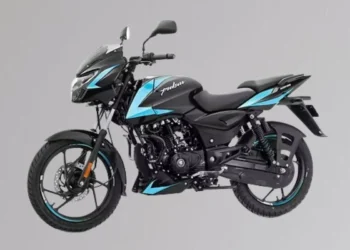






























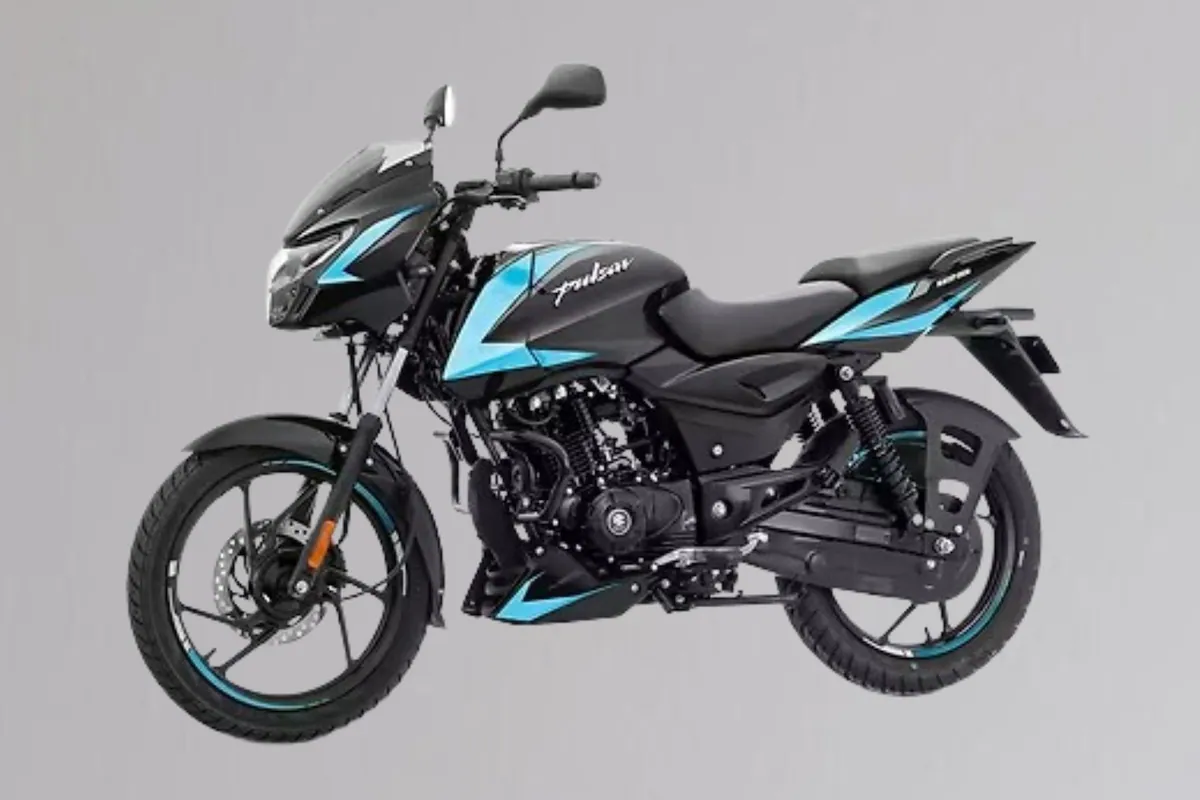
The new Bajaj Pulsar 125 and Pulsar 150 bring major mechanical and technology changes while retaining the familiar Classic Pulsar design. Launched in August 2026, both motorcycles now get new engines, updated chassis hardware, monoshock suspension and advanced connected features.
New Pulsar 125 and 150 Mark a Major Redesign
The new Bajaj Pulsar 125 and Pulsar 150 are not minor cosmetic updates. Bajaj Auto has redesigned both motorcycles for the 25th anniversary of the Pulsar brand, replacing several major mechanical components while retaining the styling cues that have defined the Classic Pulsar range.
The new Pulsar 150 starts at Rs 1,15,233, while the new Pulsar 125 starts at Rs 92,900, both quoted as introductory ex-showroom Delhi prices at launch. Bajaj unveiled the motorcycles on August 24, 2026.
The changes include new engines and gearboxes, a new diamond frame, monoshock rear suspension, a 5-inch TFT display on higher variants, Google Maps navigation and Crawl Tech. Both motorcycles also receive an Integrated Starter Generator, or ISG, on selected variants.
This makes the 2026 models substantially different from the previous-generation Pulsars underneath their familiar muscular bodywork.
New Pulsar 150 Gets an All-New Engine
The 2026 Pulsar 150 gets a 149.5cc engine producing 14PS at 8,500rpm and 13.7Nm of torque at 6,500rpm, according to Bajaj’s specifications. It is paired with a new gearbox as part of the broader mechanical redesign.
The engine is one of the most significant changes because the new Pulsar 150 has been developed around a different mechanical package rather than simply receiving an updated version of the previous motorcycle.
Autocar India’s road test describes the 2026 Pulsar 150 as a clean-sheet redesign. The old double-cradle frame and twin-shock setup have been replaced by a lighter, stiffer diamond frame and monoshock suspension.
For riders who have known the Pulsar 150 primarily as a sporty commuter, this is a substantial change in the motorcycle’s underlying architecture.
The new chassis is intended to improve handling while maintaining the upright, accessible riding position associated with the Classic Pulsar.
Pulsar 125 Also Gets a New Mechanical Package
The new Pulsar 125 receives similar treatment.
Bajaj lists a 124.58cc engine producing 12PS at 8,000rpm and 11Nm at 6,000rpm. The company describes it as the most powerful 125cc motorcycle in the market, based on its stated specifications.
The engine is paired with a five-speed manual gearbox, while the chassis has moved away from the previous double-cradle and twin-shock arrangement.
Autocar India’s road test found that the new Pulsar 125 is substantially different underneath even though the exterior design remains familiar. The publication highlighted the new diamond frame, monoshock and engine as major changes.
This approach allows Bajaj to retain the visual identity that existing Pulsar buyers recognise while updating the motorcycle’s riding hardware.
For Indian riders moving up from smaller commuter motorcycles, the 125 continues to sit in an important price and performance space.
Monoshock Suspension Changes the Riding Setup
One of the clearest hardware changes on both motorcycles is the move to monoshock rear suspension.
The outgoing Classic Pulsar setup used twin rear shocks, a configuration that had been associated with the model for years. The new motorcycles use a monoshock with the redesigned chassis.
The change is significant because suspension layout influences handling, chassis response and the motorcycle’s overall feel through corners.
Autocar India’s testing of both the Pulsar 125 and 150 found improved handling and ease of riding, although ride comfort was identified as an area that could still be better.
For everyday Indian riding, the difference may be more noticeable during direction changes and cornering than during routine straight-line commuting.
The new frame and suspension also contribute to the effort to modernise a motorcycle platform that has been associated with the Pulsar name for many years.
5-Inch TFT Display Adds More Technology
Technology is another major change, particularly on the higher variants.
The new Pulsar 125 and Pulsar 150 can be equipped with a 5-inch TFT console. Bajaj has integrated Google Maps navigation into the system, bringing turn-by-turn navigation directly to the motorcycle’s display.
This represents a notable shift for the Classic Pulsar range. The motorcycles are no longer relying only on traditional analogue or simpler digital information displays.
The technology is especially relevant to riders using their motorcycles for daily commuting in larger cities and Tier-2 locations, where navigation can be useful for unfamiliar routes.
However, availability varies by variant. Buyers therefore need to check the exact equipment list rather than assuming every Pulsar 125 or 150 receives the TFT system.
The lower variants remain positioned as more affordable versions of the motorcycles.
Google Maps Navigation Comes to the Classic Pulsar
The addition of Google Maps navigation is one of the more practical technology upgrades.
Instead of requiring riders to mount a smartphone on the handlebar for every navigation requirement, compatible versions of the new Pulsar can display navigation information through the motorcycle’s TFT console.
Bajaj has also included connected technology as part of its broader approach to the updated Pulsar range. The company previously introduced Bluetooth connectivity and USB charging on earlier Pulsar models, but the 2026 motorcycles take the technology package further.
For commuters, this can reduce dependence on aftermarket phone mounts.
The feature is particularly relevant for riders who regularly travel between home, work, colleges, markets and other locations across expanding Indian cities.
Navigation does not change the fundamental character of the motorcycle, but it brings the Classic Pulsar closer to the technology offered by newer-generation competitors.
Crawl Tech Brings Low-Speed Assistance
The new Pulsar 125 and 150 also introduce Crawl Tech.
The feature is designed to help the motorcycle move smoothly at very low speeds, which can be useful in slow-moving traffic and congested urban conditions.
This is an interesting addition because the typical Indian motorcycle spends significant time dealing with traffic rather than open roads.
In cities with heavy congestion, riders repeatedly move between stopping and crawling forward. A low-speed assistance feature can make those situations easier to manage.
Bajaj has also included an Integrated Starter Generator on the top three variants of both motorcycles. The system enables automatic start-stop functionality, which is intended to help improve fuel economy while reducing mechanical complexity for starting the engine.
The feature is therefore aimed at everyday usability rather than outright performance.
Automatic Start-Stop Technology Comes to Select Variants
The ISG system is one of the less visible but potentially useful changes.
On the top three variants of the Pulsar 125 and 150, the system supports automatic engine start-stop functionality. The engine can switch off during suitable stops and restart when the rider is ready to move.
For riders who spend considerable time at traffic signals, this can reduce unnecessary idling.
The system also contributes to Bajaj’s effort to improve fuel efficiency without requiring riders to change their normal commuting habits.
The exact real-world fuel-saving benefit will depend on traffic conditions and riding patterns. A motorcycle that spends a large amount of time in stop-and-go traffic has more opportunity to use the system than one used primarily on open highways.
This is another example of how the new Pulsars are being updated for modern urban riding.
Design Retains the Classic Pulsar Identity
Despite the extensive mechanical changes, Bajaj has deliberately kept the visual identity of the Classic Pulsar.
The motorcycles retain the muscular fuel tank, familiar silhouette and road presence associated with the Pulsar brand.
The headlamp has been redesigned with sharper wolf-eye styling and larger optics. Bajaj says the top Pulsar 150 variant also offers improved light throw, spread and intensity.
This balance between familiar design and new hardware is important because the Pulsar name has been part of India’s motorcycle market since 2001.
Bajaj says more than 20 million Pulsar motorcycles have been sold across more than 40 countries.
The company therefore has to modernise the motorcycle without removing the visual cues that existing customers associate with the brand.
The 2026 models follow that approach closely.
What Has Changed for Everyday Indian Riders?
For everyday riders, the biggest changes are not necessarily the headline power figures.
The new frame and monoshock suspension affect handling. The updated engines and gearboxes change the mechanical character. The TFT console, navigation and connectivity add functionality. Crawl Tech and automatic start-stop technology are aimed directly at urban commuting.
Autocar India’s testing of the Pulsar 125 found improved handling and an easy-to-ride character, while its test recorded an ARAI-certified fuel economy figure of 57.5kpl. The publication also noted that the motorcycle weighs 140kg and that the factory-fitted tyres did not inspire complete confidence while cornering.
The Pulsar 150 similarly received praise for improved handling, while the road test noted that ride comfort could be better and that the engine could stall relatively easily in certain situations.
These observations are useful because they show that the new motorcycles are not simply feature upgrades. Their riding behaviour has changed too.
Pulsar 125 Versus Pulsar 150: What Is Different?
The two motorcycles share the same broad design philosophy but target slightly different requirements.
The Pulsar 125 uses a 124.58cc engine and produces 12PS and 11Nm. The Pulsar 150 uses a 149.5cc engine with 14PS and 13.7Nm.
The 125 is therefore positioned as the more accessible entry point into the Classic Pulsar family.
The 150 provides additional engine capacity and torque while retaining the same general sports-commuter formula.
For riders primarily commuting through city traffic, the 125 can provide a lower entry price. Riders who regularly carry a pillion, use faster roads or want more engine performance may look toward the 150.
Variant equipment also matters. Higher versions bring the more advanced TFT and connectivity features, so the purchase decision is not only about engine displacement.
Pricing Makes the Update Important
At launch, Bajaj priced the new Pulsar 125 from Rs 92,900 and the Pulsar 150 from Rs 1,15,233, ex-showroom Delhi. These were introductory prices announced by the company in August 2026.
Current listings can differ by variant and location. For example, Autocar India’s September 2026 listings show the Pulsar 125 at around Rs 92,990 to Rs 1.04 lakh ex-showroom depending on the variant, while the Pulsar 150 is listed from around Rs 1.15 lakh to Rs 1.29 lakh.
The on-road price will be higher after insurance, registration and other applicable charges.
For buyers in Tier-2 and Tier-3 cities, the final on-road figure and local dealer availability may therefore be more important than the introductory headline price.
New Pulsar 125 and 150: What Buyers Should Know
The 2026 Bajaj Pulsar 125 and 150 represent one of the biggest updates to the Classic Pulsar family in years.
The exterior remains recognisable, but the engineering underneath has changed substantially. Both motorcycles receive new engines and gearboxes, while the previous chassis and rear suspension configuration has been replaced by a diamond frame and monoshock setup.
Technology has also moved forward with a 5-inch TFT display, Google Maps navigation, Crawl Tech and ISG-based automatic start-stop on selected variants.
The changes are particularly relevant for Indian riders who want a motorcycle that can handle daily traffic while offering more modern equipment.
The new Pulsars still retain compromises. Independent road tests have pointed to areas such as ride comfort, gearshift feel and tyre confidence that may not appeal equally to every rider.
But the overall update is much deeper than a new colour scheme or graphics package. Bajaj has used the Pulsar’s 25th anniversary to introduce a substantially revised generation of its 125cc and 150cc Classic motorcycles.
Takeaways
- The 2026 Pulsar 125 and 150 receive new engines, gearboxes, diamond frames and monoshock rear suspension.
- Higher variants get a 5-inch TFT console, Google Maps navigation and additional connected features.
- ISG-based automatic start-stop and Crawl Tech are aimed at improving everyday urban usability.
- Launch prices started at Rs 92,900 for the Pulsar 125 and Rs 1,15,233 for the Pulsar 150, ex-showroom Delhi.
FAQ
What is new in the 2026 Bajaj Pulsar 125?
The new Pulsar 125 gets a new 124.58cc engine, gearbox, diamond frame and monoshock suspension. Higher variants also get a 5-inch TFT display, Google Maps navigation, Crawl Tech and ISG-based automatic start-stop functionality.
What engine does the new Pulsar 150 use?
The 2026 Pulsar 150 uses a 149.5cc engine producing 14PS at 8,500rpm and 13.7Nm at 6,500rpm. It is part of an all-new mechanical package that also includes a revised chassis and monoshock rear suspension.
What is the price of the new Pulsar 125 and 150?
At launch, Bajaj announced introductory ex-showroom Delhi prices starting at Rs 92,900 for the Pulsar 125 and Rs 1,15,233 for the Pulsar 150. Prices vary by variant and location.
Do the new Pulsars get Google Maps navigation?
Yes. The higher-spec versions of the new Pulsar 125 and 150 are equipped with a 5-inch TFT console featuring Google Maps navigation. Equipment varies between variants, so buyers should confirm the feature list for the specific motorcycle.