
























The Amrit Bharat Express is emerging as an important part of Indian Railways’ push to improve affordable long-distance connectivity. With more services linking major cities to smaller urban centres, the trains could make intercity travel more accessible for students, workers, families and small businesses.
Amrit Bharat Express Focuses On Affordable Long-Distance Travel
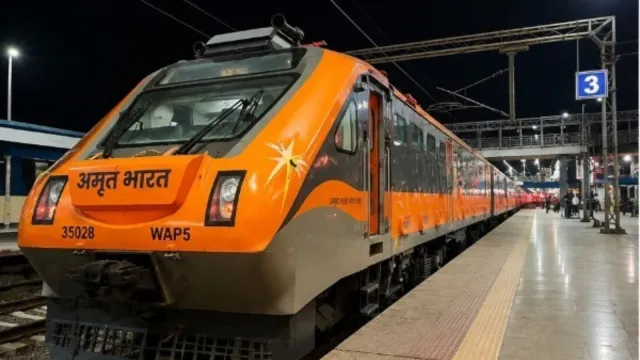
The Amrit Bharat Express was introduced as a modern train option aimed at passengers who want better amenities without paying the fares associated with premium services.
Unlike Vande Bharat trains, which primarily offer chair-car seating on relatively shorter intercity routes, Amrit Bharat services are designed around sleeper and general-class passengers. This makes them particularly relevant for long-distance journeys involving Tier-2 and Tier-3 cities.
The railway service has already expanded beyond its initial routes. Indian Railways has been adding Amrit Bharat services connecting cities and towns across different regions, including routes involving Bihar, Maharashtra, Uttar Pradesh, West Bengal and other states.
The broader significance is not simply the introduction of another train category. Better long-distance rail links can influence how people travel for education, employment, healthcare, business and family purposes.
Why Tier-2 Cities Stand To Benefit
India’s largest metros already have extensive air, rail and road connections. For smaller cities, however, direct and reasonably priced long-distance services can make a bigger difference.
A student travelling from a smaller city to Delhi for an examination, an employee travelling to a metropolitan centre for work or a family travelling for medical treatment can benefit from a direct train that reduces the need for multiple connections.
This is particularly important because rail remains one of India’s most widely used forms of long-distance transport.
The Amrit Bharat model fits that requirement by combining sleeper accommodation with improved passenger facilities. It gives passengers an alternative between conventional long-distance trains and more expensive premium services.
For cities outside the major metropolitan network, the value of such connections can therefore extend beyond passenger convenience.
New Routes Are Connecting Major And Smaller Cities
The expansion of Amrit Bharat services has increasingly focused on linking major urban centres with cities that have strong passenger demand.
One example is the Danapur-Pune Amrit Bharat Express, which was introduced as a weekly service connecting Bihar with Maharashtra. The 18-coach train provides a direct connection between the two regions and passes through important railway junctions along the route.
Another example is the Banaras-Sealdah Amrit Bharat Express, which began regular operations earlier this year, providing a new rail connection between eastern Uttar Pradesh and Kolkata.
These routes demonstrate why Amrit Bharat services can be significant for Tier-2 cities. They do not simply connect one major metro to another. They create direct links between regional centres and larger economic or employment hubs.
What Amrit Bharat Trains Offer Passengers
The Amrit Bharat Express was designed with affordability and practical passenger requirements in mind.
The trains use push-pull technology, which allows locomotives to operate at both ends of the train. This arrangement can improve operational flexibility, particularly at terminals where locomotives do not always need to be repositioned.
The trains also include modern passenger amenities such as improved toilets, charging facilities, CCTV coverage, fire detection systems and better-designed coaches.
The combination matters for long-distance travellers. A passenger travelling overnight may value sleeping accommodation, charging facilities and cleaner toilets more than premium seating or luxury services.
That makes the Amrit Bharat concept different from simply adding another fast train to the railway network.
How Smaller Cities Could Gain From Better Connectivity
Improved rail connectivity can affect more than individual passengers.
When a smaller city receives a direct connection to a major commercial centre, businesses can potentially benefit from easier movement of employees, customers and goods-related personnel.
Tourism can also gain from improved accessibility.
A traveller who might otherwise avoid a destination because reaching it requires multiple train changes may find a direct service more convenient. This can be particularly useful for cities with religious, cultural or tourism importance.
Healthcare is another important factor. Many patients from smaller cities travel to larger urban centres for specialised treatment. A direct overnight train can reduce the logistical burden associated with such journeys.
The effects are not automatic, however. Connectivity needs to be supported by suitable schedules, adequate frequency and reliable last-mile transport.
Affordability Remains The Biggest Advantage
For Tier-2 and Tier-3 passengers, price is often as important as travel time.
Premium trains can significantly reduce journey times, but their fares may not suit every traveller. Conventional express trains remain affordable but can involve longer travel times and fewer modern amenities.
Amrit Bharat attempts to occupy the middle ground.
Passengers can get sleeper and general-class accommodation while also benefiting from newer coaches and passenger facilities. This makes the service relevant to middle-income families, students, workers and other price-conscious travellers.
The value becomes especially visible on long routes where air travel may be considerably more expensive.
For many passengers, the question is not whether a train is the fastest possible option. It is whether the service offers a reasonable balance between price, travel time, comfort and direct connectivity.
Amrit Bharat And The Wider Railway Modernisation Push
The expansion of Amrit Bharat Express is taking place alongside broader railway infrastructure improvements.
Indian Railways has been working on station redevelopment, passenger amenities, electrification, track upgrades and the expansion of newer train services.
The Amrit Bharat Station Scheme is also focused on upgrading railway stations, although it is separate from the Amrit Bharat Express train category. This distinction is important because the similar names can cause confusion.
The station programme aims to improve passenger facilities and station infrastructure across a large number of locations.
Together, better stations and better trains can make regional rail travel more useful. A modern train is only one part of the passenger experience. Station access, platforms, waiting areas, sanitation and connections to local transport also influence whether a journey is genuinely convenient.
What Tier-2 Passengers Should Watch Next
The impact of new Amrit Bharat services will ultimately depend on how effectively they match passenger demand.
Frequency is one major factor. A weekly service can provide a useful connection, but passengers travelling for work or education may need more frequent options.
Timing is equally important. Overnight departures and arrivals can be convenient for some travellers but difficult for others if local transport is unavailable.
Ticket availability will also matter, especially during festivals and school or university examination periods.
For Tier-2 cities, the most useful Amrit Bharat routes are likely to be those that provide direct access to major employment, education, healthcare and commercial centres.
The Bigger Picture For Regional Connectivity
The expansion of Amrit Bharat Express reflects a broader shift in how Indian Railways is approaching passenger connectivity.
India’s transport demand is no longer limited to movement between the biggest metropolitan cities. Millions of passengers travel between smaller cities, state capitals, industrial centres and regional hubs every day.
That makes regional connectivity increasingly important.
If Amrit Bharat services continue to expand on high-demand routes, they could become an important middle-distance and long-distance option for passengers who need affordable travel with improved amenities.
For Tier-2 and Tier-3 India, the real measure of success will not be the number of trains launched. It will be whether passengers gain easier, more affordable and more dependable access to the places they need to reach.
Key Takeaways
- Amrit Bharat Express is designed to provide modern, affordable long-distance rail travel.
- The sleeper and general-class configuration makes the service relevant to price-conscious passengers.
- New routes are strengthening direct connections between regional cities and major economic centres.
- Frequency, ticket availability, schedules and last-mile connectivity will determine the long-term impact on Tier-2 cities.
FAQs
What is the Amrit Bharat Express?
Amrit Bharat Express is a long-distance train service designed to provide improved passenger amenities at relatively affordable fares, with sleeper and general-class accommodation.
How is Amrit Bharat different from Vande Bharat?
Vande Bharat services primarily use chair-car configurations and are aimed at faster intercity travel. Amrit Bharat trains are designed for longer journeys and include sleeper and general-class accommodation.
Why is Amrit Bharat important for Tier-2 cities?
The trains can provide direct or improved connections between smaller cities and major urban centres. This can help passengers travelling for employment, education, healthcare, tourism and family needs.
Are Amrit Bharat trains only useful for passengers?
No. Better connectivity can also support tourism, regional business activity and easier access to larger employment and healthcare centres. The actual economic impact depends on route frequency, schedules and supporting infrastructure.