




























Indian jugaad videos have become a recurring social media phenomenon, turning ordinary household fixes, clever shortcuts and improvised solutions into highly shareable content. Their appeal goes beyond humour, as viewers recognise familiar problems and enjoy seeing simple ideas solve them in unexpected ways.
Indian jugaad videos turn ordinary problems into entertainment
The main reason Indian jugaad videos attract attention is their familiarity. A broken household item, a difficult repair, a storage problem or an inconvenient daily task can become the starting point for a creative solution.
The word jugaad is commonly used in India to describe an improvised or unconventional way of solving a problem, often with limited resources. Social media has transformed this everyday behaviour into a content category of its own.
A simple video showing an unusual way to repair a chair or organise a kitchen can receive thousands of views because people immediately understand the problem.
This makes jugaad content different from highly produced entertainment. The setting often feels ordinary, the solution looks achievable and the situation is easy to understand without lengthy explanation.
Relatability gives jugaad content an advantage
Relatability is one of the strongest drivers behind viral social media content. People are more likely to stop scrolling when they recognise a situation from their own lives.
Indian jugaad videos frequently feature situations involving homes, vehicles, cooking, travel, farming, shopping, construction and everyday repairs. These subjects are relevant across different income groups and locations.
For viewers in Tier-2 and Tier-3 cities, this familiarity can be particularly strong. A person watching a clever repair using an easily available household object may immediately connect it with something they have experienced.
That connection can lead to comments such as trying the method, suggesting another solution or tagging a friend who might find it useful.
The result is a simple content loop: recognition leads to curiosity, curiosity leads to viewing and usefulness or humour can lead to sharing.
The surprise factor keeps viewers watching
A typical jugaad video often begins with an obvious problem and then introduces an unexpected solution.
That structure works well with short-form video because viewers do not need much background information. The first few seconds can establish the problem, while the rest of the video reveals the solution.
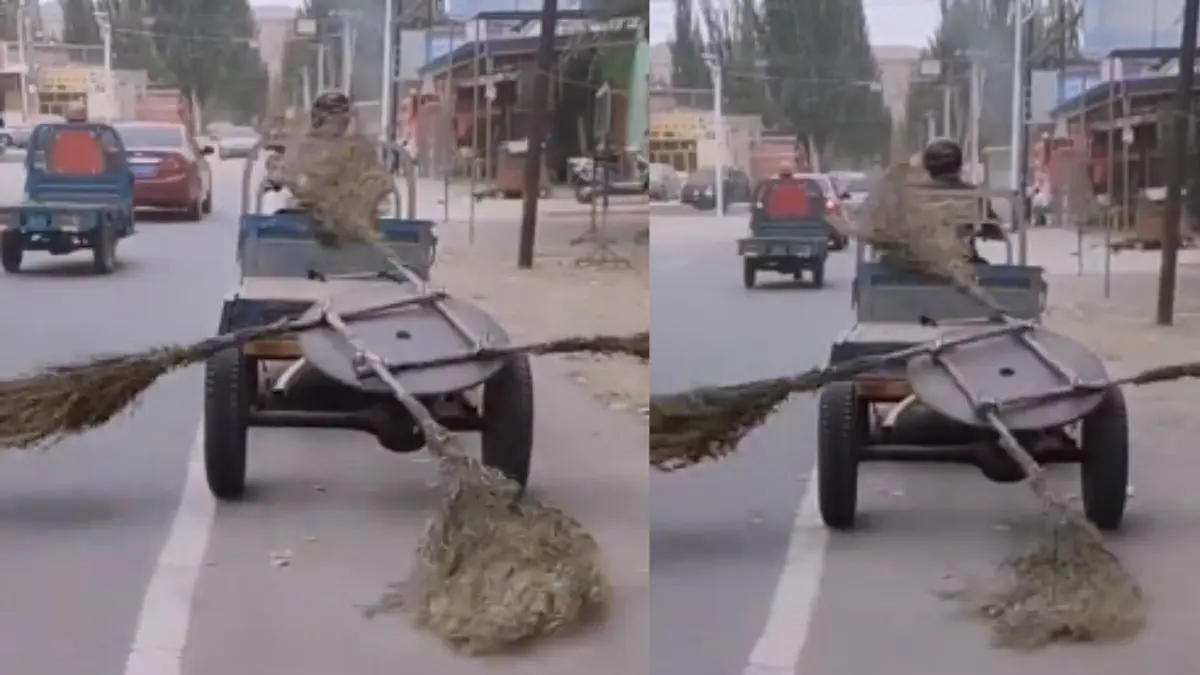
For example, a creator might show an unconventional way to move a heavy object or use an everyday item for a purpose it was not designed for.
The viewer already understands the challenge. The curiosity comes from one question: how is this going to work?
That creates a natural reason to watch until the end. If the solution works, the viewer gets a satisfying payoff. If it fails, the unexpected result can become the entertainment.
Humour makes everyday jugaad more shareable
Not every viral jugaad video is genuinely practical. Some become popular precisely because the solution looks unusual, exaggerated or funny.
Humour lowers the barrier to sharing. A viewer may send a video to a friend even without planning to use the idea.
This is particularly important on platforms built around recommendations and social sharing. Content that produces an immediate emotional response can travel quickly between users.
Indian social media also has a strong culture of meme-based humour and observational comedy. Jugaad fits naturally into this environment because many videos combine practical creativity with an element of surprise.
The humour is often visual, meaning viewers can understand the joke even without detailed dialogue. That makes the content easier to circulate among audiences speaking different Indian languages.
Short-form platforms reward simple visual ideas
The rise of short-form video has created favourable conditions for jugaad content.
Instagram Reels, YouTube Shorts and similar formats encourage creators to communicate an idea quickly. A complex explanation may not work well in a short video, but a visual demonstration can.
Jugaad is naturally suited to demonstration. Instead of explaining how a solution works, the creator can simply show the problem, the improvised method and the result.
This also makes the content relatively inexpensive to produce. A creator does not necessarily need a studio, expensive equipment or a large production team.
A smartphone, an everyday situation and a clear visual idea can be enough to create a potentially engaging video.
Tier-2 and Tier-3 India adds another layer
Jugaad content is not limited to metropolitan India. In fact, its everyday nature gives it strong potential across smaller cities and towns.
People outside major urban centres regularly encounter practical problems involving transportation, farming, home maintenance, small businesses and household equipment.
A solution using locally available materials can therefore feel more relevant than a highly polished lifestyle hack designed around expensive products.
Regional-language content also helps expand the audience. Creators can produce videos in Hindi, Marathi, Bengali, Tamil, Telugu, Punjabi and other languages while still communicating the central idea visually.
Because the basic concept is easy to understand, language becomes less of a barrier than it might be for dialogue-heavy content.
Comments and shares can push videos further
Going viral is rarely determined by one factor. Engagement signals such as watch time, shares, comments and repeat viewing can influence how widely short-form content is recommended, although the exact recommendation systems used by platforms are proprietary and can change.
Jugaad videos have several characteristics that encourage interaction.
Viewers may debate whether a trick actually works. Some may point out a safety concern. Others may suggest a better method or share their own version.
This turns a simple video into a conversation.
A creator can also encourage engagement by asking viewers whether they would try the hack or whether they have a better solution. The comments then become an extension of the original content.
Not every viral hack should be copied
The popularity of jugaad videos also creates a problem: viewers may assume that something shown online is safe simply because it appears to work in a video.
That is not always the case.
Improvised electrical repairs, vehicle modifications, cooking experiments involving heat or pressure, climbing tricks and makeshift construction methods can create genuine risks.
Creators may also edit videos in ways that hide failed attempts or make a complicated process look easier than it actually is.
Viewers should therefore distinguish between harmless creativity and potentially dangerous experimentation. A video being popular does not make the method reliable, safe or suitable for everyone.
Why jugaad is likely to remain popular
The appeal of Indian jugaad is rooted in a combination of culture, practicality, humour and social media behaviour.
People enjoy seeing familiar problems solved in unfamiliar ways. They enjoy surprising outcomes and often want to share ideas that remind them of family members, friends or their own experiences.
The format is also accessible to creators. It does not always require professional production, expensive locations or elaborate scripts.
As short-form video continues to dominate social media consumption, simple visual concepts are likely to remain important. Jugaad fits that environment almost perfectly.
Its strongest advantage is perhaps the simplest one: viewers see something they recognise, followed by something they did not expect.
Takeaways
- Indian jugaad videos combine practical problem-solving with humour and surprise.
- Familiar household and everyday situations make the content highly relatable.
- Short-form platforms are well suited to visually demonstrating simple hacks and improvised solutions.
- Viral popularity does not guarantee that every jugaad method is safe or genuinely effective.
FAQ
What does jugaad mean in India?
Jugaad generally refers to an improvised or unconventional way of solving a problem, often by using limited resources or materials that are already available.
Why do Indian jugaad videos become viral?
Their popularity is linked to relatability, surprise, humour, practical value and the ease with which viewers can understand and share the content.
Which social media platforms are popular for jugaad videos?
Jugaad videos commonly appear on platforms such as Instagram Reels and YouTube Shorts, along with other short-form video and social media platforms.
Are viral jugaad hacks always safe?
No. Some are harmless, but others can involve electricity, vehicles, heat, machinery or structural risks. Viewers should not attempt potentially dangerous hacks simply because they appear successful online.