































The business of nutrition is changing. What was once largely built around one to one consultations is increasingly becoming a structured service, with professionals managing recurring clients, personalised programmes, meal plans and ongoing communication through digital channels.
That shift is creating a larger need for technology that can support the business side of nutrition practice.
The opportunity is already visible in the growth of digital nutrition services. Grand View Research estimates that the digital dietitians market in India generated $70.3 million in revenue in 2024 and is expected to reach $173.4 million by 2030, growing at a compound annual growth rate of 16.2 percent between 2025 and 2030. The report also identifies platforms as one of the faster growing segments of the market. (Grand View Research)
As more nutrition services move into digital channels, managing the practice itself becomes an important part of the equation. Bringing in clients is only one part of running a nutrition business. Professionals also need systems for organising client information, preparing personalised meal plans, making revisions, accessing food and ingredient information and keeping communication with clients organised.
For many practices, these activities are still spread across different tools. A spreadsheet may hold client details, a document may contain the latest meal plan, a messaging application may be used for communication and a separate source may be needed to find food or ingredient information.
This approach can work at a smaller scale. As the practice grows, however, keeping everything updated and connected becomes increasingly difficult.
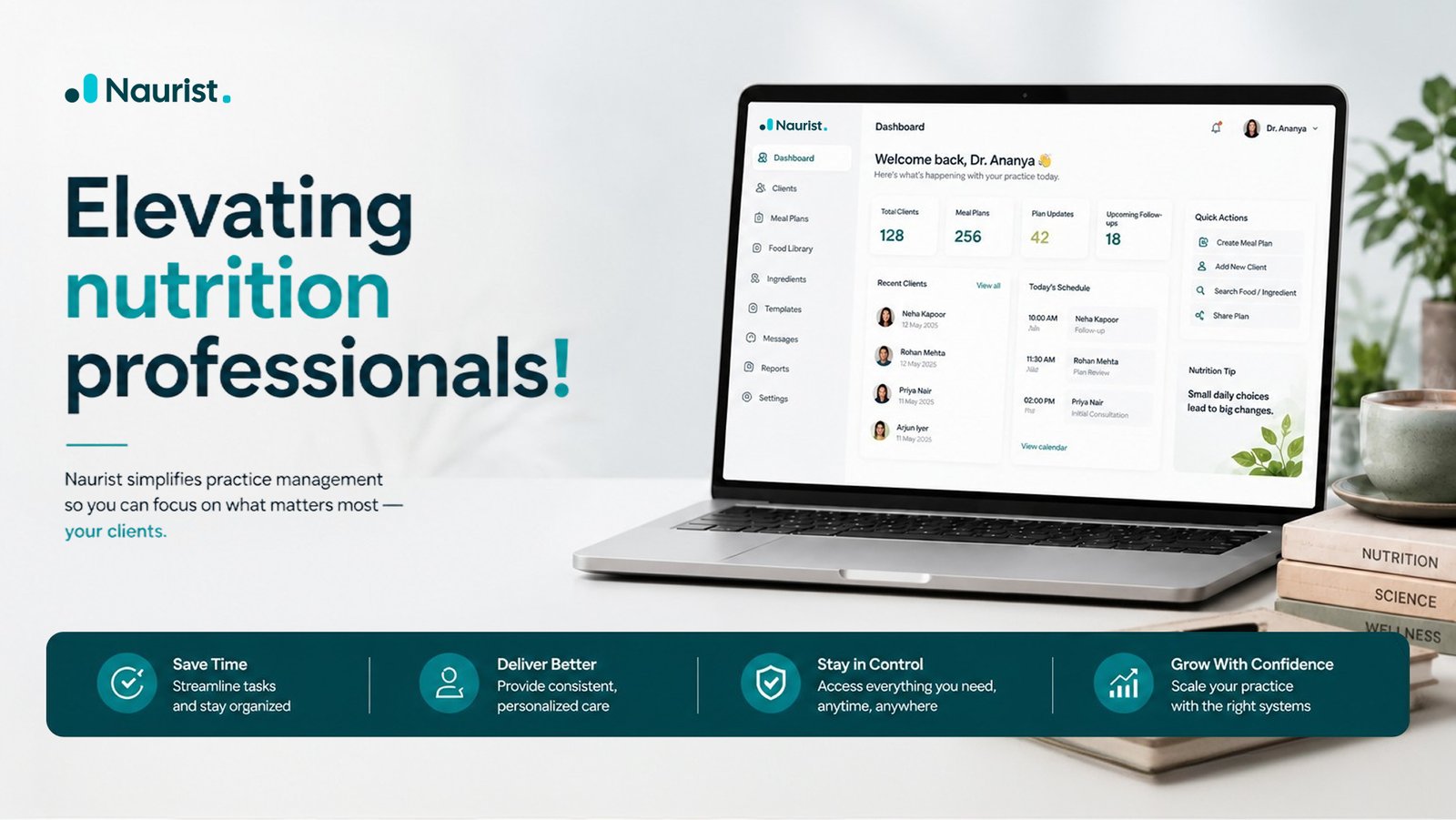
Naurist, developed by OpenUI®, a product focused technology company, is designed to address this part of the nutrition professional’s workflow. The platform brings core practice activities into one system, with tools for client management, meal plan creation and management, food and ingredient information and digital plan sharing.
The objective is not to change how nutrition professionals provide advice. It is to make the operational side of delivering that advice easier to manage.
With Naurist, professionals can create client profiles, build personalised meal plans and make changes as client requirements evolve. The platform also provides structured information around dishes and ingredients, while allowing meal plans to be shared digitally or downloaded for use through familiar communication channels.
This becomes particularly relevant as nutrition practices become more service oriented. A professional may start with a small number of clients and manage their work using familiar tools. As the client base expands, the amount of information to maintain and the number of recurring tasks increase as well.
The result is often not one major operational problem, but dozens of small ones. Finding the latest version of a plan, updating client information, recreating a document, checking food details or sharing a revised plan can each take only a few minutes. Together, they can take up a meaningful part of the working day.
The wider digital health market is also moving towards more personalised services. Consumers are increasingly using technology to track and manage aspects of their health, which is creating greater familiarity with digital wellness experiences.
For nutrition professionals, this raises a different question. If the client experience is becoming more digital, can the systems used to deliver that experience keep pace?
Naurist is approaching this question from the practice management side. Rather than focusing only on the consumer facing part of nutrition, it is being built around the operational needs of the professionals delivering the service.
The larger opportunity is to make nutrition practices easier to organise as they grow. Better practice management can help reduce repetitive administrative work, keep client information structured and give professionals a clearer way to manage the services they provide.
For Naurist, that is the space it aims to occupy: the layer between a nutrition professional’s expertise and the everyday work required to turn that expertise into a consistent, manageable service.