





























Chennai is steadily expanding its electric vehicle charging infrastructure through public and private investments. While charging stations are increasing across the city, experts believe further improvements in coverage, fast charging and residential access are needed before EVs can achieve true mass adoption.
The Chennai EV charging infrastructure has grown significantly over the past few years as electric vehicle adoption accelerates across Tamil Nadu. Government initiatives, private charging networks and automobile manufacturers have invested heavily in expanding charging stations across the city. Although Chennai now has one of South India’s strongest EV ecosystems, questions remain about whether the current infrastructure is sufficient to support mass adoption in the coming years.
With electric cars, scooters and commercial vehicles becoming increasingly common on Chennai’s roads, charging availability has become one of the most important factors influencing consumer confidence. Industry experts believe the city is moving in the right direction, but infrastructure expansion must continue to keep pace with rising EV sales.
Chennai Emerges as a Major EV Hub in South India
Tamil Nadu has positioned itself as one of India’s leading electric mobility states through supportive industrial policies and investments in EV manufacturing. Chennai, often called the “Detroit of India,” has benefited from this transformation because it already serves as a major automotive manufacturing hub.
Several leading automobile companies, battery manufacturers and component suppliers operate around Chennai, making the city an important center for electric mobility development. Alongside manufacturing, public charging infrastructure has expanded through collaborations involving state agencies, oil marketing companies, power utilities and private charging operators.
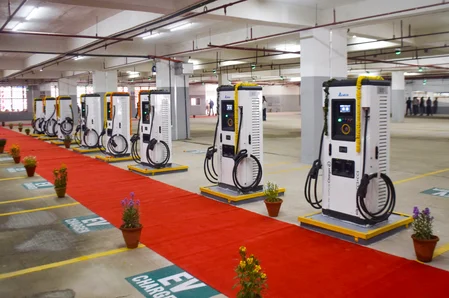
Charging stations are now available at airports, metro stations, shopping malls, hotels, office complexes, highways and fuel stations. This wider distribution has reduced range anxiety for many urban commuters and encouraged more consumers to consider electric vehicles.
Charging Network Expands Across Public and Private Locations
Over the last few years, both government agencies and private companies have accelerated the installation of charging stations across Chennai.
Oil companies such as Indian Oil, Bharat Petroleum and Hindustan Petroleum have added EV chargers at several fuel stations. Private operators including Tata Power EZ Charge, Statiq, ChargeZone and Zeon Charging have also expanded their networks throughout the city and on major highways connecting Chennai with Bengaluru, Puducherry and Coimbatore.
Apartment complexes, corporate campuses and commercial buildings are increasingly installing dedicated EV charging points as demand grows. Mobile applications now allow drivers to locate nearby chargers, check real-time availability and make digital payments, improving convenience for EV owners.
The expansion of fast DC charging stations has also made long-distance travel more practical for electric car users, although slower AC chargers remain more common in residential areas.
What Still Needs Improvement Before Mass Adoption?
Despite rapid progress, Chennai’s EV charging ecosystem still faces several practical challenges.
One of the biggest concerns is uneven charger distribution. Central business districts and premium residential areas have better charging access than many suburban neighborhoods. As EV ownership expands into outer parts of the city, charging infrastructure must keep pace.
Residential charging also remains a challenge for people living in apartment complexes without dedicated parking spaces. Installing individual charging units often requires approvals from housing societies, electrical upgrades and additional investment.
Fast charging availability is another area requiring attention. Although the number of DC fast chargers is increasing, demand is expected to rise sharply as more electric cars enter the market.
Experts also emphasize the importance of regular maintenance. Charging stations that remain out of service due to technical faults can reduce public confidence in the overall network.
Government Policies Continue Supporting Electric Mobility
The Tamil Nadu government has introduced multiple policies aimed at promoting electric mobility and attracting investment into the EV sector.
State incentives have encouraged manufacturers to establish production facilities while supporting infrastructure development. Chennai has also benefited from central government programs that promote cleaner transportation, charging infrastructure and electric vehicle adoption.
Public transport agencies have begun introducing electric buses into city fleets, contributing to lower emissions and familiarizing residents with EV technology. At the same time, ride-hailing companies and delivery platforms are gradually increasing the use of electric two-wheelers and commercial vehicles.
These developments create additional demand for charging infrastructure while helping establish a broader EV ecosystem across the city.
Consumer Confidence Is Growing, but Education Remains Important
Many consumers who were previously hesitant about buying electric vehicles are becoming more confident as charging infrastructure expands.
Modern EVs now offer longer driving ranges, improved battery technology and lower running costs compared to earlier models. Combined with the growing charging network, these improvements are making EV ownership more practical for daily commuting.
However, misconceptions still exist regarding battery lifespan, charging time and maintenance costs. Industry experts believe public awareness campaigns and transparent information about charging availability will play an important role in encouraging wider adoption.
As technology continues to improve and charging networks become denser, consumers are expected to experience fewer barriers when considering electric mobility.
Is Chennai Ready for Mass EV Adoption?
Chennai has made substantial progress toward becoming an EV-friendly city. Its strong automotive ecosystem, expanding charging network and supportive government policies provide a solid foundation for future growth.
However, achieving true mass adoption will require continued investment in fast chargers, residential charging solutions and better geographic coverage across suburban areas. Reliable maintenance and interoperability between charging networks will also become increasingly important as EV ownership grows.
While Chennai may not yet have a fully mature charging ecosystem capable of supporting every future demand scenario, it is considerably better prepared than many other Indian cities. If current infrastructure expansion continues, the city is well positioned to support the next phase of India’s electric mobility transition.
Takeaways
- Chennai has significantly expanded its EV charging infrastructure through public and private investments.
- Charging stations are now available across fuel stations, malls, offices, highways and public spaces.
- Residential charging access and fast charging availability remain important challenges.
- Continued infrastructure expansion will be essential for supporting large-scale EV adoption in the coming years.
FAQ
Q1. Does Chennai have enough EV charging stations today?
The city has developed a substantial charging network, but further expansion is needed in suburban areas and residential neighborhoods to support future demand.
Q2. Where can EV owners charge their vehicles in Chennai?
Charging stations are available at fuel stations, shopping malls, office complexes, airports, metro stations, hotels and along major highways connecting the city.
Q3. What is the biggest challenge facing Chennai’s EV infrastructure?
Expanding fast charging availability and improving residential charging access for apartment residents remain the primary challenges.
Q4. Is Chennai a good city for buying an electric vehicle?
Yes. Chennai offers one of the stronger EV ecosystems in South India, supported by growing charging infrastructure, vehicle availability and government initiatives that encourage electric mobility.
(Internal keyword suggestions: Chennai EV charging infrastructure, Chennai electric vehicle charging stations, EV charging network Chennai, Tamil Nadu EV policy, electric vehicles Chennai, fast charging stations India, EV adoption India, Chennai EV ecosystem, electric mobility Tamil Nadu, EV infrastructure India)