






























ADAS features are becoming a major selling point in the Indian automobile market. Once limited to premium luxury vehicles, Advanced Driver Assistance Systems are now available in several SUVs and sedans across different price segments, helping improve road safety and driver awareness.
What Are ADAS Features and How Do They Work?
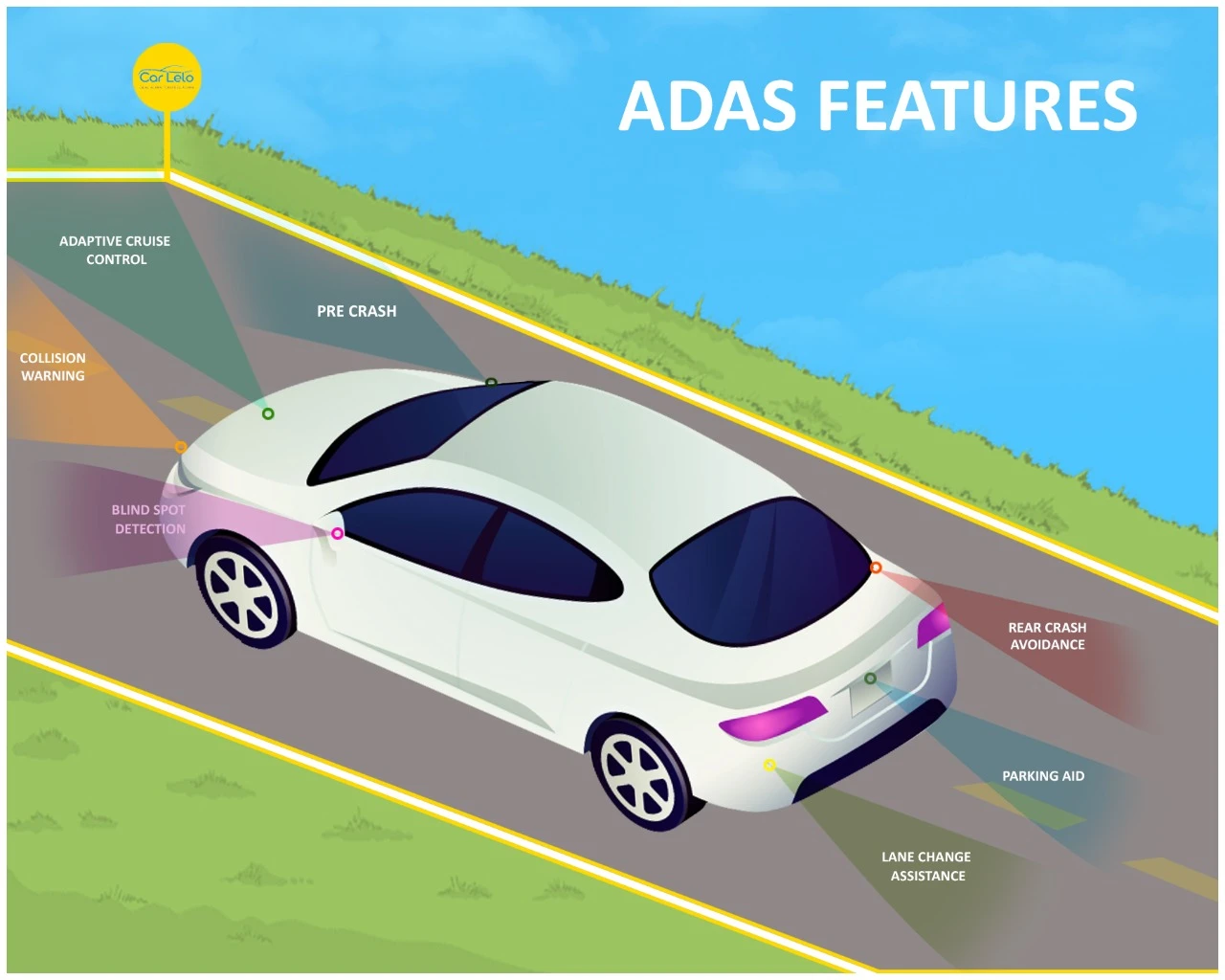
ADAS, or Advanced Driver Assistance Systems, refers to a collection of technologies designed to assist drivers and reduce the risk of accidents. These systems use cameras, radar sensors, ultrasonic sensors, and software to monitor the vehicle’s surroundings in real time.
Unlike autonomous driving, ADAS does not replace the driver. Instead, it provides warnings or automatically intervenes in specific situations.
Common ADAS features include Forward Collision Warning, Autonomous Emergency Braking, Lane Keep Assist, Adaptive Cruise Control, Blind Spot Monitoring, Rear Cross Traffic Alert, and Driver Attention Monitoring.
For example, if a vehicle ahead suddenly brakes, the system may warn the driver and apply emergency braking if there is no response. Similarly, Lane Keep Assist can gently steer the vehicle back into its lane when unintended drifting is detected.
These technologies aim to reduce human error, which remains one of the leading causes of road accidents worldwide.
Why ADAS Technology Is Growing in India
The growing popularity of ADAS in India is linked to increasing consumer awareness about vehicle safety. Buyers today are paying more attention to crash ratings, airbags, electronic stability control, and active safety systems.
Improved highway infrastructure has also increased demand for features such as Adaptive Cruise Control and Lane Keeping Assist. Long-distance driving has become more common, especially on expressways connecting major cities.
Automakers are responding by introducing ADAS-equipped models across multiple segments. What was once a luxury feature is gradually becoming accessible to mainstream buyers.
Government safety regulations and evolving global automotive standards are also encouraging manufacturers to prioritize advanced safety technologies.
However, experts caution that Indian road conditions can sometimes limit the effectiveness of certain ADAS functions. Pedestrian movement, mixed traffic patterns, and unclear lane markings may affect system performance in some situations.
New Cars Offering the Best ADAS Safety Technology
Several vehicles currently stand out for their ADAS packages in India.
The Mahindra XUV700 remains one of the most influential models in popularizing ADAS technology among Indian buyers. It offers Adaptive Cruise Control, Autonomous Emergency Braking, Traffic Sign Recognition, Smart Pilot Assist, and Lane Keep Assist.
The Hyundai Verna features Level 2 ADAS functions including Forward Collision Avoidance Assist, Lane Following Assist, Blind Spot Collision Warning, and Safe Exit Warning.
The Honda Elevate comes equipped with the Honda Sensing suite, offering collision mitigation braking, adaptive cruise control, lane departure warning, and automatic high beam assistance.
The Hyundai Creta and Kia Seltos also offer comprehensive ADAS packages in their higher variants, making advanced safety technology available to a wider customer base.
Premium options such as the Toyota Camry and MG Gloster continue to provide extensive driver assistance capabilities.
Which ADAS Features Matter Most for Indian Drivers?
Not all ADAS features provide equal value in Indian driving conditions. Some technologies have proven more practical than others.
Forward Collision Warning and Autonomous Emergency Braking are among the most useful because they can help prevent rear-end collisions. These accidents are common in urban traffic and on highways.
Blind Spot Monitoring is particularly beneficial when navigating crowded roads with motorcycles, scooters, and fast-moving vehicles changing lanes unexpectedly.
Adaptive Cruise Control becomes valuable during long highway journeys by automatically maintaining a safe distance from vehicles ahead.
Driver Attention Monitoring can also improve safety by identifying signs of fatigue and alerting the driver when a break may be needed.
On the other hand, features heavily dependent on lane markings may perform inconsistently on roads where markings are faded or absent.
Consumers should therefore focus on real-world usefulness rather than simply counting the number of ADAS features offered.
Should You Pay Extra for ADAS?
For many buyers, the answer is increasingly yes. The additional cost associated with ADAS-equipped variants often brings meaningful safety benefits that may help avoid accidents.
That said, ADAS should never be viewed as a substitute for attentive driving. Drivers must keep their hands on the wheel, remain alert, and understand the limitations of these systems.
Before purchasing a vehicle, buyers should evaluate how they use their car. Frequent highway travelers may benefit significantly from Adaptive Cruise Control and Lane Assist. Urban commuters may find collision warning systems and blind spot monitoring more valuable.
As technology becomes more widespread, ADAS is expected to transition from a premium feature to a standard safety requirement in many segments.
The future of Indian automotive safety will likely involve a combination of stronger vehicle structures, improved crash protection, and increasingly sophisticated driver assistance systems.
Key Takeaways
• ADAS stands for Advanced Driver Assistance Systems and helps improve driving safety.
• Features such as Autonomous Emergency Braking and Blind Spot Monitoring offer significant real-world benefits.
• Cars like the Mahindra XUV700, Hyundai Verna, Hyundai Creta, Kia Seltos, and Honda Elevate offer strong ADAS packages.
• ADAS assists drivers but does not replace responsible driving practices.
FAQ
What does ADAS mean in cars?
ADAS stands for Advanced Driver Assistance Systems, a group of technologies designed to improve vehicle safety through warnings and automated interventions.
Is ADAS useful on Indian roads?
Yes, especially features such as collision warning, emergency braking, blind spot monitoring, and adaptive cruise control. However, some lane-based systems may be affected by road conditions.
Which is the most affordable car with ADAS in India?
The Hyundai Verna and Honda Elevate are among the more accessible vehicles offering comprehensive ADAS packages in their segments.
Can ADAS prevent accidents completely?
No. ADAS reduces risk and assists drivers, but safe driving habits and driver attention remain essential.
(ADAS features India, best ADAS cars India, Advanced Driver Assistance Systems, Mahindra XUV700 ADAS, Hyundai Verna safety features, Honda Elevate ADAS, car safety technology India, autonomous emergency braking, adaptive cruise control India, safest cars in India)