































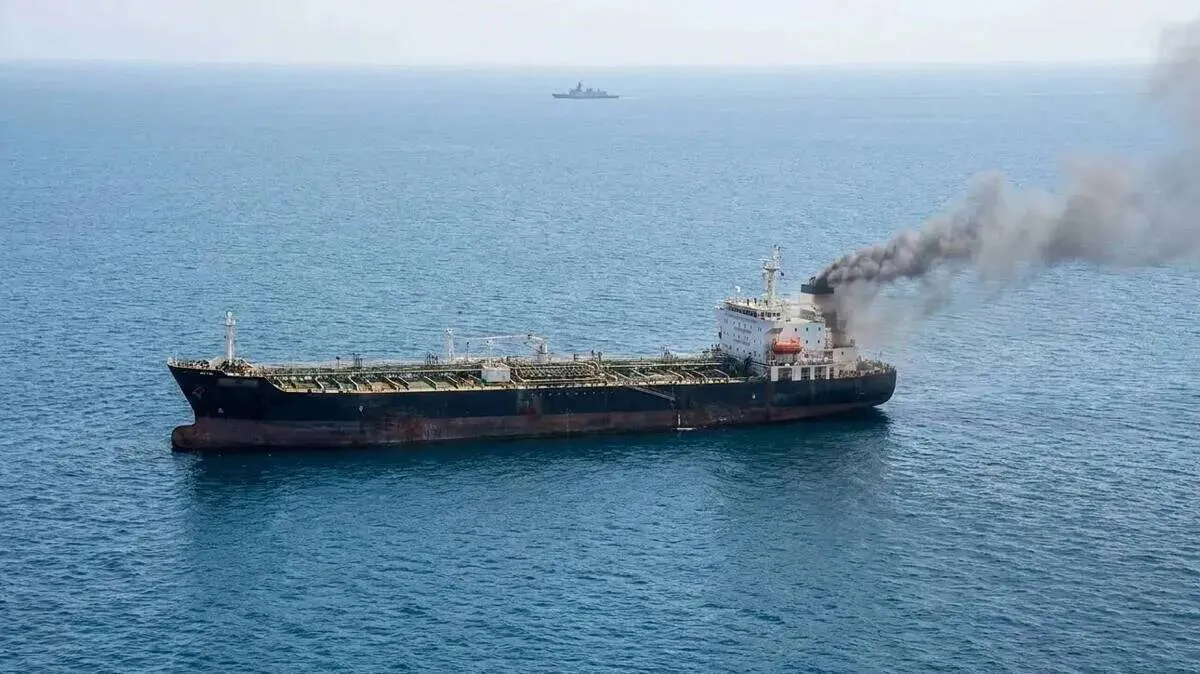
Three Indian sailors have been confirmed dead following an attack on the oil tanker MT Settebello near the Strait of Hormuz, one of the world’s most strategically important shipping routes. The incident has triggered diplomatic concerns, renewed attention on maritime safety, and questions about the security of commercial vessels operating in the Gulf region.
What Happened Near the Strait of Hormuz?
The incident involved the Palau-flagged oil tanker MT Settebello, which was operating near the Gulf of Oman and the Strait of Hormuz. According to official statements released by Indian authorities and international reports, the vessel came under attack during escalating tensions linked to maritime operations in the region.
Initial reports indicated that three Indian crew members were missing after the attack. Rescue operations were launched immediately, and 21 other Indian crew members were safely evacuated with assistance from Omani authorities. Subsequent confirmation from Indian officials revealed that the three missing sailors had died during the incident.
The deaths mark one of the most serious recent maritime tragedies involving Indian seafarers in the Gulf region. The incident has drawn significant attention because India is one of the world’s largest suppliers of maritime manpower, with hundreds of thousands of Indian seafarers working on international commercial vessels.
Who Were the Indian Sailors Killed?
Authorities have identified the three deceased crew members as Chief Engineer Patnala Suresh, Deck Cadet Aditya Sharma, and Fitter Shivanand Chaurashiya.
The victims represented different levels of maritime service, ranging from a young trainee officer to experienced engineering personnel responsible for vessel operations. Their deaths have prompted an outpouring of grief from families, maritime organizations, and industry groups across India.
Reports indicate that the crew members were performing their duties aboard the vessel when the attack occurred. Families of the deceased have sought clarity regarding the circumstances surrounding the incident and the measures that were in place to protect commercial shipping crews operating in a conflict-sensitive area.
The Indian government has begun efforts to facilitate the return of the bodies and provide support to the affected families.
Why Is the Strait of Hormuz So Important?
The Strait of Hormuz is one of the world’s most critical maritime chokepoints. Located between Oman and Iran, it connects the Persian Gulf to global shipping lanes and serves as a major route for crude oil and petroleum exports.
A significant share of global energy shipments passes through this narrow waterway every day. Any disruption in the region can have implications for international trade, energy markets, shipping insurance costs, and maritime security.
Because of its strategic importance, the Strait of Hormuz frequently becomes a focal point during periods of geopolitical tension. Commercial vessels operating in the area often face heightened security risks whenever military activity escalates.
For India, the region is especially important because a large portion of the country’s energy imports travels through these shipping routes.
India’s Response and Diplomatic Concerns
Following confirmation of the deaths, India expressed serious concern over the attack and emphasized the need to protect civilian seafarers operating in international waters.
Officials have maintained contact with authorities in the region and have sought detailed information regarding the circumstances that led to the incident. Diplomatic channels have also been used to communicate India’s concerns regarding the safety of Indian nationals working aboard commercial vessels.
Maritime industry organizations have called for stronger safeguards to protect crews operating in high-risk waters. Several experts have pointed out that seafarers often become unintended victims when geopolitical disputes spill into commercial shipping routes.
The incident has renewed discussions about risk assessments, emergency response systems, and the responsibilities of shipping companies operating in conflict-prone areas.
What Happens Next?
Investigations into the attack and its circumstances are expected to continue. Maritime authorities, governments, and industry stakeholders will likely review available evidence to determine exactly how the incident unfolded.
Shipping companies operating in the Gulf region may also reassess security procedures and voyage planning measures. Higher insurance premiums, route adjustments, and additional safety protocols are common responses following major maritime incidents.
For India, the immediate priority remains supporting the affected families and ensuring the safety of Indian seafarers working in the region.
The tragedy also highlights the broader risks facing commercial shipping in areas affected by geopolitical tensions. As international trade continues to rely heavily on strategic waterways such as the Strait of Hormuz, ensuring the protection of civilian maritime workers remains a global concern.
Key Takeaways
• Three Indian sailors aboard MT Settebello were confirmed dead after an attack near the Strait of Hormuz.
• Twenty-one other Indian crew members were rescued safely following the incident.
• The Strait of Hormuz remains one of the world’s most important and sensitive shipping routes.
• The incident has sparked diplomatic concerns and renewed focus on maritime safety in conflict-prone regions.
FAQ
Who were the three Indian sailors killed in the incident?
The deceased crew members were Chief Engineer Patnala Suresh, Deck Cadet Aditya Sharma, and Fitter Shivanand Chaurashiya.
Where did the incident occur?
The attack occurred near the Gulf of Oman and the Strait of Hormuz, a strategically important maritime passage connecting the Persian Gulf to global shipping routes.
How many crew members were rescued?
Twenty-one Indian crew members aboard the vessel were rescued safely with assistance from regional authorities.
Why is the Strait of Hormuz important?
The Strait of Hormuz is one of the world’s busiest energy shipping routes and plays a crucial role in global oil transportation and international trade.
(Three Indian sailors dead, Strait of Hormuz incident, MT Settebello attack, Indian seafarers news, Gulf of Oman tanker incident, maritime security, Indian crew members, shipping route safety, Hormuz crisis, Indian sailors killed)