































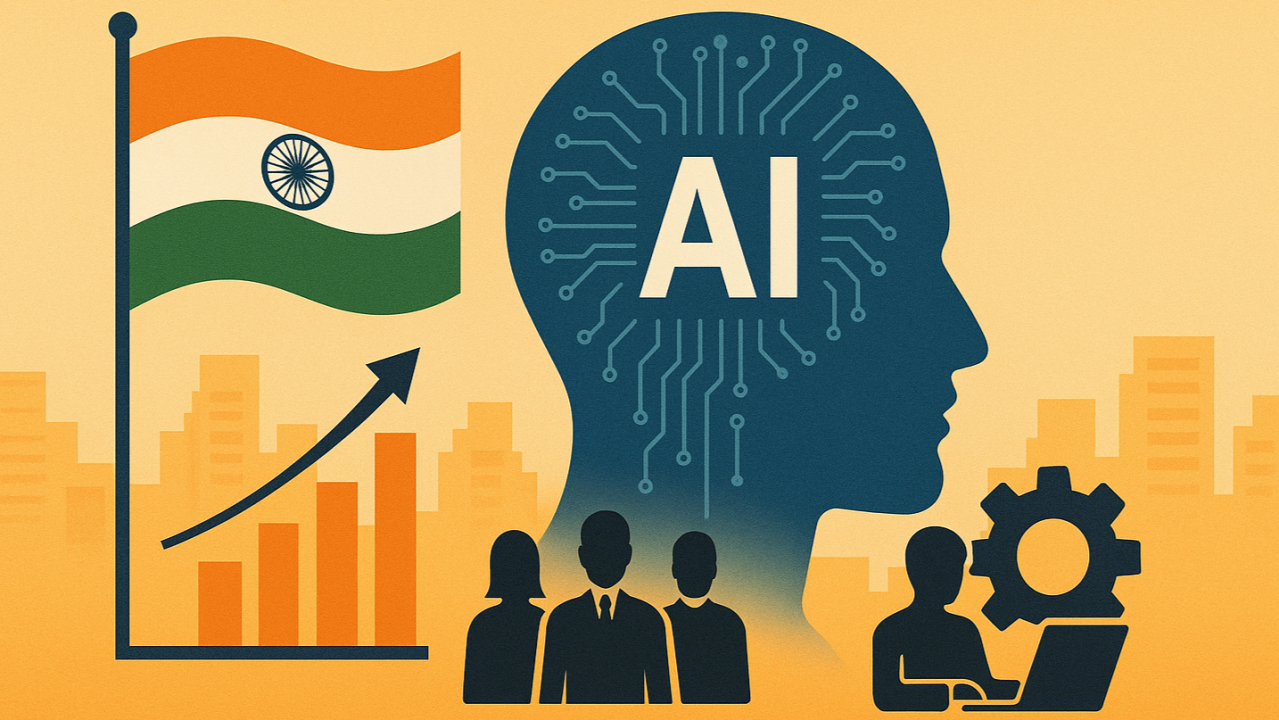
Artificial intelligence and automation are no longer limited to large technology companies. Across India, innovators, startups and researchers are using AI and automation to solve local problems in agriculture, healthcare, education, transportation and public services. Their solutions are helping improve efficiency, reduce costs and address challenges that affect millions of people every day.
AI Innovation in India Is Becoming More Practical
The rise of AI innovation in India is increasingly focused on practical applications rather than experimental technology. Indian innovators are identifying local challenges and developing solutions that can operate within real-world conditions such as limited resources, diverse languages and varying levels of digital access.
Unlike many global technology trends that focus on advanced consumer products, several Indian AI projects are designed to improve essential services. This includes helping farmers predict crop diseases, enabling healthcare workers to detect medical conditions faster and assisting local governments in managing public infrastructure.
The combination of affordable computing power, increasing internet access and a growing startup ecosystem has made it easier for innovators to deploy AI-driven solutions at scale.
AI in Agriculture Helps Farmers Make Better Decisions
Agriculture remains one of the most important sectors of the Indian economy, employing a significant portion of the population. As a result, many innovators are using AI and automation to improve farming outcomes.
AI-powered mobile applications can analyze photographs of crops and identify signs of disease or pest infestation. Farmers can receive recommendations for treatment before the problem spreads across their fields.
Weather prediction tools powered by machine learning are also helping farmers make informed decisions regarding irrigation, planting schedules and harvesting. Some startups are combining satellite imagery with AI analytics to monitor crop health and estimate yields.
Automation technologies such as smart irrigation systems are reducing water waste by delivering water only when crops require it. This is particularly important in regions facing water scarcity.
Healthcare Technology Is Improving Access to Medical Services
Healthcare is another area where AI and automation are creating meaningful impact. Indian innovators are developing tools that assist doctors in diagnosing diseases, managing patient records and improving healthcare delivery.
AI systems can analyze medical scans and help identify abnormalities that may require further examination. While these systems do not replace medical professionals, they can support faster and more accurate decision-making.
Automation is also helping hospitals reduce administrative workloads. Digital patient management systems streamline appointment scheduling, record maintenance and reporting processes.
Telemedicine platforms enhanced by AI are expanding healthcare access in rural areas where specialist doctors may not be readily available. This enables patients to receive consultations without traveling long distances.
Education and Regional Language AI Solutions Expand Learning
One of the most significant opportunities for AI in India lies in education. The country’s linguistic diversity creates challenges for delivering quality educational content across different regions.
Indian innovators are building AI-powered learning platforms that support multiple regional languages. These platforms can adapt lessons according to a student’s learning pace and provide personalized recommendations.
Automated translation tools are making educational materials more accessible to students who prefer learning in their native language. Voice-based AI assistants are also helping users access information without requiring advanced digital skills.
Such innovations are particularly valuable in Tier-2 and Tier-3 cities, where access to educational resources may be more limited than in major metropolitan areas.
Smart Cities and Public Services Benefit from Automation
Automation technologies are increasingly being adopted by urban administrations to improve public services. Smart city initiatives across India are using data analytics, AI and automated systems to address issues such as traffic congestion, waste management and public safety.
AI-powered traffic management systems can analyze vehicle movement and optimize signal timing to reduce congestion. Automated monitoring systems help identify infrastructure issues before they become serious problems.
Several municipal bodies are exploring the use of predictive analytics to improve service delivery and allocate resources more efficiently. These technologies help governments respond more effectively to citizen needs while reducing operational costs.
As urban populations continue to grow, automation is expected to play an increasingly important role in city management.
Challenges and Opportunities Ahead
Despite significant progress, AI adoption in India still faces challenges. Data quality, digital literacy, infrastructure gaps and cybersecurity concerns remain important issues that must be addressed.
There is also a growing need for ethical AI development to ensure that automated systems remain transparent, reliable and free from unintended bias. Policymakers, technology companies and academic institutions are increasingly collaborating to establish responsible AI frameworks.
At the same time, opportunities continue to expand. Advances in generative AI, machine learning and automation technologies are creating new possibilities for solving local problems at scale.
The success of Indian innovators demonstrates that technology can be most effective when it addresses real community needs. By focusing on practical applications, AI and automation are helping create solutions that improve lives across both urban and rural India.
Key Takeaways
• Indian innovators are using AI and automation to solve challenges in agriculture, healthcare, education and public services.
• AI-powered farming tools help farmers improve productivity and manage crop health.
• Healthcare and education sectors are benefiting from automation and personalized digital solutions.
• Smart city projects are increasingly using AI to improve urban infrastructure and service delivery.
FAQ
Q1. How is AI helping Indian farmers?
AI helps farmers identify crop diseases, predict weather conditions, optimize irrigation and improve agricultural productivity through data-driven insights.
Q2. Can AI replace doctors in healthcare?
No. AI is designed to assist healthcare professionals by providing analytical support and improving efficiency, but medical decisions remain the responsibility of qualified doctors.
Q3. Why is regional language AI important in India?
India has a diverse linguistic population. Regional language AI makes digital services, education and information more accessible to people who prefer local languages.
Q4. What industries are benefiting most from AI in India?
Agriculture, healthcare, education, finance, transportation, manufacturing and public administration are among the sectors seeing significant benefits from AI adoption.
(artificial intelligence India, AI innovation India, automation technology, Indian startups, AI in agriculture, AI healthcare solutions, smart city technology, machine learning India, automation trends, digital transformation India)