





























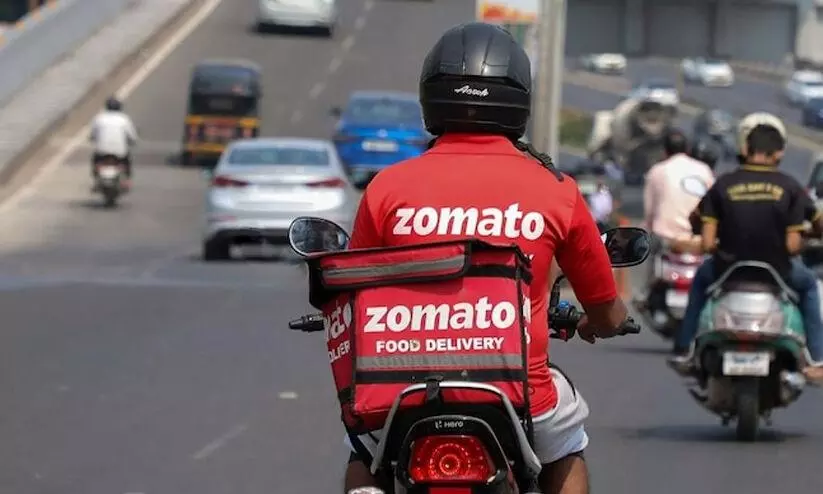
A Zomato delivery agent’s handwritten note requesting tips has gone viral across India, reigniting conversations around tipping culture, gig worker earnings, and customer responsibility. The incident highlights deeper issues in the food delivery ecosystem beyond a single viral moment.
The Zomato delivery agent tip note controversy has become a talking point on social media, with users divided over whether customers should feel obligated to tip. The viral post shows a delivery partner attaching a polite message to an order, asking customers to consider tipping due to low base earnings.
Viral Zomato Delivery Note and What It Said
The now-viral image features a simple handwritten message reportedly attached to a food delivery order. The delivery agent requested customers to consider giving a tip, explaining that base payouts from platforms are often limited and variable.
The tone of the note was not aggressive or demanding. Instead, it highlighted a ground reality many users are not fully aware of. This authenticity is what drove the content to spread quickly across platforms like Instagram and X.
Several users shared similar experiences, suggesting that this is not an isolated case. Delivery partners occasionally rely on such gestures to increase their daily earnings, especially during low-demand periods.
The virality of the note has shifted focus from individual behaviour to structural issues within the gig economy.
Understanding Zomato Delivery Earnings and Gig Economy Pay
Food delivery platforms like Zomato operate on a gig-based model where delivery partners are paid per order rather than receiving a fixed salary. Earnings depend on multiple factors including distance, demand, time slots, and incentives.
Base pay per delivery can be relatively low, especially in non-peak hours or smaller cities. While surge pricing and incentives can increase income during busy periods, earnings are not always consistent.
Delivery partners also bear certain operational costs such as fuel, mobile data, and vehicle maintenance. These factors reduce net income, making tips a meaningful addition for many workers.
In Tier 2 and Tier 3 cities, where order values are lower and tipping culture is less established, the gap between effort and earnings becomes more noticeable.
Tipping Culture in India vs Global Markets
The Zomato delivery agent tip debate has also brought attention to how tipping culture in India differs from countries like the United States. In India, tipping is generally optional and situational, not an expected part of service transactions.
Most users consider delivery charges as part of the total service cost. As a result, additional tipping is often viewed as discretionary rather than necessary.
In contrast, global markets often integrate tipping into the service economy. Workers rely on tips as a significant portion of their income, and social norms support this expectation.
India’s evolving gig economy is now testing these boundaries. As platform-based work expands, the question arises whether tipping should remain optional or become a standard practice.
Social Media Reactions Show Divided Opinions
Public response to the viral note has been sharply divided. One group supports the delivery agent, arguing that tipping is a small but meaningful way to support gig workers facing income instability.
Supporters point out that customers benefit from convenience and should be willing to contribute extra, especially when service quality is good.
On the other hand, critics argue that responsibility lies with platforms, not customers. They believe companies should ensure fair wages instead of indirectly shifting the burden to users.
Some users also expressed concern that normalising such requests could lead to discomfort or pressure during transactions.
This split highlights a broader tension between platform economics and consumer expectations.
Platform Policies and Customer Interface Around Tips
Platforms like Zomato already provide an in-app tipping feature, allowing users to add a tip before or after delivery. This system is designed to keep the process voluntary and frictionless.
However, the visibility of this feature varies among users. In many cases, customers skip tipping simply because it is not prominently highlighted or they are not habituated to the practice.
From a platform perspective, tipping can improve delivery partner satisfaction without directly increasing operational costs. However, over-reliance on tips can also attract criticism.
There is currently no mandatory tipping mechanism in India, and platforms have not indicated any shift toward enforcing it.
Larger Questions Around Gig Worker Welfare
The Zomato delivery agent viral note points to a deeper issue beyond tipping. It raises questions about income stability, worker protections, and long-term sustainability of gig jobs.
India’s gig workforce is expanding rapidly, with millions relying on platforms for income. While flexibility is a key advantage, the lack of fixed earnings and social security remains a concern.
Government discussions around gig worker rights, including minimum pay standards and insurance coverage, are ongoing but still evolving.
For users, this means the convenience of app-based services is closely tied to the working conditions of delivery partners. Awareness is increasing, but systemic changes are still in progress.
Takeaways
Zomato delivery agent’s tip note has gone viral across India
Gig workers often rely on tips due to variable earnings
Indian tipping culture remains optional and inconsistent
Debate highlights larger issues around gig economy wages
FAQs
Why did the Zomato delivery note go viral
It showed a delivery agent politely requesting tips, which resonated with users and sparked a broader discussion about worker earnings.
Are Zomato delivery partners paid a fixed salary
No, they are typically paid per delivery with incentives based on demand and performance.
Is tipping mandatory on food delivery apps in India
No, tipping is optional and left to the customer’s discretion.
Should customers feel obligated to tip delivery agents
There is no obligation, but many users choose to tip as a gesture of appreciation for service