































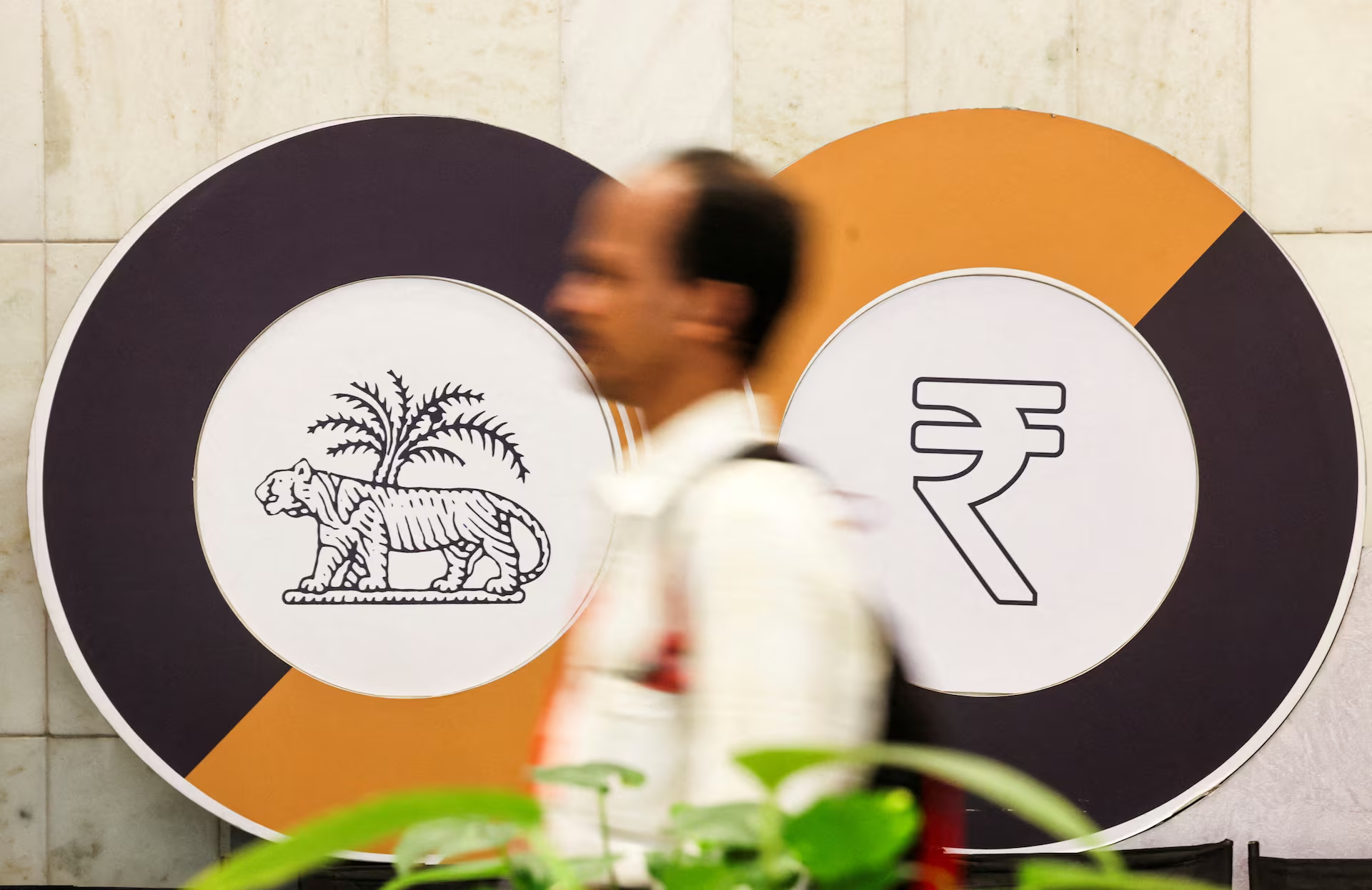
Indian banks are seeking support from the Reserve Bank of India amid rising pressure on the rupee and growing volatility in global currency markets. The issue has become a major financial discussion in May 2026 as banks push for cheaper overseas borrowing options and relief on hedging costs.
The demand comes at a time when the Indian rupee has weakened sharply against the US dollar due to rising crude oil prices, foreign investor outflows, and geopolitical tensions in West Asia. Reports indicate that banks have approached the RBI for measures that could reduce the cost of raising dollar funds from international markets.
Why the Topic Is Time Sensitive
This is a time-sensitive financial news topic because the RBI, Indian banks, and currency markets are actively responding to current rupee volatility in May 2026. Recent developments involving forex intervention, dollar liquidity measures, and overseas funding discussions make the story highly relevant for businesses, investors, and consumers.
Why the Rupee Is Under Pressure in 2026
The Indian rupee has faced heavy pressure in recent weeks, with the currency touching record lows near 96 against the US dollar before partially recovering through RBI intervention. Multiple global and domestic factors are contributing to the weakness.
One major reason is the surge in crude oil prices linked to geopolitical tensions in the Middle East. India imports a large share of its crude oil requirements, so higher oil prices increase dollar demand from importers. At the same time, foreign institutional investors have pulled money out of Indian equities, creating additional pressure on the currency.
The RBI has already sold billions of dollars from forex reserves to stabilize the rupee. Reports suggest the central bank sold between $2 billion and $3 billion in market interventions during recent trading sessions.
Despite these efforts, market uncertainty remains high because global investors continue to prefer the safety of the US dollar during geopolitical instability.
What Indian Banks Are Asking the RBI
Indian banks are now requesting relief on foreign exchange hedging costs for overseas borrowings. When banks raise money in dollars from international markets, they usually hedge currency risk to protect themselves from rupee depreciation.
However, hedging costs have become expensive due to volatility in currency markets. According to reports, banks have asked the RBI to subsidize part of these hedging costs, potentially by up to 150 basis points.
If approved, the move could make overseas dollar borrowing cheaper than domestic funding for some institutions. Banking officials reportedly believe such measures could help attract up to $50 billion in foreign currency inflows into India.
This approach is similar to measures used during the 2013 rupee crisis, when the RBI encouraged Foreign Currency Non-Resident deposits through special swap facilities to attract dollar inflows.
RBI’s Current Strategy to Stabilize the Currency
The RBI has already taken several steps to defend the rupee and manage liquidity stress in the banking system. One important move was the announcement of a $5 billion dollar-rupee swap auction aimed at improving liquidity while supporting currency stability.
The central bank has also tightened forex exposure rules for banks and increased direct intervention in currency markets. Reports show that the RBI resumed aggressive pre-market dollar sales to prevent speculative pressure on the rupee.
RBI Governor Sanjay Malhotra has emphasized that the central bank’s goal is to reduce excessive volatility rather than defend a fixed exchange rate.
Analysts believe the RBI may continue using multiple tools simultaneously, including forex swaps, liquidity management, tighter banking regulations, and measures to encourage foreign inflows.
How This Affects Businesses and Common Indians
A weak rupee affects everyday economic activity in several ways. Imported products become more expensive because companies need more rupees to buy dollars. This impacts fuel prices, electronics, machinery imports, and several consumer goods.
Businesses with overseas debt also face higher repayment costs if the rupee continues weakening. Airlines, oil companies, and import-heavy sectors usually feel the pressure first.
For ordinary consumers, rupee weakness can eventually contribute to inflation because transportation and import costs rise across industries. International travel and foreign education expenses also become costlier.
At the same time, exporters may benefit slightly because Indian goods become cheaper in global markets when converted into dollars.
Could More RBI Measures Come Soon?
Financial markets expect the RBI to remain active if currency pressure continues. Some analysts believe the central bank could introduce additional measures similar to earlier crisis-management strategies, including special NRI deposit schemes or more dollar swap facilities.
Much will depend on crude oil prices, global geopolitical developments, and foreign investor behavior over the next few weeks.
If global tensions ease and oil prices cool down, pressure on the rupee could reduce naturally. However, continued volatility may force policymakers to introduce stronger support measures for banks and the currency market.
Key Takeaways
- Indian banks want RBI support to reduce the cost of overseas dollar borrowing
- Rising crude oil prices and foreign investor outflows are weakening the rupee
- The RBI has already intervened heavily through dollar sales and forex swaps
- Currency volatility could affect inflation, imports, and business borrowing costs
FAQ
Why are Indian banks asking the RBI for dollar funding relief?
Banks want lower hedging costs for overseas borrowings because currency volatility has made dollar funding more expensive.
Why is the Indian rupee falling in 2026?
The rupee is under pressure due to high crude oil prices, geopolitical tensions, and foreign investor outflows from Indian markets.
What steps has the RBI taken so far?
The RBI has sold dollars in forex markets, announced a $5 billion swap auction, and tightened forex exposure rules for banks.
How does rupee weakness affect ordinary people?
A weaker rupee can increase fuel prices, imported goods costs, international travel expenses, and overall inflation.