

























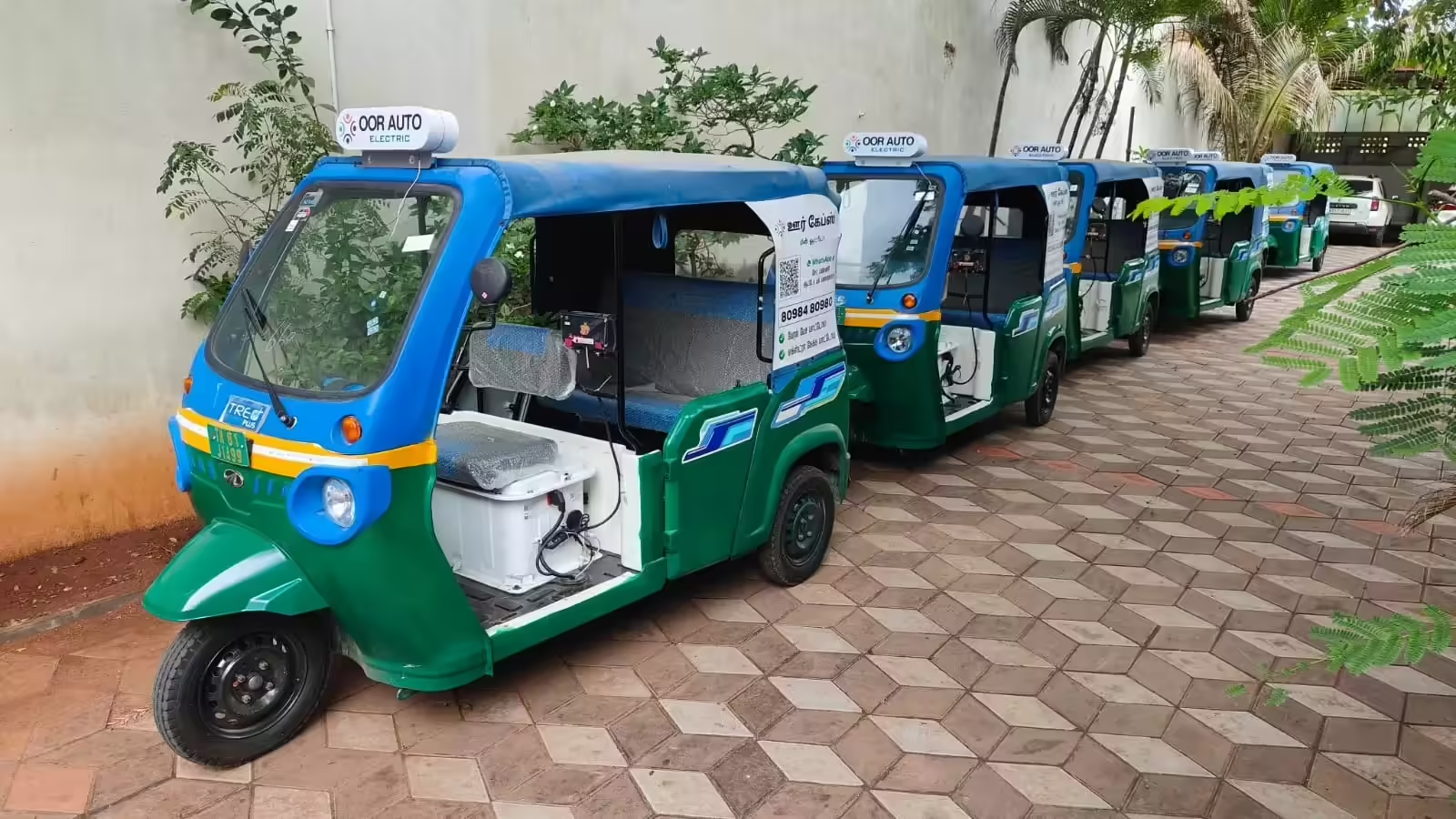
An EV startup from Trichy secures ₹25 crore funding, signalling growing investor interest in Tier-2 mobility solutions. The development highlights how smaller cities are becoming key players in India’s electric vehicle ecosystem, with implications for jobs, infrastructure, and local transport.
Funding News Signals Shift Toward Tier-2 EV Innovation
The EV startup from Trichy securing ₹25 crore funding is a time sensitive development that reflects current investor sentiment in India’s mobility sector. Traditionally, most EV investments were concentrated in metro based companies. This shift toward Tier-2 cities indicates a broader decentralisation of innovation.
Tiruchirappalli, commonly known as Trichy, has been emerging as an industrial and educational hub. The presence of engineering talent and lower operational costs makes it an attractive base for startups.
This funding round suggests that investors are looking beyond established urban centres to identify scalable and cost efficient solutions. It also aligns with the increasing demand for EV adoption in smaller cities where traditional transport challenges remain significant.
What ₹25 Crore Funding Means for EV Startup Growth
A ₹25 crore investment provides the startup with the ability to expand operations, improve technology, and scale production. Funding at this level typically supports product development, hiring, and market expansion.
For EV startups, capital is crucial because of high initial costs related to battery technology, manufacturing, and infrastructure integration. This investment may help the company enhance its vehicle offerings or develop supporting services such as charging solutions.
The funding also indicates investor confidence in the startup’s business model. It suggests that the company has demonstrated potential for growth in a competitive market.
In many cases, such funding rounds act as a stepping stone for larger investments in the future, enabling startups to establish a stronger market presence.
Impact on Tier-2 Mobility and Local Transport Systems
The growth of EV startups in Tier-2 cities can significantly impact local transport systems. These regions often face challenges such as limited public transport options and reliance on fuel based vehicles.
Electric vehicles offer a cost effective and environmentally friendly alternative. Startups can tailor their products to local needs, such as short distance commuting or last mile delivery.
In cities like Coimbatore and Madurai, similar mobility patterns have shown strong demand for two wheelers and three wheelers. EV solutions designed for these use cases can gain quick adoption.
Improved mobility can also support local businesses by enabling more efficient logistics and transportation.
Job Creation and Skill Development Opportunities
The funding is expected to generate employment across multiple areas, including engineering, manufacturing, sales, and service operations. As the startup expands, it will require a skilled workforce to support its growth.
Tier-2 cities often have a strong talent pool from local colleges and technical institutes. This creates opportunities for graduates to find employment without relocating to metro cities.
In addition to direct jobs, indirect employment can emerge in areas such as supply chain management, maintenance services, and charging infrastructure.
Skill development programs may also evolve to meet industry needs, particularly in areas related to battery technology and electric drivetrains.
Role of EV Ecosystem in Supporting Startup Success
The success of an EV startup depends on the broader ecosystem, including infrastructure, policy support, and consumer awareness. Government initiatives promoting electric mobility play a crucial role in enabling growth.
Policies related to subsidies, tax benefits, and charging infrastructure can influence adoption rates. Collaboration with local authorities and private partners can help startups scale more effectively.
The presence of a supportive ecosystem ensures that funding translates into real world impact rather than remaining limited to expansion plans.
As more startups emerge in Tier-2 cities, the ecosystem is likely to strengthen further.
Challenges Facing EV Startups in Smaller Cities
Despite the positive outlook, EV startups in Tier-2 cities face several challenges. Infrastructure gaps remain a major concern, particularly in terms of charging networks.
Consumer awareness is another issue. Many potential users are still unfamiliar with EV benefits and maintenance requirements. Building trust and educating customers will be essential.
Competition from established players can also create pressure. Larger companies often have more resources and brand recognition.
Access to supply chains and components, especially batteries, can impact production timelines and costs. Managing these challenges will be critical for sustained growth.
What This Means for India’s EV Startup Landscape
The funding of a Trichy based EV startup reflects a broader trend in India’s startup ecosystem. Innovation is no longer limited to metro cities, and Tier-2 regions are becoming important contributors.
This shift can lead to more inclusive economic growth, where opportunities are distributed across regions. It also encourages localised solutions that address specific mobility needs.
As more investors explore opportunities in smaller cities, competition and innovation are likely to increase. This can accelerate the overall growth of India’s EV sector.
The development signals that the future of mobility in India will be shaped not just by large corporations but also by emerging startups from diverse regions.
Key Takeaways
- A Trichy based EV startup has secured ₹25 crore in funding
- The investment highlights growing focus on Tier-2 mobility solutions
- Funding can drive job creation and local economic growth
- Challenges include infrastructure gaps and consumer awareness
Frequently Asked Questions
Why is this funding significant for EV startups?
It shows investor confidence and provides resources for growth and expansion.
How will this impact Tier-2 cities?
It can improve mobility, create jobs, and support local economic development.
What challenges do EV startups face in smaller cities?
Infrastructure limitations, awareness gaps, and competition are key challenges.
Will more startups emerge in Tier-2 regions?
Yes, as investment and demand continue to grow, more startups are likely to enter the market.