



























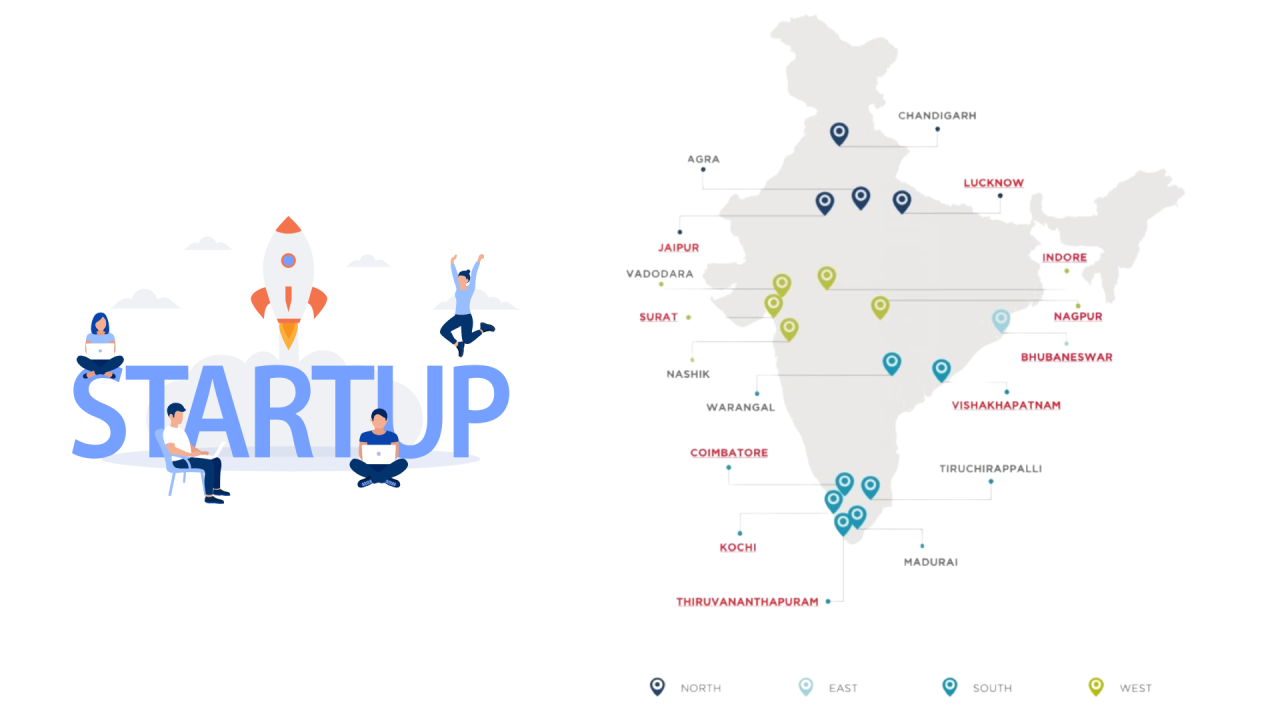
Tier-2 cities are increasingly emerging as India’s next growth engines for startups and employment. Rising digital adoption, lower operating costs, improved infrastructure, and a growing skilled workforce are encouraging businesses and entrepreneurs to look beyond major metropolitan areas for expansion and innovation.
Why Tier-2 Cities Are Gaining Attention
Tier-2 cities in India are no longer viewed as secondary markets. Cities such as Indore, Nagpur, Jaipur, Lucknow, Coimbatore, Bhubaneswar, Surat, Kochi, and Chandigarh are attracting startups, technology companies, and investors at an unprecedented pace.
The shift is being driven by changing economic realities. Operating a business in Mumbai, Bengaluru, Delhi, or Hyderabad often involves significantly higher expenses related to office space, employee salaries, and infrastructure. In contrast, Tier-2 cities offer lower operational costs while providing access to a growing pool of educated professionals.
The expansion of high-speed internet, digital payment systems, and remote work culture has further reduced the geographical advantages traditionally enjoyed by metropolitan cities. As a result, many startups now see smaller cities as viable locations for building and scaling businesses.
Startup Ecosystems Are Expanding Beyond Metro Cities
India’s startup ecosystem has matured significantly over the past decade. While Bengaluru remains the country’s startup capital, entrepreneurial activity is becoming more decentralized.
Several Tier-2 cities have developed strong startup ecosystems supported by incubators, accelerators, universities, and government initiatives. Educational institutions in these cities are producing engineering, management, and technology graduates who increasingly prefer local employment opportunities instead of relocating to metropolitan regions.
Government programs such as Startup India and various state-level startup policies have also contributed to this trend. Many states now offer incentives, grants, and incubation support to encourage entrepreneurship in emerging urban centers.
The result is a growing number of startups focused on sectors such as fintech, agritech, healthtech, edtech, logistics, and software services that are choosing Tier-2 locations as their operational base.
Employment Opportunities Are Growing Rapidly
One of the most significant outcomes of this shift is the creation of new employment opportunities.
Companies expanding into Tier-2 cities often hire local talent, reducing the need for migration to larger cities. This allows professionals to access quality jobs while maintaining a lower cost of living and staying closer to their families.
Business process outsourcing, information technology services, e-commerce operations, digital marketing, and customer support functions are among the sectors generating substantial employment in these regions.
Remote and hybrid work models have further strengthened this trend. Many companies now recruit talent from across India without requiring employees to relocate. This has enabled professionals in smaller cities to participate in the national and global digital economy.
As a result, Tier-2 cities are becoming important contributors to India’s workforce development and economic diversification.
Infrastructure and Digital Connectivity Are Supporting Growth
Improved infrastructure has played a major role in transforming Tier-2 cities into business-friendly destinations.
Over the past decade, investments in highways, airports, metro systems, industrial corridors, and digital connectivity have enhanced accessibility and economic activity. Better transportation networks allow businesses to connect more efficiently with customers, suppliers, and markets.
The widespread availability of affordable internet services has also accelerated digital adoption. Small businesses, entrepreneurs, and startups can now reach national audiences through online platforms without requiring a physical presence in major cities.
The growth of coworking spaces, technology parks, and innovation centers further supports entrepreneurial activity. These developments make it easier for startups to access professional workspaces and collaborative business environments.
Consumer Demand Is Creating New Market Opportunities
Another reason for the rise of Tier-2 cities is the growing purchasing power of their residents.
Higher disposable incomes, expanding middle-class populations, and increasing digital literacy have transformed these cities into attractive consumer markets. Businesses no longer view them solely as talent hubs but also as significant revenue opportunities.
E-commerce companies, fintech platforms, food delivery services, healthcare providers, and entertainment businesses have expanded aggressively into smaller cities to capture this demand.
Startups are particularly well-positioned to serve local needs by developing products and services tailored to regional markets. This creates opportunities that may be overlooked in highly competitive metropolitan environments.
As consumption patterns continue to evolve, Tier-2 cities are expected to contribute an increasingly larger share of India’s economic growth.
What the Future Holds for Tier-2 India
The momentum behind Tier-2 cities is expected to continue over the coming years. Industry experts believe these cities will play a crucial role in India’s ambitions to become a larger innovation-driven economy.
Continued investments in infrastructure, education, digital connectivity, and entrepreneurship support systems are likely to strengthen their position further. Companies seeking sustainable growth may increasingly adopt multi-city strategies rather than concentrating operations in a handful of metropolitan locations.
While challenges related to infrastructure gaps, funding access, and urban planning remain, the overall trajectory points toward greater economic significance for emerging cities.
For startups, investors, and job seekers, Tier-2 India is no longer a future opportunity. It is becoming a present-day growth story shaping the next phase of the country’s development.
Key Takeaways
• Tier-2 cities are attracting startups due to lower operating costs and growing talent availability.
• Employment opportunities are increasing across technology, services, e-commerce, and digital sectors.
• Improved infrastructure and internet connectivity are enabling business expansion beyond metro cities.
• Rising consumer demand is making Tier-2 cities important markets as well as talent hubs.
FAQ
What are Tier-2 cities in India?
Tier-2 cities are emerging urban centers that are smaller than major metropolitan cities but have strong economic, educational, and infrastructure development.
Why are startups moving to Tier-2 cities?
Startups benefit from lower costs, skilled talent availability, improving infrastructure, and growing local markets.
Which Indian Tier-2 cities are growing rapidly?
Cities such as Indore, Nagpur, Jaipur, Lucknow, Surat, Coimbatore, Kochi, Bhubaneswar, and Chandigarh are experiencing strong startup and employment growth.
How do Tier-2 cities contribute to employment?
These cities create jobs across sectors including IT services, e-commerce, digital marketing, customer support, fintech, and startup ecosystems.
(Tier-2 cities India, startup growth India, employment opportunities, emerging business hubs, startup ecosystem India, digital economy, Tier-2 city development, Indian startups, job market India, economic growth cities)