































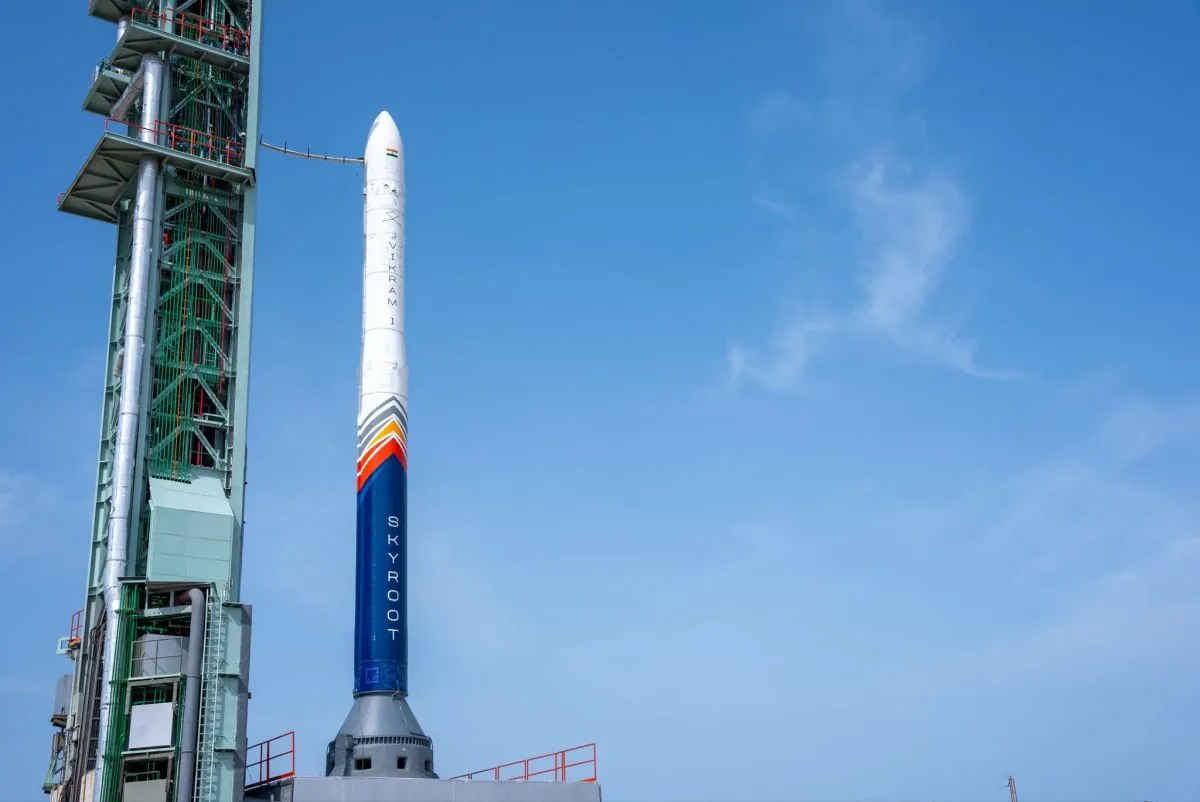
Skyroot Aerospace’s Vikram-1 mission is set to become India’s first privately developed orbital rocket launch. More than a technological achievement, it represents the rapid growth of India’s private space industry and could reshape satellite launches, innovation, jobs, and the country’s global space ambitions.
Skyroot’s Vikram-1 launch is one of the most significant milestones in India’s modern space sector. Scheduled for 18 July 2026 from the Satish Dhawan Space Centre in Sriharikota under Mission Aagaman, Vikram-1 is expected to become India’s first privately developed orbital rocket to attempt reaching orbit. The mission is time sensitive and represents a major development in India’s commercial space ecosystem.
For decades, India’s space achievements were led almost entirely by ISRO. Vikram-1 now highlights how private companies are beginning to play a much larger role in developing launch vehicles, satellite services, and commercial space technologies.
What Makes Vikram-1 a Historic Mission?
Developed by Hyderabad-based Skyroot Aerospace, Vikram-1 is an orbital-class launch vehicle designed to place small satellites into Low Earth Orbit. Unlike the company’s successful Vikram-S suborbital mission in 2022, this launch aims to achieve orbit, making it a far more complex engineering challenge.
The maiden mission, known as Mission Aagaman, serves primarily as a technology demonstration. Engineers will evaluate the rocket’s propulsion systems, stage separation, guidance, navigation, avionics, and overall flight performance before moving toward regular commercial launches.
If successful, Vikram-1 will establish Skyroot as India’s first private company to demonstrate indigenous orbital launch capability from Indian soil. The launch is scheduled from the country’s historic First Launch Pad at Sriharikota after completing extensive testing and safety clearances.
Why Private Space Launches Matter for India
India’s space sector has undergone significant reforms over the past few years. The government opened the sector to private participation, allowing startups to build launch vehicles, satellites, and space technologies with regulatory support from IN-SPACe.
This policy shift has encouraged dozens of Indian space startups to enter the market. Skyroot has emerged as one of the leading names because it focuses on affordable and responsive satellite launches for commercial customers.
Small satellites are becoming increasingly important for communication, agriculture, disaster monitoring, weather forecasting, internet connectivity, defence applications, and scientific research. As demand grows globally, launch opportunities must also expand.
Private launch providers can reduce waiting periods, increase launch frequency, and make access to space more affordable for startups, universities, research institutions, and businesses.
How Vikram-1 Could Benefit Ordinary Indians
Although rocket launches may appear distant from daily life, their impact reaches millions of people.
Satellites launched by vehicles like Vikram-1 can support faster internet connectivity in remote regions, improve weather prediction, strengthen disaster response systems, enhance GPS-based services, and assist farmers through better crop monitoring.
The commercial space industry also creates high-skilled employment opportunities across engineering, manufacturing, software development, electronics, materials science, artificial intelligence, and aerospace research.
As India’s private space ecosystem expands, more investment is expected to flow into advanced manufacturing and deep technology startups, benefiting the broader economy.
Technology Behind Vikram-1
Vikram-1 incorporates advanced composite structures to reduce weight while maintaining strength. The vehicle uses multiple propulsion stages, including a restartable upper stage designed to improve orbital insertion flexibility.
The rocket has been engineered to carry small satellite payloads into Low Earth Orbit and supports the growing global demand for dedicated satellite launches.
Reports indicate that Mission Aagaman will carry multiple technology demonstration payloads from Indian and international customers. These payloads will help validate commercial launch capabilities while demonstrating confidence in India’s emerging private launch sector.
A Turning Point for India’s Global Space Ambitions
The Vikram-1 launch arrives at a time when the global commercial space market is expanding rapidly. Countries are investing heavily in satellite constellations, Earth observation, communications infrastructure, and scientific missions.
India already enjoys a strong reputation through ISRO’s achievements, including Chandrayaan and Mars Orbiter Mission. Private companies like Skyroot now have an opportunity to complement those successes by serving commercial customers worldwide.
A successful Vikram-1 mission would strengthen India’s credibility as a competitive launch destination while encouraging more domestic innovation and international partnerships.
Even if engineers identify improvements after the maiden flight, the mission remains an important learning opportunity. Initial development launches are designed to validate technologies before routine commercial operations begin.
For India’s growing space startup ecosystem, Mission Aagaman represents more than a single rocket launch. It signals the arrival of a new generation of private innovation capable of contributing to the country’s long-term leadership in the global space economy.
Key Takeaways
- Vikram-1 is India’s first privately developed orbital rocket preparing for its maiden launch.
- Mission Aagaman aims to validate launch technologies before commercial operations.
- The mission highlights the rapid growth of India’s private space industry.
- Success could expand satellite launch opportunities, investment, employment, and global competitiveness.
Frequently Asked Questions
Q1. What is Vikram-1?
Vikram-1 is an orbital launch vehicle developed by Skyroot Aerospace to place small satellites into Low Earth Orbit.
Q2. Why is Mission Aagaman important?
It represents India’s first attempt to launch a privately developed orbital rocket from Indian soil and marks a major milestone for the country’s private space sector.
Q3. Who developed Vikram-1?
Vikram-1 was developed by Hyderabad-based space startup Skyroot Aerospace, founded by former ISRO engineers.
Q4. How will ordinary citizens benefit from this mission?
Successful commercial space launches can improve satellite services that support communication, weather forecasting, agriculture, disaster management, navigation, and economic growth.
(Internal Keyword Suggestions: Skyroot Vikram-1, Mission Aagaman, India’s private space mission, Vikram-1 launch, Skyroot Aerospace, Indian space startups, commercial satellite launch, ISRO private sector, orbital rocket India, Low Earth Orbit)