































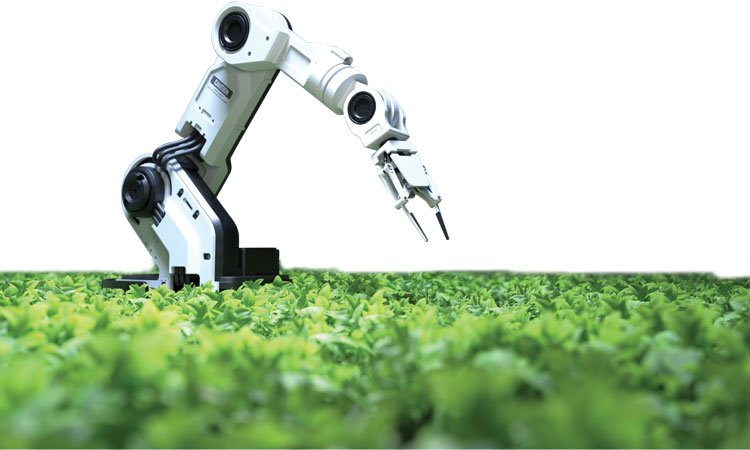
Robotics is becoming an essential part of India’s manufacturing sector as companies invest in automation to improve productivity, product quality and global competitiveness. From automobiles to electronics and pharmaceuticals, manufacturers are increasingly deploying industrial robots to meet growing demand and modernize production.
The growth of robotics in India is reshaping the country’s manufacturing landscape. As industries face rising production demands, stricter quality standards and increasing global competition, manufacturers are investing heavily in automation technologies. Industrial robots are no longer limited to large automobile factories. Today, businesses across electronics, pharmaceuticals, food processing, logistics and engineering are adopting robotic systems to improve efficiency, reduce errors and strengthen long-term competitiveness. The shift reflects India’s broader move toward Industry 4.0 and smart manufacturing.
Why Manufacturers Are Investing in Automation
Automation has become a strategic investment rather than just a cost-saving measure. Modern manufacturing requires high precision, faster production cycles and consistent product quality, all of which can be supported by robotic systems.
Industrial robots can perform repetitive tasks with remarkable accuracy while operating continuously with minimal downtime. This allows manufacturers to increase production capacity without compromising quality.
Many companies are also facing labour shortages in highly specialized manufacturing roles. Robots help address these gaps by taking over repetitive, physically demanding or hazardous tasks, allowing skilled workers to focus on supervision, maintenance and quality control.
Automation also improves workplace safety by reducing human exposure to dangerous machinery, high temperatures, chemicals and heavy lifting.
Automotive Industry Leads Robotics Adoption
India’s automotive industry remains the largest user of industrial robots. Vehicle manufacturers use robotic systems for welding, painting, material handling, assembly and inspection.
These automated processes improve consistency while reducing production time and minimizing manufacturing defects.
Electric vehicle production has further accelerated automation investments. Battery assembly, precision component manufacturing and advanced quality inspection require high levels of accuracy that robotic systems can consistently deliver.
Major automotive suppliers are also expanding automation to meet growing demand from both domestic and export markets.
As India’s automobile industry continues evolving, robotics is expected to remain a key driver of productivity and innovation.
Electronics, Pharmaceuticals and Logistics Follow Closely
The electronics manufacturing sector has significantly increased automation as India expands domestic production of smartphones, consumer electronics and semiconductor components.
Robotic systems assist with delicate assembly operations, testing, packaging and inspection where precision is essential.
Pharmaceutical companies are also deploying robots in packaging, laboratory automation, medicine handling and sterile manufacturing environments. Automation helps maintain quality standards while improving operational efficiency.
In logistics and warehousing, autonomous mobile robots and automated sorting systems are becoming increasingly common. These technologies improve inventory management, reduce order processing time and support the rapid growth of e-commerce across India.
Government Initiatives and Industry 4.0 Drive Growth
Government initiatives promoting domestic manufacturing have created a favourable environment for automation investments.
Programs such as Make in India, Production Linked Incentive (PLI) schemes and the Digital India initiative encourage manufacturers to modernize production facilities and adopt advanced technologies.
Industry 4.0 has become another major factor driving robotics adoption. Manufacturers increasingly integrate robots with Artificial Intelligence, machine learning, Internet of Things (IoT) devices, cloud computing and real-time data analytics.
These smart factories can monitor equipment performance, predict maintenance requirements and optimize production using data-driven decision-making.
Such technologies help manufacturers improve operational efficiency while reducing downtime and maintenance costs.
Challenges Still Remain for Small Businesses
Despite growing adoption, robotics implementation remains challenging for many small and medium enterprises.
The initial investment required for industrial robots, software integration and employee training can be significant.
Many smaller manufacturers also require technical expertise to operate and maintain advanced automation systems effectively.
However, the cost of robotics has gradually declined over the past decade, making automation increasingly accessible. Robotics-as-a-Service (RaaS), equipment leasing and government support programs are also helping businesses adopt automation without making very large upfront investments.
Training and workforce development remain equally important. Rather than replacing workers entirely, automation is creating demand for technicians, robot programmers, maintenance engineers and automation specialists.
What the Future Looks Like
India’s robotics market is expected to continue expanding as manufacturers invest in digital transformation and smart factories.
Collaborative robots, commonly known as cobots, are becoming more popular because they can safely work alongside human employees instead of replacing them. Artificial Intelligence is also making robots more adaptive, allowing them to perform increasingly complex tasks.
As global companies diversify supply chains and increase manufacturing in India, automation is likely to become a competitive necessity rather than an optional investment.
Manufacturers that combine robotics with skilled human talent, digital technologies and efficient production processes will be better positioned to compete in both domestic and international markets.
The future of Indian manufacturing is expected to rely on collaboration between people and intelligent machines rather than one replacing the other.
Key Takeaways
- Robotics is helping Indian manufacturers improve productivity, quality and workplace safety.
- The automotive, electronics, pharmaceutical and logistics sectors are leading automation adoption.
- Government initiatives and Industry 4.0 technologies are accelerating investment in smart manufacturing.
- Growing demand for automation is creating new opportunities for skilled technicians, engineers and robotics professionals.
Frequently Asked Questions
Q1. Why are manufacturers investing in robotics?
Manufacturers use robotics to improve productivity, maintain consistent quality, reduce production costs, enhance workplace safety and remain globally competitive.
Q2. Which industries use robotics the most in India?
The automotive industry leads, followed by electronics, pharmaceuticals, logistics, engineering, food processing and consumer goods manufacturing.
Q3. Does robotics replace human jobs?
Robotics automates repetitive and hazardous tasks but also creates demand for skilled roles such as robot programming, maintenance, automation engineering and quality supervision.
Q4. What is Industry 4.0?
Industry 4.0 refers to the integration of advanced technologies such as robotics, Artificial Intelligence, IoT, cloud computing and data analytics into manufacturing to create smart, connected factories.
(Internal Keyword Suggestions: robotics in India, industrial robots India, manufacturing automation, Industry 4.0 India, smart manufacturing, factory automation India, automation in manufacturing, robotics investment India, Make in India automation, industrial automation technology, collaborative robots, AI in manufacturing)